Peter Ostroff
A Voice for Beverly Hills — Past, Present, and Future
OBH Closing Argument
In a letter to the Beverly Hills City Council, Peter Ostroff expresses strong opposition to the One Beverly Hills developer's request for $550 million in tax-exempt bonds, arguing that it represents a "bait and switch" tactic that poses significant financial risks to the city and its residents. He emphasizes the need for thorough analysis and public accountability before proceeding with such a substantial financial commitment, highlighting widespread resident outrage and concerns about potential liabilities.
By Peter Ostroff
Dear Mayor Nazarian and Members of the Beverly Hills City Council:
As I will be unable to attend the City Council meeting on August 19 when you will consider the One Beverly Hills developer’s request for issuance of not to exceed $550 million of tax exempt bonds to reimburse the developer’s costs for public facilities improvements on its private property (OBH), I want to convey these final thoughts.
First, we should take a step back and look at the big picture.
In 2021, OBH came to the City seeking unprecedented and extremely valuable entitlements. OBH wanted permission to build two condominium towers more than twice as tall as any other buildings in the City and a hotel/time share building that, while not as tall as the towers, was itself taller than zoning rules permitted. Notably, condominium units on a 23rd floor sell for prices far higher than the units on a third floor.
Never once did OBH suggest that it would require financial help from the City with Mello-Roos bonds or anything else to pay for parts of this development that OBH promised to provide.
Now, OBH has asked the City for financial help in the form of City issued tax exempt bonds in an amount that is far greater than the City’s operating budget and would swamp the City financially in the event that something goes wrong.
Some might call that a classic Bait and Switch.
This request raises numerous existential problems for the City and its future viability and, therefore, has stimulated widespread resident outrage.
OBH Developer Larry Green purported to answer some of these questions in a Guest Editorial that appeared in last week’s issue.
He completely ignored the “bait and switch” aspect of his proposal.
The “answers” that he did provide are so misleading and incomplete that they reveal conclusively that the financial risks to the City are very very substantial.
Let’s take a look at Mr. Green’s statements and my comments:
Larry Green: “Is this a giveaway of public funds? No. These are not general obligation bonds of the City; they are not secured by any general funds of the City. The bonds are repaid solely from special taxes paid by property owners in the district. Taxpayers are not providing a subsidy or any public funding. The City’s credit rating is not involved.”
Peter Ivan Ostroff Commentary: The proposal is for the City to sell tax exempt lower interest bonds. The amounts paid by the bond buyers to the City for the bonds are public funds. The proposal is that the City pay those funds to “reimburse” OBH for construction of things that OBH agreed to provide at its own expense in exchange for the magnificent entitlements that it received from the City. If that’s not a “giveaway” of public funds, I don’t know what is.
Green: What public infrastructure is proposed to be funded by the CFD and how are they public? The CFD will finance public infrastructure including street and sidewalk improvements on Wilshire and Santa Monica Blvds, new and upgraded traffic signals, utility improvements, street trees, landscape, and the realignment of Merv Griffin Way.
PIO Commentary: Certainly that is OBH’s proposal – that funds raised by City issued bonds pay for things that OBH is unconditionally obligated to pay for with its own funds. Further, it is difficult to imagine that those items will cost $550 million so the City would have to watch carefully to make certain that its funds are not misused. The City has no experience or capability to fulfill that watchdog role and could be held responsible for its own mistakes.
Green: How does the CFD benefit the residents of Beverly Hills beyond the project? The One Beverly Hills CFD will provide an additional revenue stream for public infrastructure and ongoing maintenance instead of relying on city general funds or raising taxes on existing property owners.
PIO Commentary: Mr. Green seems to be arguing that some Merv Griffin Way street cleaning and watering the project’s lawns somehow justifies $550 million of city issued bonds. Seriously?
Green: Is there liability for the City if the project goes bankrupt? No. The City has no financial liability, as the bonds are land secured and the purchasers of the bonds understand that (i) these are non-recourse to the City, and (ii) the only collateral for these bonds is the property within the CFD district (sic) (in this case the One Beverly Hills project.)
PIO Commentary: What the future purchasers may or may not “understand” will be based on the City issued securities offering statement (the bonds are securities) for which the City will be subject to state and federal securities laws. Importantly, what the City will or won’t say about the gift of public funds issue will be a very challenging legal issue.
Further, there are many scenarios beyond whether “the project goes bankrupt” (whatever that means) which will give rise to liability or other injury to the City and its reputation including but not limited to whether the project is completed or its condominium units are not sold in a timely manner.
OBH could completely address these issues by providing an opinion letter from experienced counsel with a large malpractice policy that the City could rely upon that states unequivocally that:
The proposed transaction does not involve an unlawful gift of public funds; and
There are no circumstances in which the City or its resources or residents could sustain any financial liability or other injury.
OBH did provide a letter on August 5 which did not even mention those issues, said little, cautioned that the City could not rely on its statements and could have been written by ChatGPT.
Mr. Green’s letter does not address whether the City is receiving adequate compensation for paying for up to $550 million in costs to reimburse OBH for performing its obligations. This is understandable given that OBH’s proposal is limited to paying some undefined “infrastructure” costs directly or indirectly out of the bond proceeds.
Assuming for a moment that all of these questions can be answered to your satisfaction, one paramount issue remains for your consideration.
The prospect that this transaction goes forward is immensely unpopular with our residents.
I have spoken with dozens of residents. Without exception, other than those directly or indirectly on the developer’s payroll, these have expressed strong opposition.
My sense is that even for people like me who really like this project as presented, the outrage is because of the bait and switch nature and the substantial risks presented.
City Treasurer Howard Fisher told me: “From what I’ve learned from staff, I am convinced that this matter has not been properly analyzed. Since taking office, I’ve received more calls about this issue than anything else, and everyone I’ve spoken to about it is outraged.”
Is it wise to proceed headlong into this when the City Treasurer advises that more analysis is needed? Disregarding that advice seems, at best, reckless.
Undoubtedly, you have heard similar expressions of opposition from residents. And this is notwithstanding that several have told me that they have refrained from speaking out because of fear or retaliation from the developer or from City officials.
Don’t we need, at a minimum, proper analysis and assurances from experienced counsel that we can rely upon (not just Latham & Watkins’ word salad that tells us only that we cannot rely on them)?
The issue of whether the bond issuance is a gift of public funds has been specifically brought to your attention. Do you have reliable assurance based on sound authority that it is not? If you guess wrong about this, you will subject the City and yourselves personally to substantial potential liability.
What you have not been told and do not know about why these bond funds are being sought, why they are needed, whether they will be sufficient to ensure timely completion of the project or the value of these bonds to OBH far exceeds the limited information that has been shared.
You have been democratically elected to represent our City’s residents. You have also been elected because the residents respect your good judgment.
I do not suggest for a moment that you must conduct a plebiscite on every issue. I do suggest, respectfully, that where, as here, there are more questions than answers and public sentiment of opposition is so strong, it would be imprudent and inappropriate to rush to a conclusion or disregard the widespread sentiment. If you do, it will send the unmistakable message that you are exalting the interests of the developer over the interests of the City or its residents.
I wish you well as you wrestle with the challenge of saying “no” to a developer who had previously promised an outstanding project or to the residents who believe that “no” is the only principled answer.
But if it were easy, we wouldn’t need you.
***
Some corrections from last week’s column about the District 24 Senate race for which I apologize.
Senator Adam Schiff has not endorsed a candidate and I incorrectly reported that he had endorsed John Erickson.
Brian Goldsmith did not work for Rick Caruso but Mr. Caruso has endorsed Brian Goldsmith and has contributed financial support to Mr. Goldsmith’s campaign.
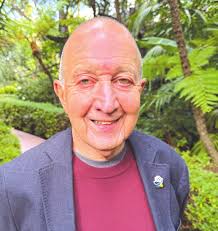
Peter Ostroff is a long-time Beverly Hills resident of over 50 years who retired in 2017 after a 50-year career as a trial lawyer. He was born in Washington, D.C. in 1942. He graduated from Washington University (St. Louis, Mo) in 1964 with a B.A. degree in political science and economics. He graduated from the University of Chicago Law School in 1967 with a J.D. degree. He taught law at Monash University Law School in Melbourne, Australia in 1968. He became a member of the Illinois Bar in 1967 and the California Bar in 1969, He clerked for Hon. Shirley M. Hufstedler of the United States Court of Appeal 1969-70, practiced law with Nossaman, Waters, Scott, Krueger & Riordan and successor firms from 1970 to 1980 and with Sidley Austin from 1980 until 2017. During his full time law practice years he was a Committee Chair and Member of the Council of the American Bar Association, Litigation Section and was President of the Association of Business Trial Lawyers. Since 2018, he has served on the Beverly Hills Planning Commission. In addition to his work on the Commission, Peter has chaired the BHUSD 7-11 Surplus Property Committee and contributed to planning efforts for the District Offices site on S. Lasky Drive and future uses of the Hawthorne School property. He also served as Co-Chair of the Citizens Advisory Committee for the City's Climate Adaptation and Action Plan. He has been married to Anne Y. Ostroff since 2002, has two children, Nick Ostroff and Natalie Anne Cookson and has two grandchildren, Elliott Cookson and Emma Anne Cookson. Some family information is collected under Family Tree in this website. Since April 2024, he has written a weekly column for the Beverly Hills Weekly The columns are collected in this website.
petero@ostroff.laMore from the Archive
OneBH Wants Financing – Should It Come From Us?
The City Council is considering a proposal to issue up to $550 million in bonds to help finance the One Beverly Hills project, which has raised concerns about the lack of public discussion regarding the potential risks and benefits to the city. Critics argue that the council has not adequately addressed why the city should support the financing for a private developer and whether the proposed $10 million compensation is sufficient given the significant financial implications involved.
Use to Think About
The article discusses the challenges and changes facing Beverly Hills, particularly regarding new development projects and housing legislation that have sparked resident concerns about neighborhood transformations. It emphasizes the need for informed and accountable candidates in the upcoming City Council and Board of Education elections to navigate these issues effectively and engage the community in meaningful discussions.
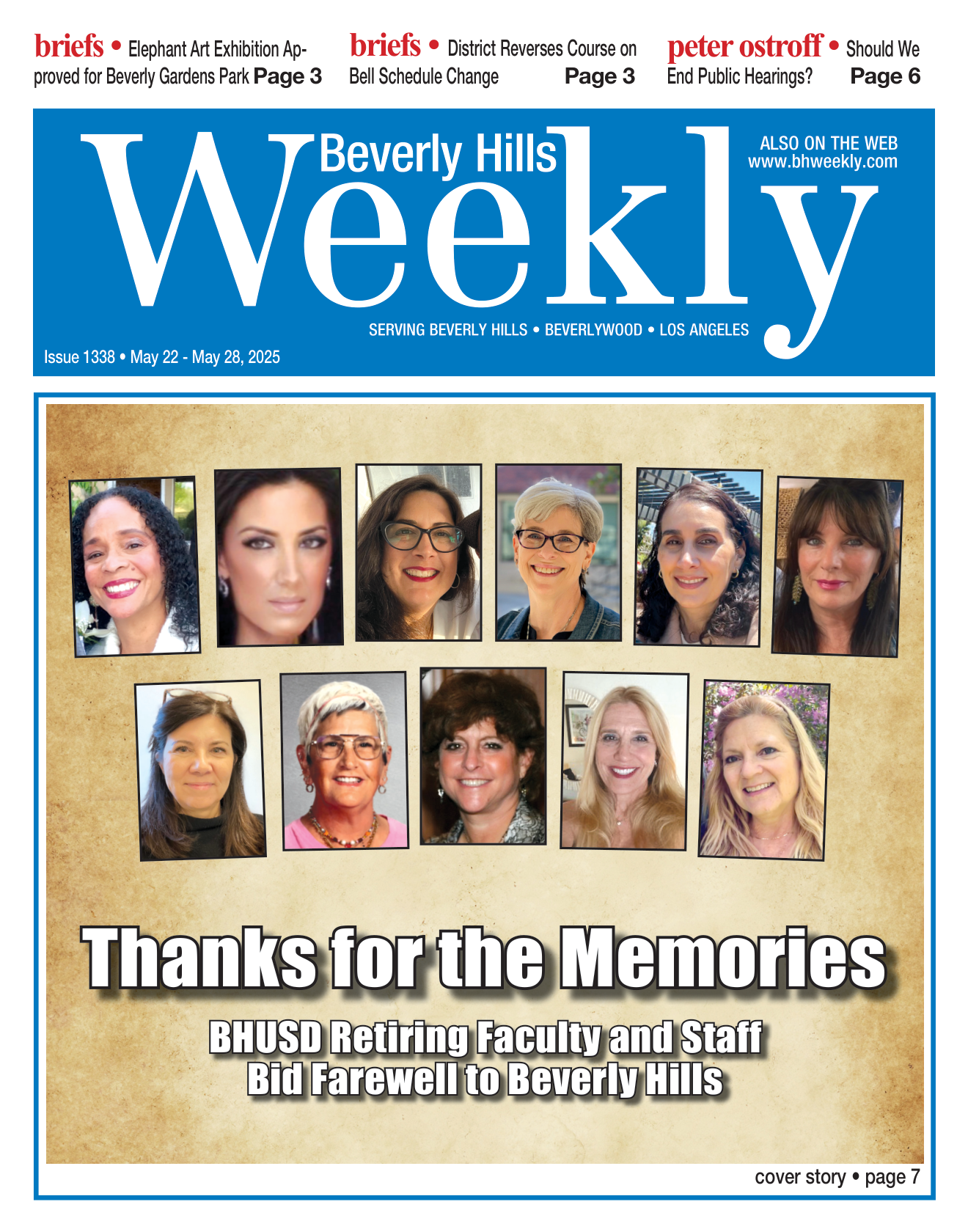
Should We End Public Hearings?
The article discusses the proposal to eliminate public hearings for fourteen large residential projects in Beverly Hills, allowing developers to expedite approvals by scaling back their projects to comply with specific height and density limits. While city planners hope this will reduce the scale of the developments, the author argues that public input is crucial for understanding the potential impacts on neighborhoods and urges the City Council to reject the recommendation for ministerial review.