Peter Ostroff
A Voice for Beverly Hills — Past, Present, and Future
Should We End Public Hearings?
The article discusses the proposal to eliminate public hearings for fourteen large residential projects in Beverly Hills, allowing developers to expedite approvals by scaling back their projects to comply with specific height and density limits. While city planners hope this will reduce the scale of the developments, the author argues that public input is crucial for understanding the potential impacts on neighborhoods and urges the City Council to reject the recommendation for ministerial review.

Should We End Public Hearings?
Developers of approximately fourteen big and tall residential projects have filed applications for land use entitlements that they contend are exempt from the City’s zoning and development standards. The basis for this contention is that Preliminary Applications for these projects were filed before the state certified in early May 2024 the City’s Revised General Plan and, therefore, are entitled to this exemption as Builder’s Remedy projects.
The current list of Builder’s Remedy projects is:
• 333-353 S. Beverly Drive (8 stories/35 dwelling units)
• 8844 Burton Way (26 stories/200 d.u.)
• 140 S. Camden Drive (15 stories/27 d.u.)
• 211-217 S. Hamilton Drive (14 stories/210 d.u.)
• 214-216 S. Hamilton Drive (8 stories/90)
• 125-129 S. Linden Drive (19 stories/165 d.u. + hotel)
• 346 N. Maple Drive (12 stories/65 d.u.)
• 401 N. Oakhurst Drive (11 stories/25 d.u.)
• 9430 Olympic Boulevard (13 stories/53 d.u.)
• 9441 Olympic Boulevard (13 stories/75 d.u.)
• 9467 Olympic Boulevard (8 stories/105 d.u.)
• 145 S. Rodeo Drive (19 stories/30 d.u.)
• 232 Tower Drive (8 stories/55 d.u.)
• 9229 Wilshire Boulevard (14 stories/116 d.u. + hotel)
City Planners and others recognize that construction of all or several of these would result in a number of buildings that are out of scale with most buildings in the City. Thus, the City has been exploring ways to persuade these applicants to scale back the height and/or size of these projects.
As an aside, the purpose of the state rules that may allow such a dramatic alteration of our city is to create so-called affordable housing. In the highly unlikely event that all of these projects are built as proposed, they would provide a total of only approximately 125 affordable units. Reasonable minds would likely agree that the state’s approach to a need for affordable housing is as nutty as it has been ineffective.
The Planning Commission has recommended an ordinance that is intended to incentivize these Builder’s Remedy applicants to scale back their projects in exchange for an expedited and much more certain approval process.
This proposed ordinance will be considered by the City Council at its meeting on June 3 at 7 p.m.
The key points are:
A Ministerial Approval Housing Development Overlay Zone will be established that consists solely of the sites of the 14 proposed Builder’s Remedy projects listed above. On the condition that the applicant scales back its project to a level consistent with what would be allowed for a project on the site with size and density allowed using the state density bonus provisions (including, e.g., a maximum height of 85 feet), the city will afford the project a “ministerial” review with no public hearings rather than a “discretionary” review with public hearings before the Planning Commission and Architectural Design Commission. Because the review would be ministerial, it will be exempt from review for compliance with the California Environmental Quality Act (“CEQA”).
To the extent Builder’s Remedy applicants accept this deal, most, if not all, will be scaled back in height and density. At least ten would be much shorter than proposed.
A fundamental assumption is that the elimination of the public hearing and discretionary review is not a material concession because state law limits the City’s discretion to deny approval. Thus, projects that are compliant with the City’s zoning rules and the state density bonus opportunities generally must be approved. Thus, elimination of the arguably inconsequential discretionary review will benefit the applicants because they can avoid the associated expense and time but would not injure residents because approval is almost a foregone conclusion.
The questions that the Council must resolve are whether elimination of discretionary review is a good thing and whether this deal will be sufficiently attractive to the applicants to achieve anything of consequence.
An understanding of the differences between discretionary and ministerial review is helpful to the analysis of these questions.
In short, ministerial review is limited to a check by planning staff that a proposed development complies with objective standards. Generally, this eliminates CEQA review because CEQA only applies to discretionary actions. Ministerial review is generally much quicker, cheaper, more predictable, narrower in scope and transparent than discretionary review. Appeal of staff ministerial approvals is very limited.
Discretionary review is much more involved and allows for the exercise of judgment and discretion rather than simply looking at compliance with explicit objective criteria. It allows for considerations such as design, environmental impact, community character and public input generally through noticed public hearings. It may result in site-specific conditions placed on a project’s approval based on broader policy objectives or community feedback and mitigation of identified impacts.
The benefits of this proposed deal to applicants are summarized in the public notice as follows:
“Builder’s remedy projects that adhere to the ministerial permitting guidelines [i.e. accept this deal] will be exempt from the California Environmental Quality Act, and will not require public hearings or public notice. There is no right of appeal for projects approved through ministerial permitting.”
And there are specific conditions. The recommendation explains:
“To qualify for the ministerial permitting under the new ordinance, developers must adjust the builder’s remedy projects to be 85 feet tall or less. The buildings also must adhere to the uses submitted in the projects’ preliminary application, and the maximum density must be the number of units originally listed in the preliminary application. In addition to other specifications including setbacks and parking adhering to the preliminary application, no barbeque or kitchen facilities may be installed or utilized on balconies of the projects. Outdoor common space is limited to the operating hours of 7 a.m.–10 p.m. on weekdays, 9 a.m.–10 p.m. on weekends and amplified sound must be prohibited in all outdoor areas.”
So, that’s the proposed deal. Is it a good idea?
Reduced to its essence, developers who have proposed Builder’s Remedy projects could choose (OPTION A) to submit those projects, which are all substantially out of scale for our City and its zoning laws, to public hearings in front of the Planning Commission and Architectural and Design Commission and CEQA review or (OPTION B) to scale back their projects with the assurance that smaller but still sizable — for our City — will be approved in a relatively short time.
We are told that the City has very limited discretion to deny approval of projects that are compliant with our zoning laws but enhanced in size and scope by the state density bonus provisions. Therefore, the argument goes, even with discretionary review, such projects are highly likely to be approved. So, foregoing public hearings and CEQA review is a small price to pay if we can reduce projects proposing thirteen to twenty-six stories to a “mere” eight story limit.
I predict that developers who are serious about their hi-rise proposals will not accept this offer so it is unlikely that many, or any, of these that are taller than eight stories or 85’ will actually be scaled back.
Further, the main attraction of a discretionary project is certainty of approval and saving of time. In today’s high interest rate environment and great economic uncertainty due to threatened increases in tariffs and other issues, I am told that few if any projects once approved will commence construction any time soon. If this is so, and I suspect it is, expediting the entitlement process is not particularly meaningful.
Also, proposals in the California legislature to afford all state density bonus projects ministerial approval are in the works. If enacted, these would make the offer of ministerial review meaningless and even less likely to be accepted by developers.
More important to me is the fact that limited discretion or not, public hearings serve vital purposes. City officials, from planners to Planning and Architectural and Design Commissioners to City Council members don’t know what they don’t know about the impact of projects on our neighborhoods and residents. The opportunity for residents to appear at public hearings and make known their views based on their everyday first hand experience is not only important to them and their feelings of being heard but also can bring information forward that could affect the exercise of discretion, however limited that discretion may be.
I commend the planning staff and the Planning Commissioners who voted to recommend the proposal for their creativity in attempting to minimize the impact that the fourteen builder’s remedy projects would have on our City.
But for the reasons stated above, including my appreciation of the importance of public hearings and public input, I respectfully urge the City Council to reject this recommendation.
⸻
I hope that I will see you at the Beverly Hills Firefighters’ Association Backdraft Ball on Thursday, June 5, at 6 p.m. at the Beverly Wilshire Hotel. This event, which is always a big hit and a lot of fun for me, celebrates 100 years of service! And it is all in support of the BHFA Medical Retirement Fund.
Visit event.auctria.com/18c109b3-99da-4409-ab2b-887182fb6e62 to purchase tickets.

Peter Ostroff is a long-time Beverly Hills resident of over 50 years who retired in 2017 after a 50-year career as a trial lawyer. He was born in Washington, D.C. in 1942. He graduated from Washington University (St. Louis, Mo) in 1964 with a B.A. degree in political science and economics. He graduated from the University of Chicago Law School in 1967 with a J.D. degree. He taught law at Monash University Law School in Melbourne, Australia in 1968. He became a member of the Illinois Bar in 1967 and the California Bar in 1969, He clerked for Hon. Shirley M. Hufstedler of the United States Court of Appeal 1969-70, practiced law with Nossaman, Waters, Scott, Krueger & Riordan and successor firms from 1970 to 1980 and with Sidley Austin from 1980 until 2017. During his full time law practice years he was a Committee Chair and Member of the Council of the American Bar Association, Litigation Section and was President of the Association of Business Trial Lawyers. Since 2018, he has served on the Beverly Hills Planning Commission. In addition to his work on the Commission, Peter has chaired the BHUSD 7-11 Surplus Property Committee and contributed to planning efforts for the District Offices site on S. Lasky Drive and future uses of the Hawthorne School property. He also served as Co-Chair of the Citizens Advisory Committee for the City's Climate Adaptation and Action Plan. He has been married to Anne Y. Ostroff since 2002, has two children, Nick Ostroff and Natalie Anne Cookson and has two grandchildren, Elliott Cookson and Emma Anne Cookson. Some family information is collected under Family Tree in this website. Since April 2024, he has written a weekly column for the Beverly Hills Weekly The columns are collected in this website.
petero@ostroff.laMore from the Archive
Beverly Hills Expenditures
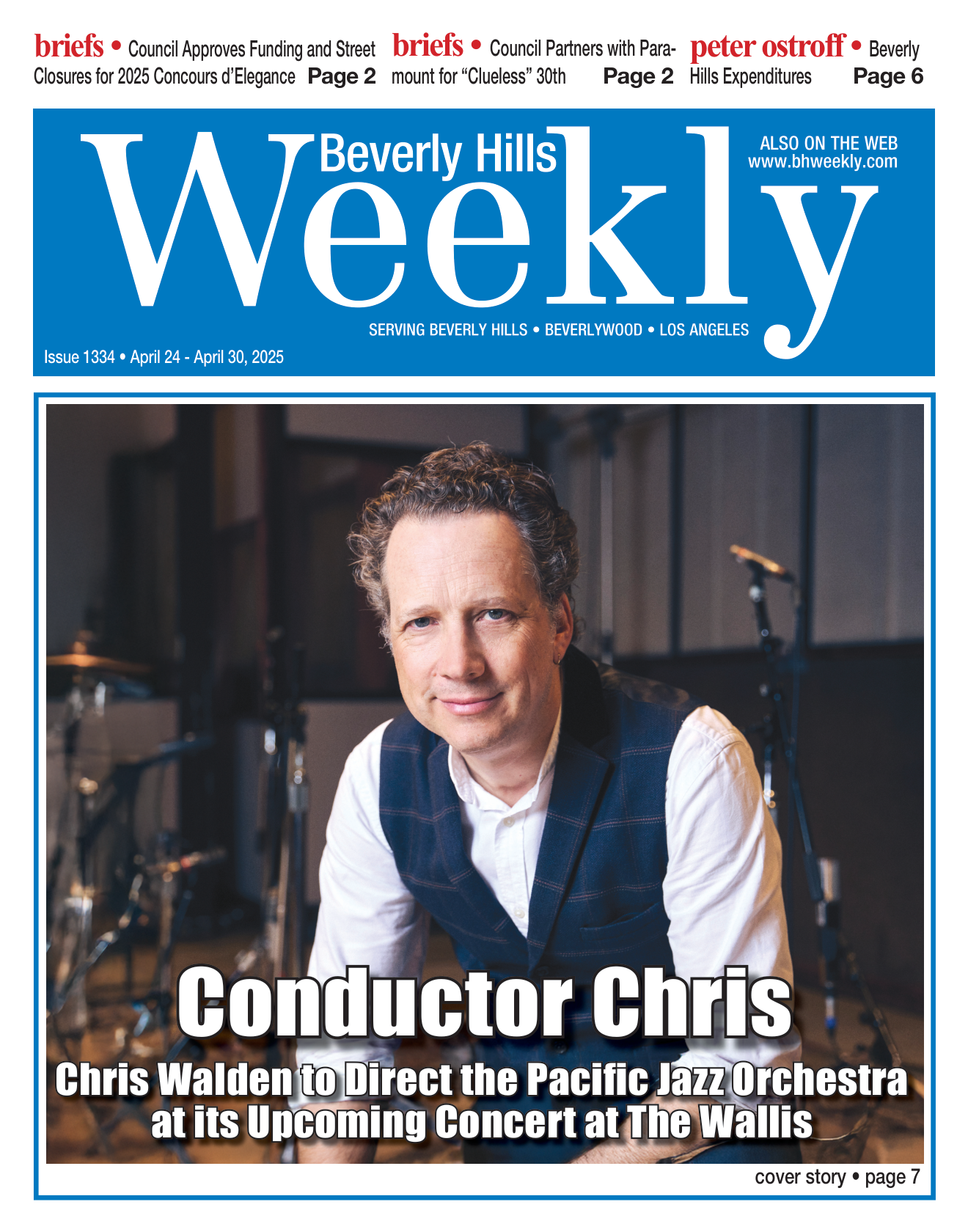
Beverly Hills is facing a significant financial challenge, with projected expenditures set to exceed revenues, leading to anticipated deficits starting in the 2026-27 fiscal year. To address this issue, there is a call for an independent committee to explore expenditure cuts and ensure the city's long-term financial health, rather than relying solely on increasing taxes or revenues.
OneBH Wants Financing – Should It Come From Us?
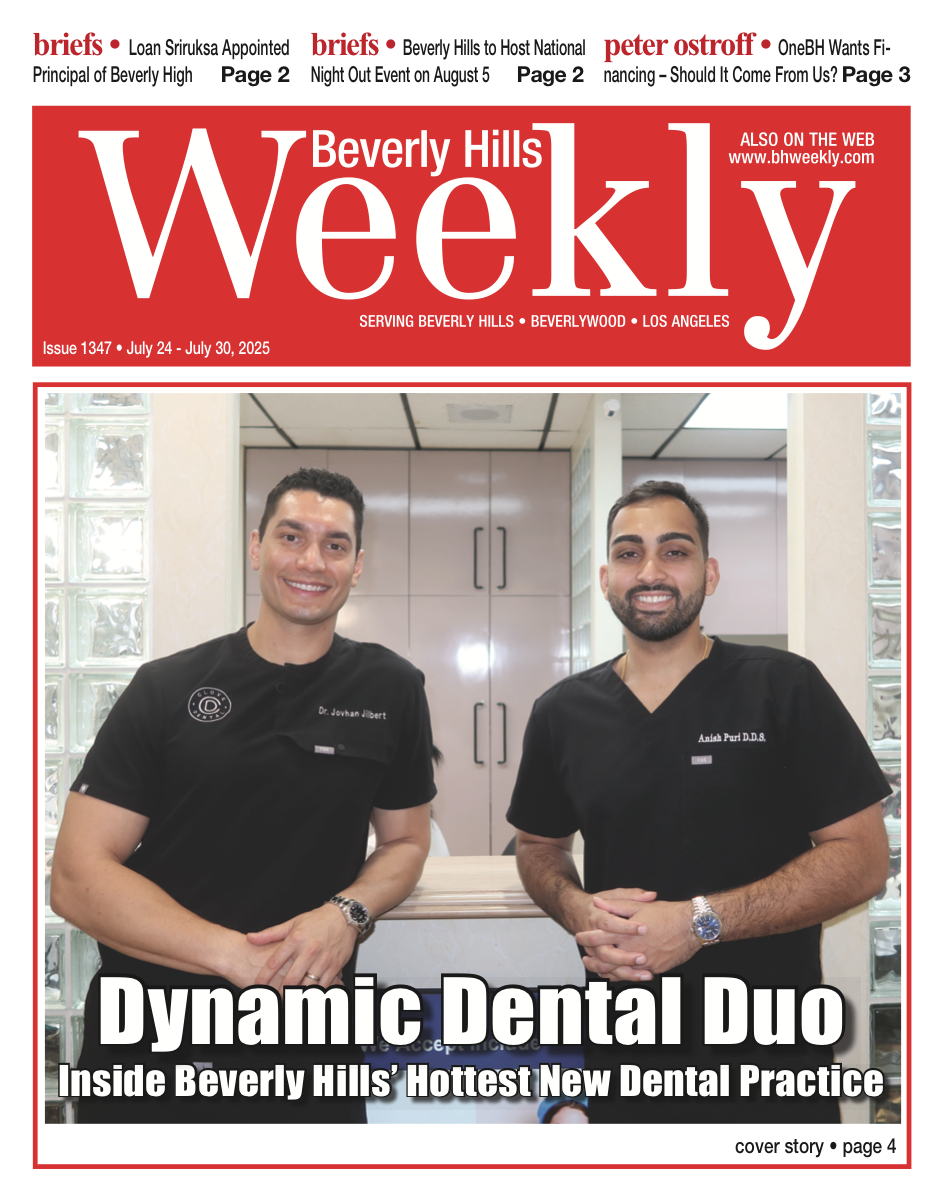
The City Council is considering a proposal to issue up to $550 million in bonds to help finance the One Beverly Hills project, which has raised concerns about the lack of public discussion regarding the potential risks and benefits to the city. Critics argue that the council has not adequately addressed why the city should support the financing for a private developer and whether the proposed $10 million compensation is sufficient given the significant financial implications involved.

OBH Closing Argument
In a letter to the Beverly Hills City Council, Peter Ostroff expresses strong opposition to the One Beverly Hills developer's request for $550 million in tax-exempt bonds, arguing that it represents a "bait and switch" tactic that poses significant financial risks to the city and its residents. He emphasizes the need for thorough analysis and public accountability before proceeding with such a substantial financial commitment, highlighting widespread resident outrage and concerns about potential liabilities.