Peter Ostroff
A Voice for Beverly Hills — Past, Present, and Future
OneBH Wants Financing – Should It Come From Us?
The City Council is considering a proposal to issue up to $550 million in bonds to help finance the One Beverly Hills project, which has raised concerns about the lack of public discussion regarding the potential risks and benefits to the city. Critics argue that the council has not adequately addressed why the city should support the financing for a private developer and whether the proposed $10 million compensation is sufficient given the significant financial implications involved.
OneBH Wants Financing – Should It Come From Us?
The City is now being asked to help Oasis BH, LLC, the owner and developer of the One Beverly Hills project at 9900 Wilshire Blvd. (OBH) reduce the cost of financing this very ambitious proposed development.
The City Council will decide at its meeting on August 19, whether to help OBH by issuing bonds in an amount not to exceed $550M (more than twice the City’s annual operating budget) that will be used to fill a gap between the amount of financing that OBH has and the amount that it now contends that it needs.
The proceeds from the sale of City issued bonds will be used to construct the infrastructure for the project. Notably, OBH is already unconditionally obligated to complete the infrastructure at no cost to the City. In return, OBH has claimed that the City will not be liable for the repayment of the bonded indebtedness, have zero risk in issuing the bonds and “agreed in principle” (but not yet in writing) to pay the City $10M apparently out of the bond proceeds.
One focus at this point is on the process – the City Council’s approach to making a decision on this request. In short, the Council has, almost to the exclusion of all else, discussed whether the bond issuance will involve any risk to the City. What has been missing from the discussion in open public sessions is more important than what has been discussed.
I am concerned that the Council has already decided to do the bidding of OBH even though there has been little public discussion. It is important to understand that OBH and City staff have been negotiating over this since last fall. The very first time that it was disclosed publicly was at a study session in late May, 2025 followed by the discussion that I happened to attend on July 15. This train is barrelling down the track and it will be difficult, if not impossible, to stop. Mayor Nazarian and councilmembers Friedman and Wells voted that this be placed on the August 19 Council agenda for final approval. Vice Mayor Mirisch voted “no” and councilmember Corman recused himself.
Specifically, the following preliminary questions have not been publicly addressed, let alone been answered:
Why should the City do this? How does the City, in contrast to the Developer, benefit from an enormous bond offering?
What is fair compensation to the City, assuming that the City agrees to issue the requested bonds? What is the true value to OBH of this type of financing which will likely be much less expensive than its other indebtedness? And based on that, among other considerations, what compensation should be paid to the City?
While this type of infrastructure financing may be typically available to developers of subdivisions and golf courses, the last time the City agreed to do something of this nature but at a much lower level was more than 20 years ago. At that time, the City issued two series of bonds, $13.7M of tax exempt bonds such as what are proposed now and $19.9M taxable bonds, a total of less than $34M. for the construction of a parking structure on Rodeo Drive. Importantly, the $34M of bonds were for a City project, not $550M for a private developer.
The false suggested equivalence between a $34M bond offering for a City owned parking structure and $550M facility for a private developer with very substantial resources which is building condominiums, a shopping mall and a hotel is, at best, disingenuous. The notion expressed at the July Council meeting that we have done “this” before betrays that our City leaders have already decided to go ahead without any public discussion of whether the City should do this or whether the City is being fairly compensated for this extraordinary and potentially risky accommodation.
Assuming that we conclude that issuance of these bonds and compensation amount is adequate, what do independent experts advise regarding whether there is any risk to the City?
Here is background relevant to those questions.
***
In June 2021, the Council approved the OBH Specific Plan and Development Agreement for development of the property, a multi-acre site adjacent to the Beverly Hilton and Waldorf Hotels. The development included a commitment by OBH to build two condominium towers, a hotel, a conference center, commercial space, open space and gardens and all related infrastructure. There was no mention of the need for or desirability of use of City issued bonds for financing.
Then, in late 2024, OBH requested for the first time that the City sell bonds that can be used to pay for the construction of some or all of the infrastructure that OBH has committed to provide to support the condominiums, hotel, and retail space now under construction.
The current “ask” is for bonds in an amount Not to Exceed $550M, which has increased without explanation in less than two months from an amount of Not to Exceed approximately $350M discussed at a Council Study Session in May, 2025. OBH says that the full $550M may not be needed; but we must assume that it will be.
Our residents are entitled to know why we should do this. It may be a good thing to do but at least the rationale should be discussed.
To date, there has been no such public discussion.
I asked Larry Green, the Managing Director of Cain International which is overseeing the development, why the City should agree to the issuance of the bonds. He said that the bonds would facilitate the completion of the project, which could be said to any lender. He also said that it would lower the costs of capital which would lower “everyone’s” costs. Certainly, a lower cost of capital would be good for the developer and, possibly, purchasers of the condominiums and other interests. I do not see any benefit for the City. On the contrary, to be crass, the higher price that a condominium purchaser pays, the more property tax the City will receive.
The Council should address directly, What is the benefit to the City?
Regarding the proposed $10M payment to the City, Mr. Green properly corrected my incorrect reporting in last week’s Weekly that the $10M would be used in part to reimburse the City’s administrative costs. He pointed out that OBH has committed that all of the administrative costs would be reimbursed by the developer and that the $10M was a payment over and above any costs. He’s right – my bad. I note, however, that the City must administer the bonds and ensure that bondholders are repaid over the thirty year or so life of the bonds so it is important that the developer’s reimbursement obligations be fulfilled.
When I asked Mr. Green whether $10M was adequate compensation to the City, he did quantify the benefit to the developer from the issuance of the City bonds which involve a lower interest rate than other types of financing. Specifically, he said that the developer’s savings due to these bonds would be approximately 5% per annum in interest (i.e., he said that the interest on the City issued tax exempt bonds would be 5 to 10% per year as contrasted with other financing which would be at a rate of 10 to 15%).
Putting that into $ terms, 5% on the $550M would result in an interest cost difference of $27.5M per year. Over five years, the difference would result in a savings to the developer of $137.5M. If you assume that the bond debt would be limited to $275M, the savings to the developer over five years would be “only” $68,75M. Under these circumstances, is $10M adequate compensation to the City?
The Council should discuss publicly whether $10M is adequate compensation for issuing bonds in an amount that could be twice the City’s operating budget.
Finally, we must examine critically the developer’s mantra that there is “no risk to the City.” When someone tells me that I can enter into a sizeable transaction that is entirely without risk to me, I am skeptical.
Assuming that there are satisfactory answers to the “why” and “fair compensation” questions, we need expert risk analysis and assurance including thorough indemnification from OBH supported by adequate security and guarantees from OBH’s owners and affiliates.
I discussed the subject of risk with City Treasurer Howard Fisher (who, surprisingly to me, was not consulted about this).
Treasurer Fisher, a lawyer and certified tax specialist, said:
“This is a great project and this might be an appropriate way to help but there are risks.
“While we may not be directly on the hook for repayment of the bonds, there are nonetheless substantial risks that I see including reputational risk, risk to our credit rating and exposure to bondholder litigation that may not be meritorious but could be very expensive. The City may have insurance that would provide a defense but even so, such an exercise could affect our premiums going forward.”
Now, I don’t know which of our City Treasurer’s reservations or the Developer’s “no risk” mantra is correct. But I do see a pathway to a resolution:
The City can demand that the developer support its assertion that there is no risk by providing, at its expense, a legal opinion from a jointly approved Am Law 50 law firm (the largest and most financially solvent law firms in the world) that tells the City, in writing, that there is “no risk” or, at least, quantifying the risk. Then and only then will we be able to assess whether there is a risk and, if so, what it is.
Short of that, the Developer’s assurances of “no risk” are just talk.
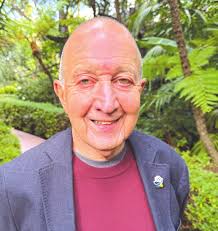
Peter Ostroff is a long-time Beverly Hills resident of over 50 years who retired in 2017 after a 50-year career as a trial lawyer. He was born in Washington, D.C. in 1942. He graduated from Washington University (St. Louis, Mo) in 1964 with a B.A. degree in political science and economics. He graduated from the University of Chicago Law School in 1967 with a J.D. degree. He taught law at Monash University Law School in Melbourne, Australia in 1968. He became a member of the Illinois Bar in 1967 and the California Bar in 1969, He clerked for Hon. Shirley M. Hufstedler of the United States Court of Appeal 1969-70, practiced law with Nossaman, Waters, Scott, Krueger & Riordan and successor firms from 1970 to 1980 and with Sidley Austin from 1980 until 2017. During his full time law practice years he was a Committee Chair and Member of the Council of the American Bar Association, Litigation Section and was President of the Association of Business Trial Lawyers. Since 2018, he has served on the Beverly Hills Planning Commission. In addition to his work on the Commission, Peter has chaired the BHUSD 7-11 Surplus Property Committee and contributed to planning efforts for the District Offices site on S. Lasky Drive and future uses of the Hawthorne School property. He also served as Co-Chair of the Citizens Advisory Committee for the City's Climate Adaptation and Action Plan. He has been married to Anne Y. Ostroff since 2002, has two children, Nick Ostroff and Natalie Anne Cookson and has two grandchildren, Elliott Cookson and Emma Anne Cookson. Some family information is collected under Family Tree in this website. Since April 2024, he has written a weekly column for the Beverly Hills Weekly The columns are collected in this website.
petero@ostroff.laMore from the Archive
OBH Closing Argument
In a letter to the Beverly Hills City Council, Peter Ostroff expresses strong opposition to the One Beverly Hills developer's request for $550 million in tax-exempt bonds, arguing that it represents a "bait and switch" tactic that poses significant financial risks to the city and its residents. He emphasizes the need for thorough analysis and public accountability before proceeding with such a substantial financial commitment, highlighting widespread resident outrage and concerns about potential liabilities.
Should We End Public Hearings?
The article discusses the proposal to eliminate public hearings for fourteen large residential projects in Beverly Hills, allowing developers to expedite approvals by scaling back their projects to comply with specific height and density limits. While city planners hope this will reduce the scale of the developments, the author argues that public input is crucial for understanding the potential impacts on neighborhoods and urges the City Council to reject the recommendation for ministerial review.
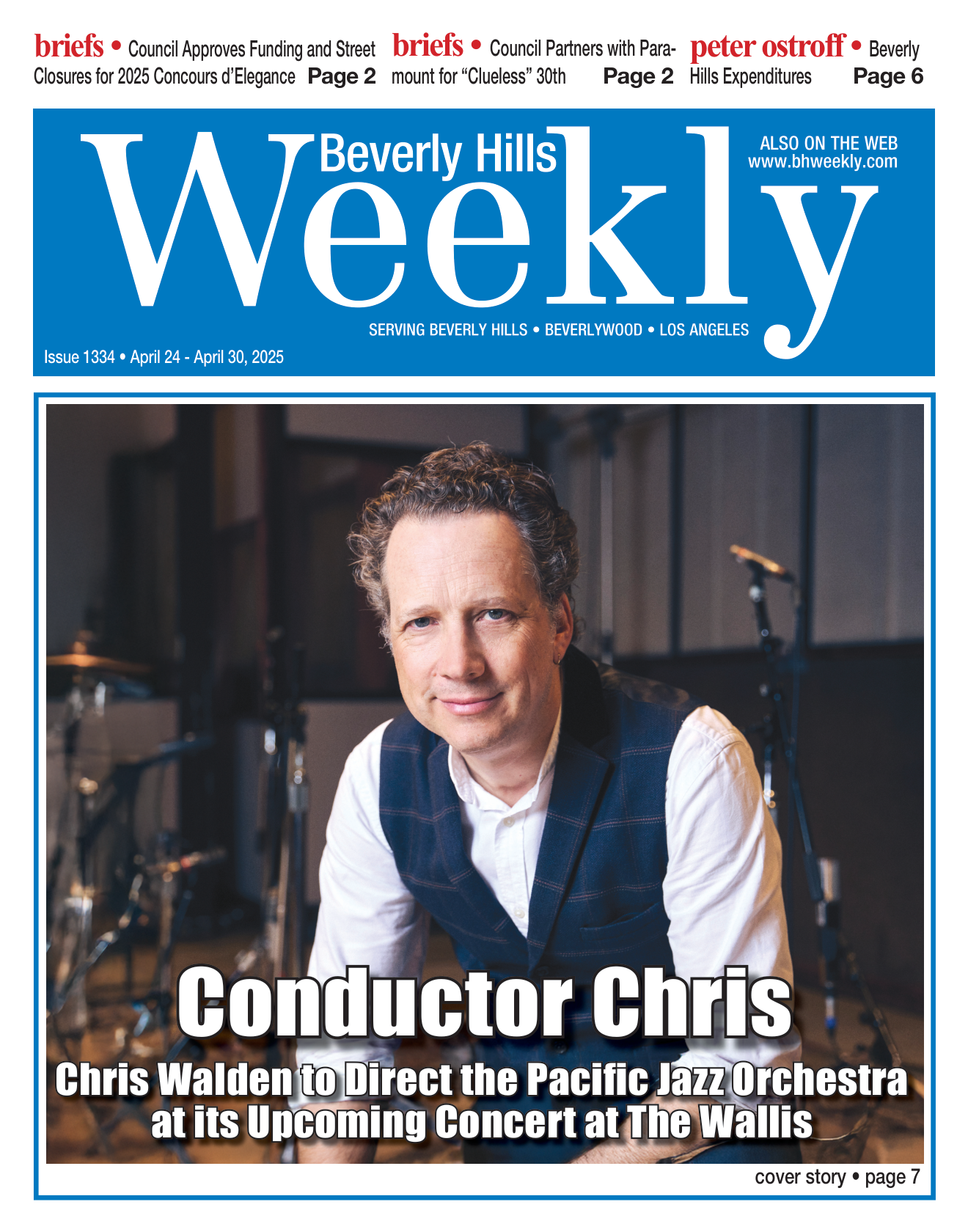
Beverly Hills Expenditures
Beverly Hills is facing a significant financial challenge, with projected expenditures set to exceed revenues, leading to anticipated deficits starting in the 2026-27 fiscal year. To address this issue, there is a call for an independent committee to explore expenditure cuts and ensure the city's long-term financial health, rather than relying solely on increasing taxes or revenues.