Peter Ostroff
A Voice for Beverly Hills — Past, Present, and Future
Transit to the Subway – ONLY
The open letter to the City Council urges the use of restricted Prop A funds for a security building at the Wilshire/LaCienega subway station and calls for a scaled-back microtransit pilot project focused solely on connecting residents to subway stations. It emphasizes the need for accountability by appointing a specific individual to oversee the microtransit initiative, rather than relying on a committee or department, to improve the city's dealings with Metro and ensure efficient public transit access.

This is an open letter to the City Council addressing an item that I anticipate will be on the agenda for the study session on July 21 – a “MicroTransit Pilot Project”.
I respectfully request that you take the following action:
1) Use the restricted Prop A funds to pay for the station plaza security building;
2) Create a much more modest and sensible microtransit pilot project that will be limited to taking people to and from locations in the City to and from the Metro Subway stations in the City; and
3) Put someone – a named individual City employee, not a department head, not generic “staff”, who will be responsible and accountable, in charge; and report regularly to the Council.
This proposal is made in the following context.
The Station Plaza Security Building
The City has available funds restricted exclusively for public transit use created through a county wide permanent half-cent sales tax. [Prop A funds.] Currently, the City has available more than $3 million in Prop A funds.
The City has committed to Metro to fund the entire cost of a security building on the Plaza of the Wilshire/LaCienega subway station. Although initial estimates for the cost were approximately $500,000, the City did not negotiate a cap on its obligation and the costs are currently estimated at $3 million. (In exchange for paying the cost of construction, the City has only the right to use the building for five years.)
I note that the temporary security building immediately to the east of the Plaza is working well and would be sufficient for security purposes. Unfortunately, it appears that we are committed to spending whatever Metro claims the plaza building costs so this option is not available to us.
The staff report recommending an elaborate but largely unneeded microtransit project does not disclose that Prop A funds could be used for construction of the security building (or even mention the security building for that matter), I am informed that construction costs of this building are a permissible use of Prop A funds.
Important Note: This matter was on the June 23 Study Session Agenda and I am referencing the staff report prepared for that occasion. I was told that the staff report would not change for the upcoming meeting. It is of course possible that a staff member may change that report after reading this column or for other reasons. However, the point remains the same: Prop A funds should be used for the security station and we should go back to the drawing boards for a scaled down microtransit system that does no more than serve the subway stations.
Given where we are, we’d best use these funds first to discharge our obligation to pay for the security building. And note that we really have no control over what the ultimate cost will be (those are already 6x what we thought and the final tab could be higher) and we should try to protect the general fund.
The MicroTransit Pilot Project
Given that Metro has invested Billions of dollars to bring us a subway, which offers a dramatic improvement in travel times to LACMA/DTLA and other points east, reasonable measures to encourage our residents to use it are long overdue. But that is all that is necessary or desirable.
For at least five years, the City has talked about providing imprecisely named “first mile/last mile” service to facilitate access to and from the subway station.
The background provided in the staff report is more notable for what it does not say than for what it does say. In short, there have been several ill-conceived (but expensive given the cost of outside consultants and staff time that no one keeps track of) proposals that have been expressly rejected or quietly dumped.
Virtually nothing was done for two or three years – nothing.
The current proposal was the result of a Request for Proposals issued in November 2024. This RFP was transmitted with no prior public discussion and contemplated commencement of service in the summer of 2025 in advance of the opening of the Wilshire/LaCienega station. Responses from proposed vendors to supply this service were received in January 2025 and nothing was done for more than a year before it was presented to Council.
Here we are after several years and we have a proposal that makes no sense and is very expensive. The main problem with the current proposal is that it is not limited to taking people to and from the Metro station(s). It should be.
Nothing more is needed and extension beyond that would distract from and make transportation to the stations less readily available. And it would cost much more than need be the case.
Staff proposes that Prop A funds be used for this. The staff presentation suggests that since funds are not coming from the general fund that cost is no object. It ignores the fact that we have a looming $3Million+ obligation for the security building that is eligible for use of those funds.
The goal of microtransit and its implementation in the City should be limited to fostering the use of the subway by helping people get to and from the subway from their homes or businesses.
Responsibility and Accountability
One individual City employee – not the Council as a whole or the City Manager, not a department, not a department head, not generic “staff” – one named individual – should be responsible for making useful microtransit happen and that future dealings with Metro are productive.
In short, we need an individual who will be our “Metro Czar” who will be responsible and report regularly to Council.
Why? Because the City’s dealings by committee with Metro have been a case study in bungling. When a committee (and Council is a committee) or department (and the Department of Public Works is always a case study in opaqueness) is in charge, no one is in charge.
Examples:
The City wanted a “portal” or entrance to the Beverly Drive station on the north side of Wilshire (the “North Portal”). The City agreed to share Metro’s claimed cost of construction 50/50 with Metro but neglected to negotiate a cap on our share. When the projected costs escalated to nearly three times what the City anticipated, the idea of a North Portal was abandoned – after the City had spent at least $1.5 million on the North Portal design.
The City agreed to pay Metro’s claimed cost of construction of the security building on theWilshire/ La Cienega station plaza that was to open when subway service began on May 8. Once again, the City did not negotiate a cap on these costs. Initially, they were estimated to be approximately $500K. Now, they are projected to be $3 million but who knows what they will really be or when it will really open. Had the actual cost been known, we may have continued to use the security space behind the Plaza’s eastern wall at nominal cost. We no longer have that option.
The City has known the Metro was coming for at least a decade and has been fumbling around with ideas for so-called “first mile/last mile” access for at least five years. Expensive consultants have been retained and countless (but uncounted) hours of staff time have been expended. Nothing sensible has come of this and the current proposal is no exception.
I challenge you to find any individual who will take responsibility for any one of these bungles.
I respectfully suggest that if one person is assigned responsibility, there is a chance, not a guarantee, that the results of our dealings with Metro will improve and provision of efficient access to and from the subway stations will happen.
***
Here’s a note from last Saturday’s Wall Street Journal for those of us who, from time to time, forget how fortunate we are:
In 2022, when the NYC Metropolitan Transit Agency which runs the City’s subways opened applications for jobs cleaning subway cars and platforms, more than 75,000 people applied for jobs paying $20.89/hour.
***
Greg Barton, the beloved Chief of the BHFD, has announced that he is retiring later this fall once a replacement has been named. (See page 3). I have never heard a word of criticism about the Chief and he will be greatly missed. I will write more about him once I can get on his schedule for a chat and one of his favorite Australian meat pies.
People Mentioned
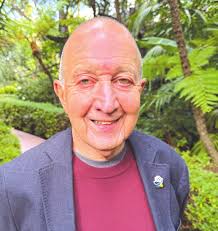
Peter Ostroff is a long-time Beverly Hills resident of over 50 years who retired in 2017 after a 50-year career as a trial lawyer. He was born in Washington, D.C. in 1942. He graduated from Washington University (St. Louis, Mo) in 1964 with a B.A. degree in political science and economics. He graduated from the University of Chicago Law School in 1967 with a J.D. degree. He taught law at Monash University Law School in Melbourne, Australia in 1968. He became a member of the Illinois Bar in 1967 and the California Bar in 1969, He clerked for Hon. Shirley M. Hufstedler of the United States Court of Appeal 1969-70, practiced law with Nossaman, Waters, Scott, Krueger & Riordan and successor firms from 1970 to 1980 and with Sidley Austin from 1980 until 2017. During his full time law practice years he was a Committee Chair and Member of the Council of the American Bar Association, Litigation Section and was President of the Association of Business Trial Lawyers. Since 2018, he has served on the Beverly Hills Planning Commission. In addition to his work on the Commission, Peter has chaired the BHUSD 7-11 Surplus Property Committee and contributed to planning efforts for the District Offices site on S. Lasky Drive and future uses of the Hawthorne School property. He also served as Co-Chair of the Citizens Advisory Committee for the City's Climate Adaptation and Action Plan. He has been married to Anne Y. Ostroff since 2002, has two children, Nick Ostroff and Natalie Anne Cookson and has two grandchildren, Elliott Cookson and Emma Anne Cookson. Some family information is collected under Family Tree in this website. Since April 2024, he has written a weekly column for the Beverly Hills Weekly The columns are collected in this website.
petero@ostroff.laMore from the Archive
Meet the Chief
The article features an interview with Max Subin, the newly appointed Chief of the Beverly Hills Police Department, highlighting his extensive career within the department and his commitment to community relations and technological advancements in policing. Additionally, it discusses the Beverly Hills City Council's mixed response to a proposed MicroTransit system for access to Metro subway stations, ultimately rejecting it due to its impracticality and high cost.
Election Update/Metro to LACMA
The article discusses the ongoing Beverly City Council election results, where incumbents Sharona Nazarian and Lester Friedman are likely to be re-elected, while the third seat remains contested between Rebecca Pynoos and Andy Licht, with final results pending. Additionally, it highlights a positive experience using the new Metro system to visit the David Geffen Galleries at LACMA, while also addressing security concerns related to fare evasion on the subway.
The Sensational South/Metro/Mr. Kole
The article discusses a town hall meeting focused on zoning issues and proposed multifamily residential projects in Beverly Hills, highlighting community efforts to advocate for residents' interests in the "Sensational South." It also addresses the upcoming subway service and security concerns, while emphasizing the need for better transportation solutions and facilities to encourage local residents to utilize the new transit system.