Peter Ostroff
A Voice for Beverly Hills — Past, Present, and Future
Meet the Chief
The article features an interview with Max Subin, the newly appointed Chief of the Beverly Hills Police Department, highlighting his extensive career within the department and his commitment to community relations and technological advancements in policing. Additionally, it discusses the Beverly Hills City Council's mixed response to a proposed MicroTransit system for access to Metro subway stations, ultimately rejecting it due to its impracticality and high cost.
I had the great pleasure recently of sitting down with the new Chief of BHPD, Max Subin, to discuss his three decade journey to this position. And what a journey it has been for this local guy who is the first Chief appointed from the ranks of BHPD in over forty years.
So, let’s start at the beginning.
Chief Subin’s parents grew up in New York and met at Woodstock, the most famous music festival in American history. Its full name was the Woodstock Music & Art Fair, and occurred from August 15 through 18, 1969, on dairy farmer Max Yasgur’s farm in Bethel, New York. It was attended by nearly 500,000 people, far more than had been anticipated or could comfortably be accommodated. Performers included The Who, Janis Joplin, Jefferson Airplane, The Grateful Dead and Jimi Hendrix, whose singing of our national anthem was one of the greatest performances in rock history. I remember all of these but I don’t expect you to. Suffice it to say that this was a momentous event. And somehow, Chief Subin’s parents found each other there.
Not long after Woodstock they drove across the country and moved to Venice Beach. Chief Subin has lived in that vicinity his entire life.
His course, as these things happen, was set from a casual conversation with one of his friends while he was attending Santa Monica High School. After class, his friend was changing into something that looked like a police uniform. He explained that he was in a Santa Monica PD “Explorer” program for high school students who wanted to learn about police work. It sounded good to young Max so he signed up and that was the start.
He then attended California State University at Northridge where he received an undergraduate degree and then a Masters in Public Administration. This training explains why he is such a good communicator. All through his days at CSUN he worked as a Police Cadet with SMPD. Unlike the Explorer program, as a Cadet, he points out, he was paid. I plan to cover the Explorer and Cadet programs in a future column.
He then started the application process for a job with a police department. During this period, he worked as a parking lot attendant at Gladstone’s at the Beach. He described that as a “fantastic” job. (I did not probe further into the details.)
Among the police departments that he applied to were SMPD and BHPD. Of the two, he much preferred SMPD because that’s where his friends from the Explorer and Cadet programs worked and, in his view, there was much more “action” there than in Beverly Hills. However, he was advised to take the job with the department that called him first. Fortunately for us, it was BHPD. He was 23 years old and after only a few weeks on the job, he came to appreciate the unique relationship between BH residents and BHPD and has never looked back.
Since joining the Department, the Chief has done everything and come full circle. He showed me a photo of his swearing in by then Chief Iannone in the same office that he now occupies as Chief. The office looks the same and our youthful new Chief hasn’t changed much.
In 1999, he started as a patrol officer after training at the Police Academy. He moved from that to the plain clothes “Crime Suppression Unit”, now called the “Crime Impact Team”. He then moved to the Detective Bureau and was then promoted to Sergeant and was a supervisor of patrol officers. He then came “inside” where he was with the Professional Standards group and was the Public Information Officer using those communication skills. He was promoted to Detective Sergeant and Lieutenant.
In 2021, the Chief was promoted to Captain. That was a particularly trying time as there were protests in the City for 32 consecutive weeks starting in 2020.
In his view, his appointment as Chief from within is very important for several reasons: it gives more advancement hope to young officers, we have a Chief who knows the community and has great institutional knowledge about the Department and can directly apply lessons learned, for example, using experience in dealing with the opening of the Wilshire/La Cienega Metro station in preparation for the opening of the Beverly/Wilshire Metro station.
He takes pride in the Department’s uniquely extensive use of technology including 3500 cameras around the City, strategically located license plate readers, drones and advanced labs to analyze DNA. And this technology will only get better. He points out the full staffed Real Time Watch Center and the new Dispatch Center. The Dispatch Center handles over 31,000 911 calls per year and an astonishing (to me at least) 156,000 non-emergency calls per year. Think about it – nearly 200,000 calls per year; that’s nearly 570 calls per day or more than one every two minutes.
Finally, I asked him to tell me his wish list. His response:
1) Fifteen new well-qualified officers;
2) For crime to go down; and
3) Better technology as it develops.
Chief Subin is off to a very good start and my impression is that he has the qualifications and qualities that will make him an outstanding Chief.
God speed, Chief.
***
At its study session on Tuesday August 4, the Council delivered a mixed but inevitable message of bad news and good news regarding the so-called MicroTransit to and from the two Metro Subway stations.
The bad news is that we won’t have a City provided badly needed way for easy access to and from the Metro subway any time soon.
The good news is that we will not have the nonsensical and expensive system that was one more in a line of similarly ill-conceived proposals from the City’s Department of Public Works.
This proposal involved a combination of the City’s current free dial a ride program for seniors and others who need transport to/from medical appointments with a subsidized on call (sort of) system which would take someone from their home in the hills to an ice cream shop. An estimated only 20-30% of the rides would actually take someone to or from the Metro stations. This would cost a bit over $1.5M/year and take restricted funds away from necessary improvements to the stations such as the security facility at Wilshire/La Cienega station and, possibly, other needed improvements at the Beverly/Wilshire station.
This proposal was clearly a Non Starter for any objective observer to see.
The five Council Members were far more polite and measured in their rejection of this proposal than I would have been. But their message was clear:
You have had nearly a decade to come up with a way for people to get to and from two Metro stations that offer no parking and are miles from the homes of many residents.
Now the La Cienega station has been open for several months and we have nothing.
Go back to the drawing boards and come up with a proposal that serves the Metro stations and nothing more and that is affordable and sustainable.
And please at least try to give us something that makes sense by the time that the Beverly/Wilshire station opens.
I will be watching hopefully but not optimistically.
People Mentioned
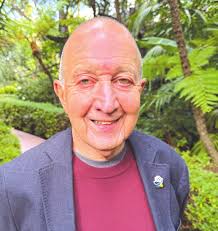
Peter Ostroff is a long-time Beverly Hills resident of over 50 years who retired in 2017 after a 50-year career as a trial lawyer. He was born in Washington, D.C. in 1942. He graduated from Washington University (St. Louis, Mo) in 1964 with a B.A. degree in political science and economics. He graduated from the University of Chicago Law School in 1967 with a J.D. degree. He taught law at Monash University Law School in Melbourne, Australia in 1968. He became a member of the Illinois Bar in 1967 and the California Bar in 1969, He clerked for Hon. Shirley M. Hufstedler of the United States Court of Appeal 1969-70, practiced law with Nossaman, Waters, Scott, Krueger & Riordan and successor firms from 1970 to 1980 and with Sidley Austin from 1980 until 2017. During his full time law practice years he was a Committee Chair and Member of the Council of the American Bar Association, Litigation Section and was President of the Association of Business Trial Lawyers. Since 2018, he has served on the Beverly Hills Planning Commission. In addition to his work on the Commission, Peter has chaired the BHUSD 7-11 Surplus Property Committee and contributed to planning efforts for the District Offices site on S. Lasky Drive and future uses of the Hawthorne School property. He also served as Co-Chair of the Citizens Advisory Committee for the City's Climate Adaptation and Action Plan. He has been married to Anne Y. Ostroff since 2002, has two children, Nick Ostroff and Natalie Anne Cookson and has two grandchildren, Elliott Cookson and Emma Anne Cookson. Some family information is collected under Family Tree in this website. Since April 2024, he has written a weekly column for the Beverly Hills Weekly The columns are collected in this website.
petero@ostroff.laMore from the Archive

Transit to the Subway – ONLY
The open letter to the City Council urges the use of restricted Prop A funds for a security building at the Wilshire/LaCienega subway station and calls for a scaled-back microtransit pilot project focused solely on connecting residents to subway stations. It emphasizes the need for accountability by appointing a specific individual to oversee the microtransit initiative, rather than relying on a committee or department, to improve the city's dealings with Metro and ensure efficient public transit access.
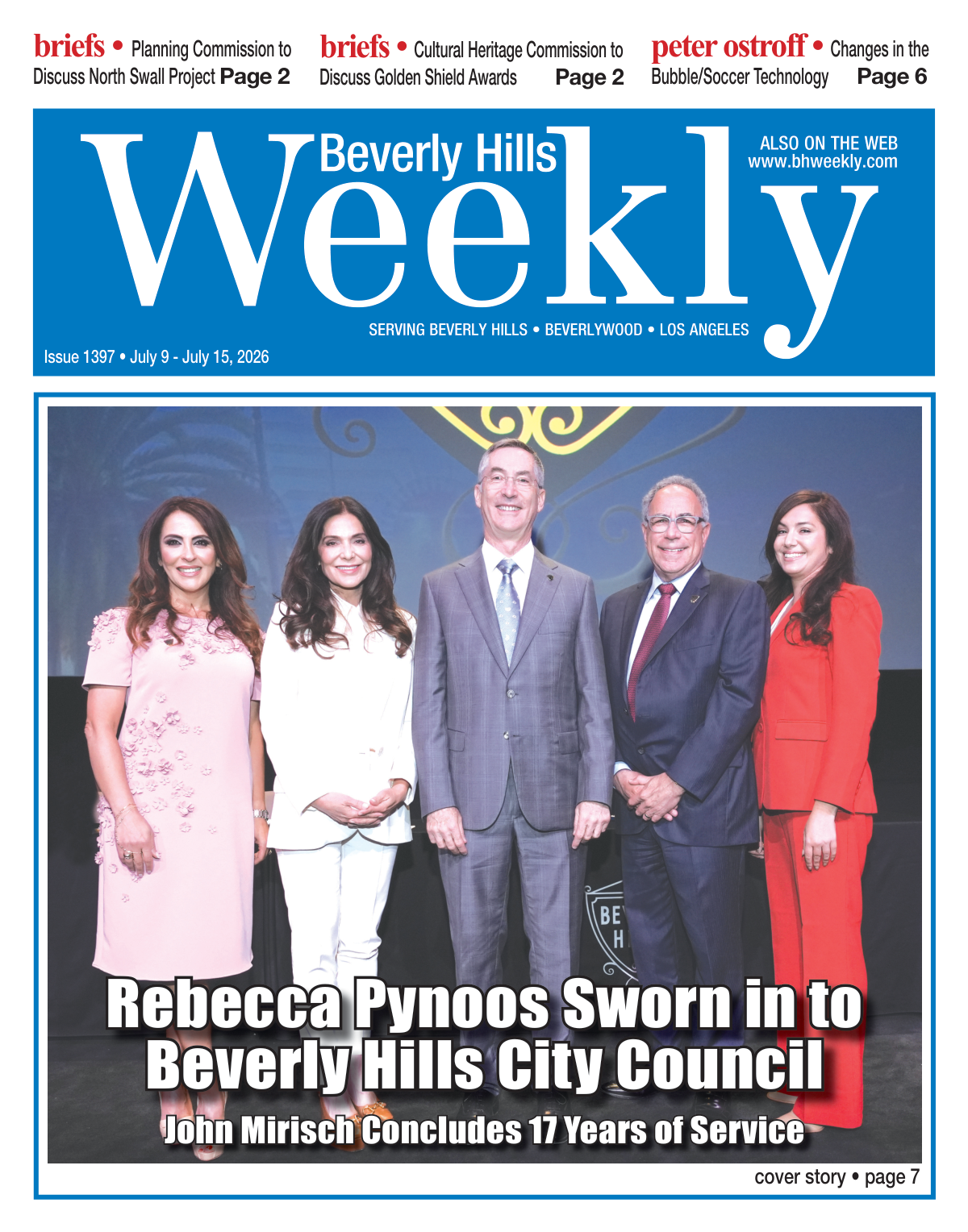
Changes in the Bubble/Soccer Technology
Peter reflects on Beverly Hills leadership transitions, including Ryan Gohlich as City Manager, Captain Max Subin as Police Chief, and Rebecca Pynoos joining the City Council after John Mirisch’s service. He also critiques FIFA’s connected-ball offside technology and corrects a prior note about the Millennium Project’s ministerial approval path under AB 2011.
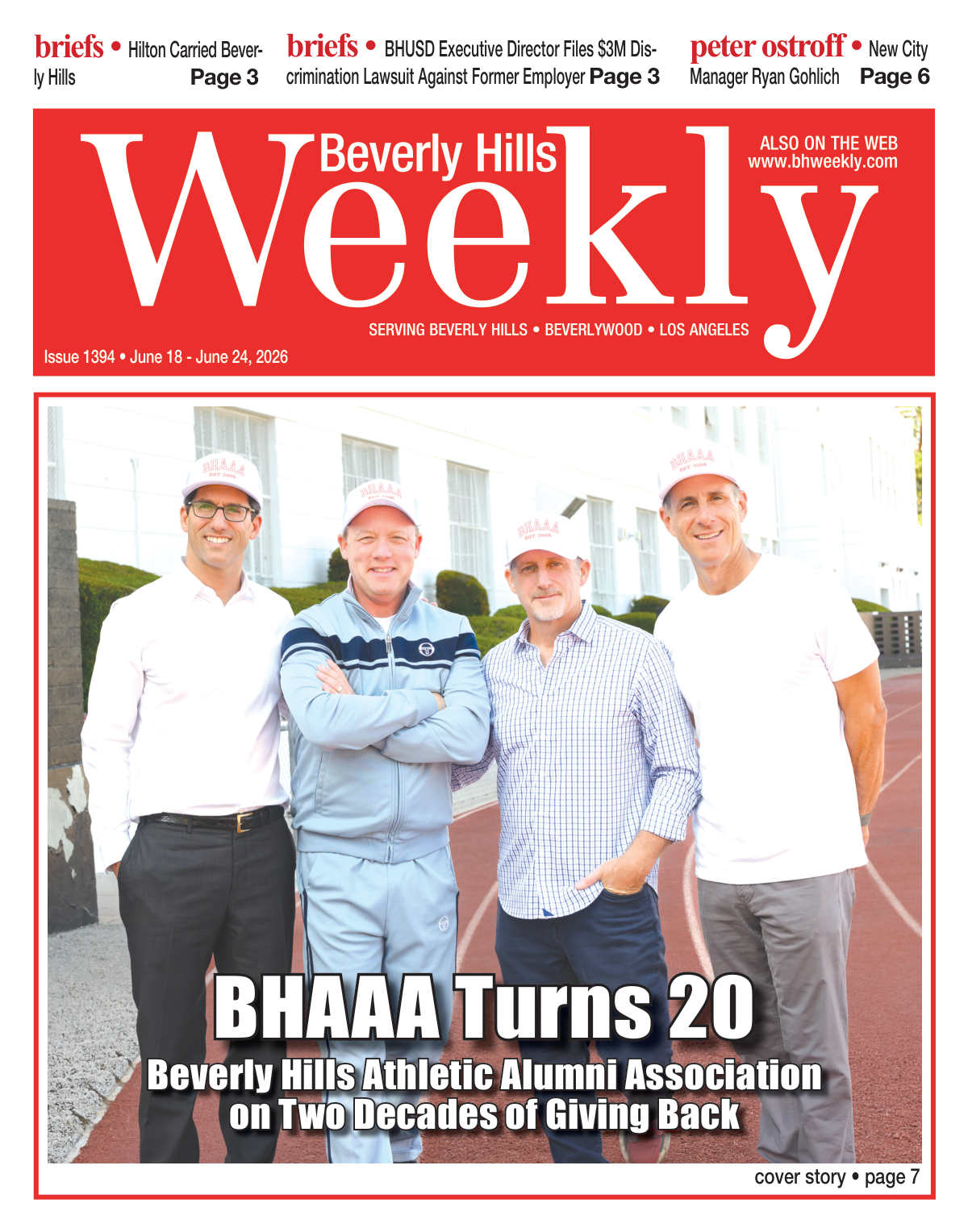
New City Manager Ryan Gohlich
Ryan Gohlich, who takes office as City Manager on July 1, has an extensive background in city planning and development, making him a strong candidate for the role amid challenging housing allocation issues. As he prepares to lead, he emphasizes the importance of effective management of city services and public safety, while also acknowledging the complexities of hiring additional police officers and the need for transparency regarding the city's staffing levels.