Peter Ostroff
A Voice for Beverly Hills — Past, Present, and Future
Election Update/Metro to LACMA
The article discusses the ongoing Beverly City Council election results, where incumbents Sharona Nazarian and Lester Friedman are likely to be re-elected, while the third seat remains contested between Rebecca Pynoos and Andy Licht, with final results pending. Additionally, it highlights a positive experience using the new Metro system to visit the David Geffen Galleries at LACMA, while also addressing security concerns related to fare evasion on the subway.
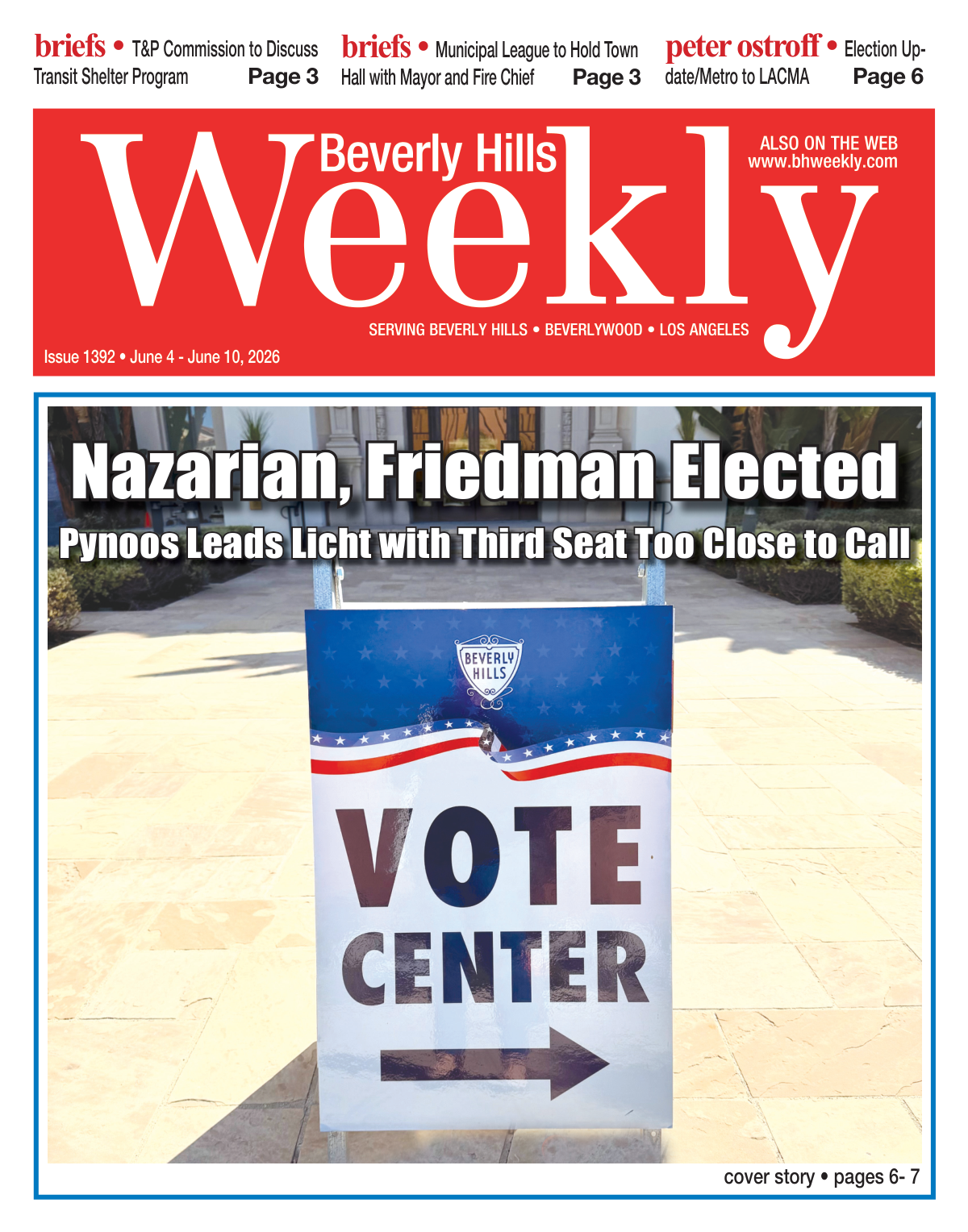
After an unusually intense campaign for three open Beverly City Council seats, the initial results are in. Approximately twothirds of the total ballots have been counted. Under California law, mailed votes postmarked on election day, June 2 in this case, will be counted if received no later than a week after election day. So, results, particularly in close races could change. Notably, in the last few Beverly Hills City Council elections, neither the leaders or the order of the leaders has changed after election night. However the election turns out, we will likely have one new member of the City Council. On June 1, I went through the City Budget for the July 1 2026 - June 30, 2027 fiscal year. One of many takeaways is an appreciation of how complicated management of our City really is. Fortunately, our City offers an orientation for new members of the City Council. I am told it is very helpful. So this is where we are as of 11p on June 2: Incumbents Sharona Nazarian and Lester Friedman are well ahead and very likely to be re-elected. For the third seat, Rebecca Pynoos and Andy Licht are a handful of votes apart, much too close for any prediction. The rest of the field is far behind with very little chance of leap-frogging Ms. Pynoos or Mr. Licht for the third spot. I am profoundly grateful that it appears that a very troublesome candidate will not advance his local political ambitions. Hopefully, he will learn from this experience. I will defer any more analysis until more
votes are in and we are closer to final results.
*** On a recent Sunday, I decided to take Metro from the newly opened Wilshire/La Cienega Station to see the newly opened David Geffen Galleries at the Los Angeles County Museum of Art, one stop away on the D line across from the Wilshire/Fairfax Station. Making the trip on a Sunday is significant for two reasons. First, I easily found free on Sunday metered parking on La Cienega directly west of the Metro Station. Second, the Sunday senior fare was only 35 cents one way – 70 cents roundtrip. The Metro experience could not have been better. The stations were beautiful with marble appearing walls with attractive art work. The escalators down two levels to the tracks worked as did the stairs and, presumably, the elevators workes as well. There were lots of security folks and Metro uniformed guides to answer all questions. The trains themselves are very attractive and officially operate with two cars on off-peak hours and four cars during peak hours. During my trips, there must have been testing underway because the trains were longer, at least six cars. The trains run every ten minutes or so. I waited less than that and the one-stop trip lasted less than three minutes. There were only a few passengers on my out-going trip, more on the return. None were unruly or unpleasant in any way. Notably, it is unrealistic to expect that Metro rides will be as pleasant as first class air travel or a limousine ride. We live in a big city that has people of all economic
levels. This is not perfect. But it is and will be pretty good and deserves a try. The experience on arrival at the Geffen Galleries was seamless. As a non-member, I had to purchase a ticket to enter. It cost $21 and the total elapsed time from arrival to walking up the stairs to the Galleries was less than five minutes. The building is unique and, in my opinion, fabulous. It is a concrete and glass structure that is elevated and curves across the La Brea Tar Pits and Wilshire Blvd. As a result, it provides wonderful views of the outstanding surroundings – parks, other museums, modern high rise buildings and the city beyond. The project was designed by a Swiss architect, Peter Zumthor, cost well over $700M and took twenty years from start to finish. It contains LACMA’s permanent collection. The displays are unconventional as media and cultures are mixed together but it seemed to work. Most importantly to me is the setting. The unparalleled Los Angeles Museum Row. This is a collection of several wonderful museums in a park setting in the middle of Los Angeles, the world’s greatest metropolis. These include the striking red-striped Petersen Automotive Museum, the Academy Museum of Motion Pictures, the La Brea Tar Pits Museum, the soon to be reopened Pavillion for Japanese Art, the Craft Contemporary Museum, the Broad Contemporary Museum, The Resnick Pavillion and the Los Angeles Museum of the Holocaust. The latter is the oldest holocaust museum in the world, founded in 1961. A substantial addition is scheduled to open in June. The La Brea Tar Pits Museum is undergoing a two year expansion but the archaeological work continues. All of these are surrounded by actively used park grounds. I cannot imagine that there is a superior or more attractive collection of cultural facilities in the world. I spent a very pleasant Sunday morning there. I am looking forward to visiting the Holocaust Museum soon. The director will be speaking at the Rotary Club of
Beverly Hills in August and I may report further. I do want to address one Metro subway operational issue relating to security. This is an issue for Beverly Hills and for the Metro subway system as a whole. I have reported in the past that nearly all of the unpleasant or criminal activity on the system is committed by fare evaders. People who are on the subway not to get somewhere but simply to be somewhere. The subway is not a place for them. Metro is installing large gates at its new stations so that people cannot simply evade barriers but must pay a fare by adding funds to a TAP card and open the gates and gain entry. These gates can also be programmed to require TAP out to exit. However, many of the subway stations are not at present equipped with these gates so there can be plenty of fare evaders on the trains. For this reason, it is important that the Beverly Hills stations gates require both TAP in and TAP out so that fare evaders who have entered the system at another station without the gates. The gates intended to thwart fare-evaders seemed to work successfully and use of the TAP card was necessary to enter. Strangely, TAP to exit was not required at the other two new D line stations, Wilshire/ Fairfax and Wilshire/LaBrea. This is a matter of programming the gates and, in my view, TAP to enter and to exit should be required at all stations. The use of a paid TAP card to exit was required at the La Cienega station. However, this requirement is easily evaded. Next to the gates are two “emergency exits.” There are signs that identify those gates as emergency only and state that use of those gates will trigger an alarm. But there is no alarm. When I left the train at La Cienega, three of approximately ten exiting passengers walked through the “emergency exits” but not a peep was triggered. I reported this to the security officers in the adjacent Beverly Hills Police security facility. The officers thanked me for reporting this and said that they were not aware of this situation. Hopefully, this will be corrected.
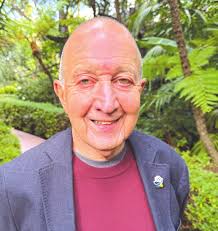
Peter Ostroff is a long-time Beverly Hills resident of over 50 years who retired in 2017 after a 50-year career as a trial lawyer. He was born in Washington, D.C. in 1942. He graduated from Washington University (St. Louis, Mo) in 1964 with a B.A. degree in political science and economics. He graduated from the University of Chicago Law School in 1967 with a J.D. degree. He taught law at Monash University Law School in Melbourne, Australia in 1968. He became a member of the Illinois Bar in 1967 and the California Bar in 1969, He clerked for Hon. Shirley M. Hufstedler of the United States Court of Appeal 1969-70, practiced law with Nossaman, Waters, Scott, Krueger & Riordan and successor firms from 1970 to 1980 and with Sidley Austin from 1980 until 2017. During his full time law practice years he was a Committee Chair and Member of the Council of the American Bar Association, Litigation Section and was President of the Association of Business Trial Lawyers. Since 2018, he has served on the Beverly Hills Planning Commission. In addition to his work on the Commission, Peter has chaired the BHUSD 7-11 Surplus Property Committee and contributed to planning efforts for the District Offices site on S. Lasky Drive and future uses of the Hawthorne School property. He also served as Co-Chair of the Citizens Advisory Committee for the City's Climate Adaptation and Action Plan. He has been married to Anne Y. Ostroff since 2002, has two children, Nick Ostroff and Natalie Anne Cookson and has two grandchildren, Elliott Cookson and Emma Anne Cookson. Some family information is collected under Family Tree in this website. Since April 2024, he has written a weekly column for the Beverly Hills Weekly The columns are collected in this website.
petero@ostroff.laMore from the Archive
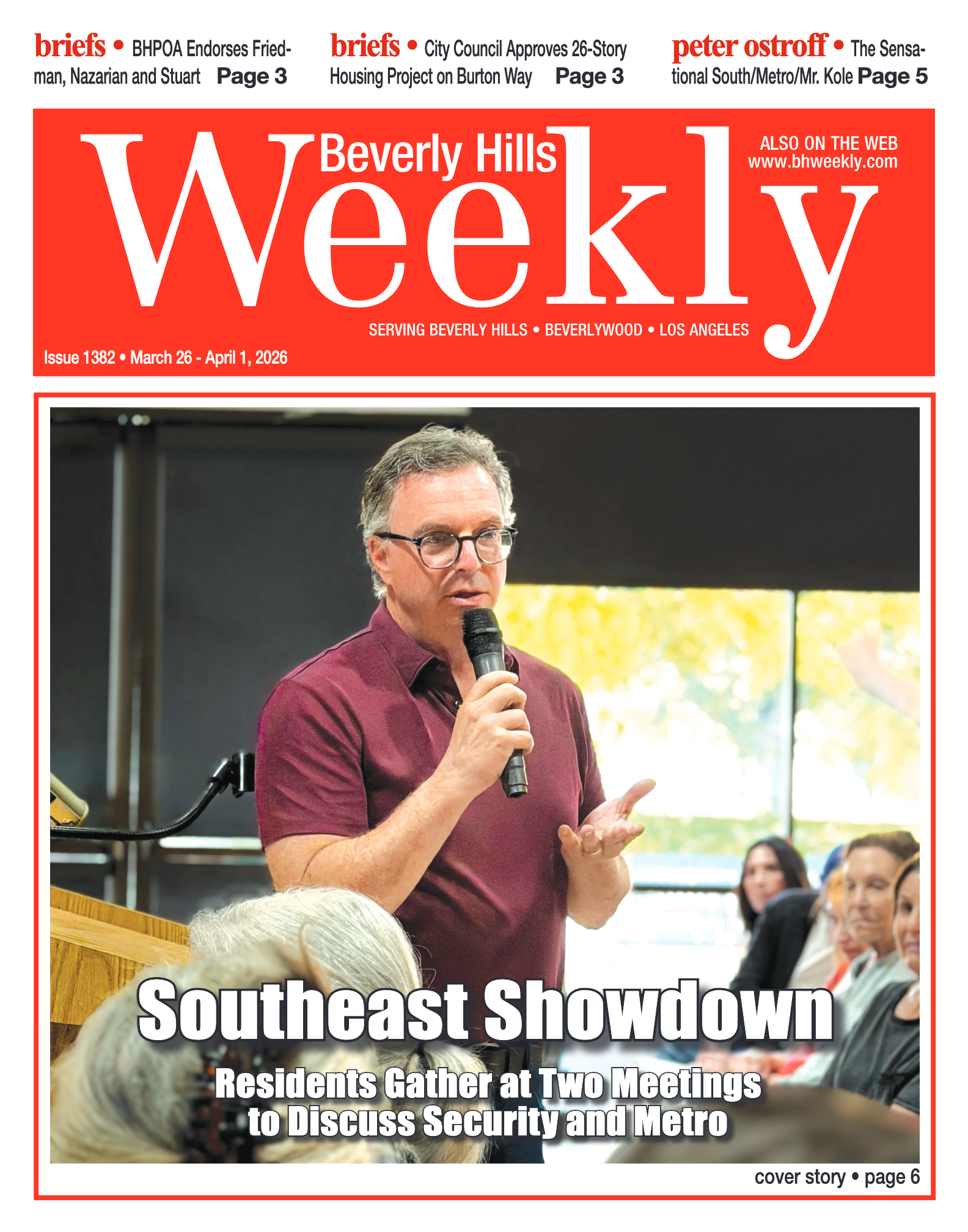
The Sensational South/Metro/Mr. Kole
The article discusses a town hall meeting focused on zoning issues and proposed multifamily residential projects in Beverly Hills, highlighting community efforts to advocate for residents' interests in the "Sensational South." It also addresses the upcoming subway service and security concerns, while emphasizing the need for better transportation solutions and facilities to encourage local residents to utilize the new transit system.
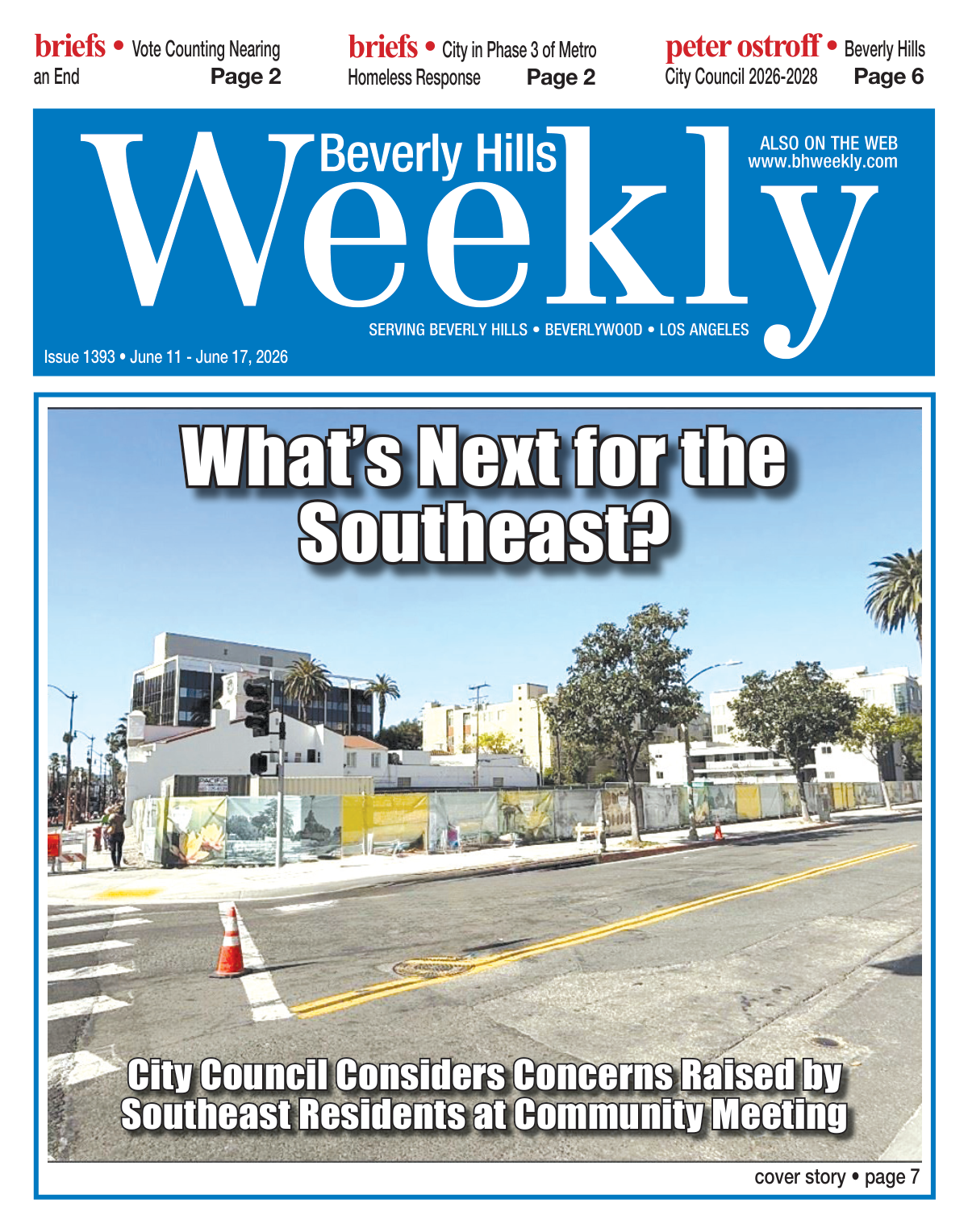
Beverly Hills City Council 2026-2028
The Beverly Hills City Council has maintained stability with the re-election of Mayor Craig Corman and Vice Mayor Mary Wells, alongside new member Rebecca Pynoos, while voters opted for a conservative approach to governance. The election results also highlighted the strong performance of City Treasurer Howard Fisher and the challenges faced by other candidates, particularly Russell Stuart, who relied heavily on social media rather than direct voter engagement.
New City Manager Ryan Gohlich
Ryan Gohlich, who takes office as City Manager on July 1, has an extensive background in city planning and development, making him a strong candidate for the role amid challenging housing allocation issues. As he prepares to lead, he emphasizes the importance of effective management of city services and public safety, while also acknowledging the complexities of hiring additional police officers and the need for transparency regarding the city's staffing levels.