Peter Ostroff
A Voice for Beverly Hills — Past, Present, and Future
OBH Post-Mortem and Lessons Learned (Maybe)
The article discusses the City Council's decision to establish special districts for the One Beverly Hills project, allowing the issuance of up to $550 million in tax-exempt bonds to reimburse the developer for infrastructure costs, despite initial concerns about potential risks and public opposition. Ultimately, the City secured better terms through negotiations, including increased fees for the City, highlighting the importance of transparency and community engagement in such significant financial decisions.
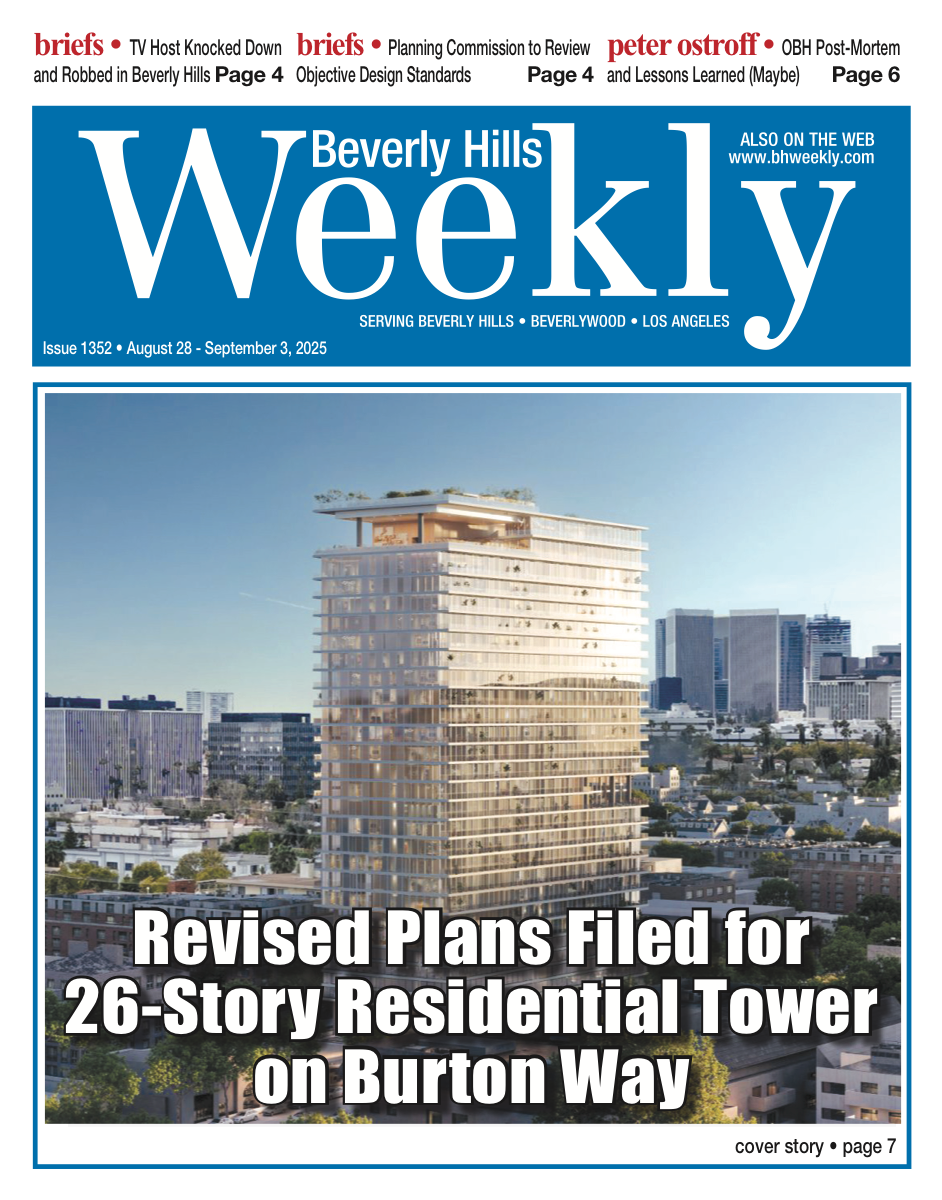
OBH Post-Mortem and Lessons Learned (Maybe)
Early on the morning of August 20, the City Council took the procedural steps of establishing special Districts on the One Beverly Hills (OBH) campus which would have the authority under the control of the Council to issue up to $550 million in tax exempt bonds that could be used to reimburse the developer for construction of OBH infrastructure.
After attending a July 15 meeting of the Council where I learned for the first time that this was under consideration, and hearing a presentation from bond counsel, staff and the Councilmembers which was limited to assurances that these bonds posed “no risk to the City,” I raised several questions including:
- Rather than talk, should we get written opinions from experienced independent counsel that addressed the potential risk including whether there was a potential that these would be an unlawful gift of public funds given that OBH had already agreed to install the infrastructure in exchange for uniquely substantial development entitlements?
- Should the City be compensated for the bond issuance in an amount commensurate with the benefit that low interest bonds would provide to OBH?
During most of the time between the July 15 hearing and August 19, the responses from staff and the friends and family of the developer were limited to the “mantra” that there was “no risk to the City” and that the benefit to the City would be the completion of a beautiful project without delay.
Notably, the developer did not say, at least not publicly, that without the City issued bonds, the project would be delayed or not completed. Had the developer done so, that would have been an admission of financial problems and a very compelling reason to refuse to authorize the issuance of the bonds.
Many residents were strongly opposed to this project once it received public attention.
Most troublesome, at all times since the questions were raised about the wisdom of the issuance of the bonds, City officials and staff treated those who raised questions as adversaries standing in the way of completion of a development that the City wanted.
Fortunately, two things happened that were entirely responsive to the questions raised by residents:
1) City Attorney Larry Wiener arranged for two letters from prominent law firms (including, as a nice touch, the firm at which I worked for the last 37 years of my law practice) assuring the City and its residents that the risks were minimal; and
2) Councilmember John Mirisch negotiated for an enhanced Environmental Management and Sustainability (EMS) fee of 1% of the sales price of every unit sold units after the initial sale from the Developer to a condominium owner (subject to some carveouts). This provides tremendous value to the City as it is projected that this enhanced fee will bring the City from a low of $70 million to a high of at least $140 million; and it eliminates the issue of gift of public funds because of the substantial new compensation to the City. In addition, the City will receive another $15 million from the bond proceeds that can be used for infrastructure improvements elsewhere in the City.
Bottom line, while this “deal” is not perfect, it can be very good for the City and I support it.
The City and developer representatives have expressed their enthusiastic support.
City Manager Designee Ryan Gohlich said: “This is a good outcome for the City with long term benefits. It will provide for services and infrastructure with extremely low risk.”
Larry Green, Managing Director of developer Cain Development LP expressed that he was “pleased that the City has taken this step. The unanimous vote by the Council reflects a strong partnership between Cain, the City of Beverly Hills and the Community.” He also said that he thanks the Council for this partnership and the community support “as we work together to advance this extraordinary project.”
While it may be true that “all’s well that ends well”, it is worth exploring how this application for NTE $550 million in bond financing was handled by our City officials.
I acknowledge that some of this is speculative on my part but I believe that the overall picture is accurate even if some of the details are not.
In June or July 2024, the Developer approached the office of the City Manager about the possibility of the City issuing Mello-Roos tax exempt bonds to fund OBH infrastructure. Mello-Roos bonds are a common way to help developers pay for the cost of installing infrastructure with lower cost “loans.”
Then, the City Manager’s office consulted with counsel and with at least one member of the City Council about the advisability of considering this and was likely told that Mello-Roos bonds were a commonly used tool and that there was no harm in exploring the possibility.
This proposed transaction surfaced somewhat publicly for the first time in November 2024, the City Council approved on its consent calendar a Reimbursement Agreement with Oasis BH, LLC. whereby the developer agreed to pay for costs of bond counsel for the City, other consultants and other expenses incurred by the City and it was off to the races.
Apart from this Consent calendar item, the bond issuance proposal was processed and considered behind closed doors until it was nearly fully baked and strongly supported by staff. It was supported even before there was a suggestion that the City would receive any compensation for this extraordinary highly valuable accommodation.
The issue was discussed for the first time publicly at a City Council Study Session on May 20. The discussion was brief and limited to what became a “mantra” of “no risk to the City.”
At the July 15 Council meeting, the Council addressed and passed a resolution stating its intent to authorize the formation of two “Community Facilities Districts” on the OBH campus that could then, under supervision of the City Council, issue up to $550 million of Mello-Roos Bonds. There was a vague reference in the staff report to an agreement whereby the developer would pay $10 million of the bond proceeds to the City for future infrastructure costs. In other words, paying the City its own $.
I was troubled that the City was considering entering into a significant transaction with no discussion of how this would benefit the City and fair compensation to the City.
Shortly after the July 15 meeting, we made these questions public. It is fair to say, as City Treasurer Howard Fisher did, that many residents were “outraged.”
Between late July and the August 19 hearing, many questions were asked but the answers from the developer and staff were not helpful.
There are likely several reasons that the developer’s application was addressed with an opaque process until we discussed it:
Initially, I think that some city officials believed, in good faith, that Mello-Roos bonds were so common that this request was just the ordinary course of business. However, this request for Mello-Roos funding was different for several reasons including that:
a) $550 million is a huge amount for this City; if we make a mistake of $10 million or even $15M, that would be unfortunate, but a mistake for a significant part of $550 million would be catastrophic for our City;
b) this would be paying the developer the costs of something that the developer had agreed to do in exchange for the uniquely generous entitlements that had been extended; and
c) this project, while the apple of some present and former Councilmembers’ eyes, was already unpopular with many residents.
In hindsight, a well-publicized study session or town hall at the outset to take the residents’ temperature about this proposal would have been a wiser course rather than the “smuggle it through in baggy tweeds” effort that was mistakenly and unsuccessfully attempted.
It would also be wise for our Councilmembers to treat residents with respect rather than the “we know best” disdainful approach that some have practiced in the recent past. Here, rather than acknowledging objectively that the gift of public funds issue was a matter for serious concern, the issue was consistently ignored. The response to other issues such as how the City would benefit was limited to an explanation that it would ensure that the City would get a beautiful project without delay. That argument was never overtly supported or even suggested by the developer but it would be naive to assume that the developer’s carefully curated letters of support would have offered that contention absent prompting by the developer.
So, the public debate in the runup to the August 19 hearing was far more contentious than it should have been.
Fortunately, through the good work of City Attorney Wiener, Mayor Sharona Nazarian who negotiated for a $15 million payment instead of the $10 million or zero initially “negotiated” by staff and, most importantly, Vice Mayor Mirisch who persuaded the developer to increase the EMS fees, we have a happy ending.
This should not obscure my parting message to our City officials:
Staff should retain objectivity throughout the process of managing the presentations to the Council and, for that matter, the Commissions, and resist the temptation to put their “elbows on the scales” in the preparation of staff reports, conduct of meetings etc.
We residents are not the enemy just because we raise questions about what you are considering, planning or doing.
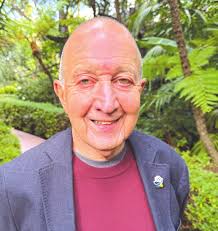
Peter Ostroff is a long-time Beverly Hills resident of over 50 years who retired in 2017 after a 50-year career as a trial lawyer. He was born in Washington, D.C. in 1942. He graduated from Washington University (St. Louis, Mo) in 1964 with a B.A. degree in political science and economics. He graduated from the University of Chicago Law School in 1967 with a J.D. degree. He taught law at Monash University Law School in Melbourne, Australia in 1968. He became a member of the Illinois Bar in 1967 and the California Bar in 1969, He clerked for Hon. Shirley M. Hufstedler of the United States Court of Appeal 1969-70, practiced law with Nossaman, Waters, Scott, Krueger & Riordan and successor firms from 1970 to 1980 and with Sidley Austin from 1980 until 2017. During his full time law practice years he was a Committee Chair and Member of the Council of the American Bar Association, Litigation Section and was President of the Association of Business Trial Lawyers. Since 2018, he has served on the Beverly Hills Planning Commission. In addition to his work on the Commission, Peter has chaired the BHUSD 7-11 Surplus Property Committee and contributed to planning efforts for the District Offices site on S. Lasky Drive and future uses of the Hawthorne School property. He also served as Co-Chair of the Citizens Advisory Committee for the City's Climate Adaptation and Action Plan. He has been married to Anne Y. Ostroff since 2002, has two children, Nick Ostroff and Natalie Anne Cookson and has two grandchildren, Elliott Cookson and Emma Anne Cookson. Some family information is collected under Family Tree in this website. Since April 2024, he has written a weekly column for the Beverly Hills Weekly The columns are collected in this website.
petero@ostroff.laMore from the Archive
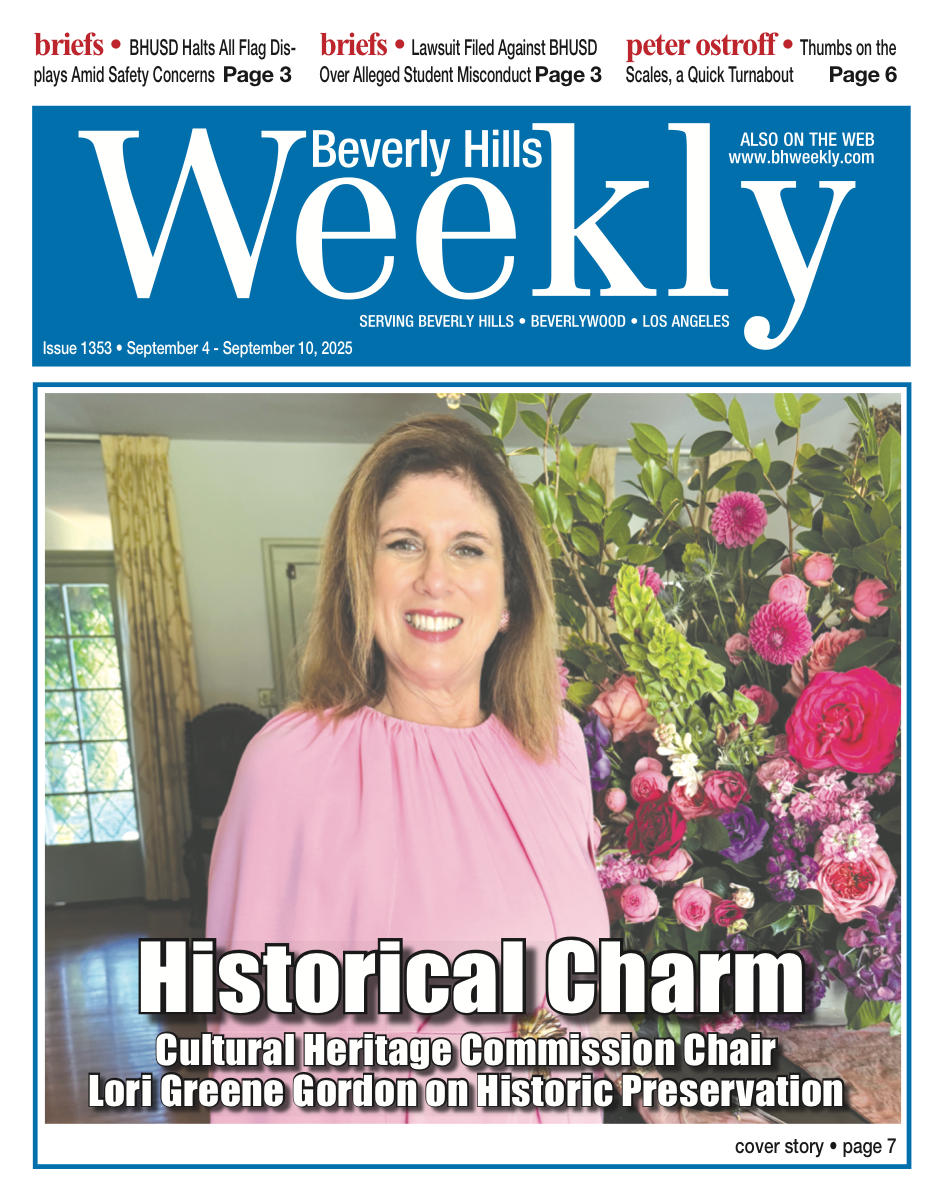
Thumbs on the Scales, a Quick Turnabout
Peter Ostroff's column critiques the Planning Commission's proposal to allow short-term rentals for landmarked houses, arguing that it unfairly favors a specific case without evidence of greater maintenance costs compared to non-landmarked homes. He also highlights a controversial decision by the BHUSD Board to display the Israeli flag, which was quickly reversed due to community backlash, emphasizing the need for the Board to focus on academic issues rather than political matters.
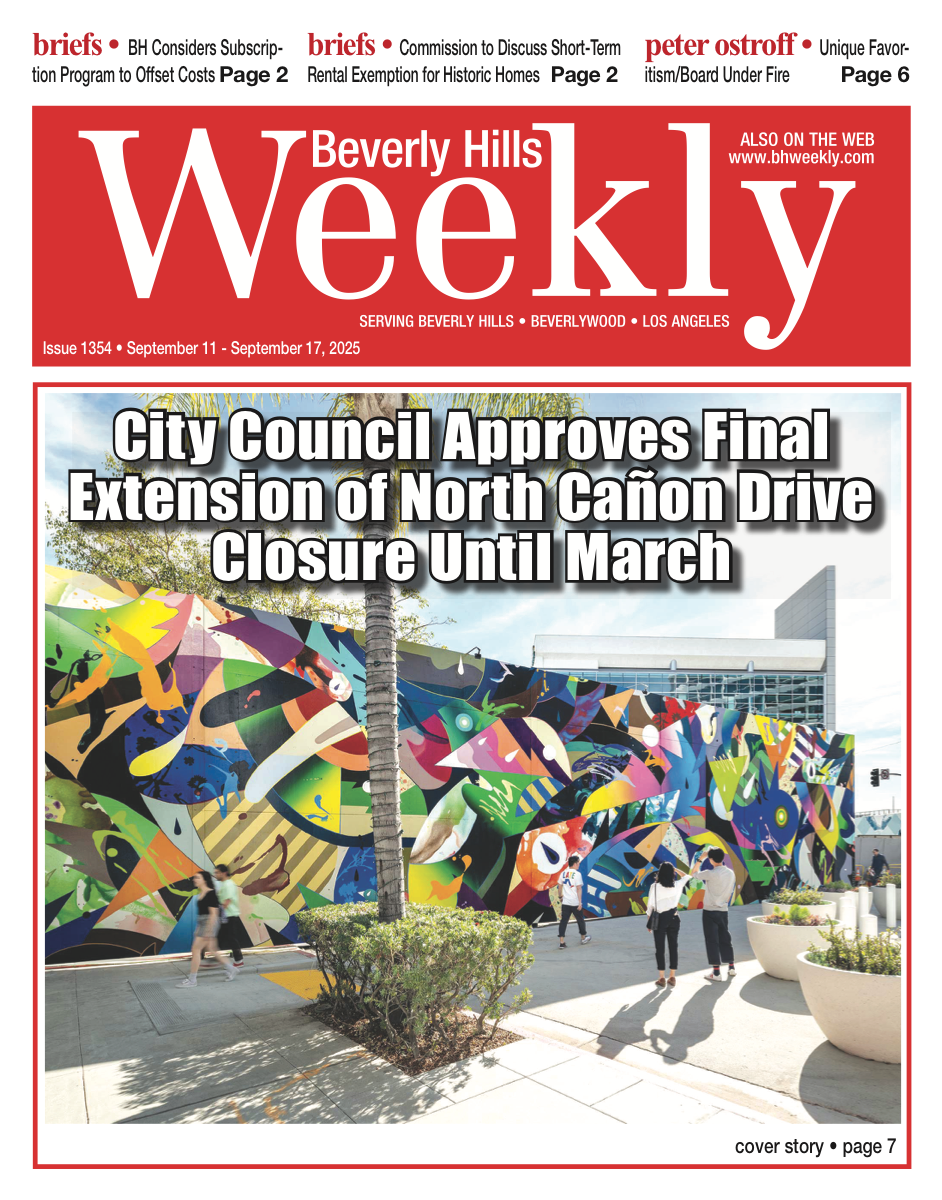
Unique Favoritism/Board Under Fire
The article discusses the controversy surrounding a proposed exception to a new ordinance in Beverly Hills that would allow landmarked properties to be rented out for shorter terms, raising concerns of favoritism toward a specific property owner. Additionally, it critiques the Board of Education's handling of a recent decision regarding the display of Israeli flags in schools, highlighting community outrage and the need for open, accountable discourse on leadership issues within the district.
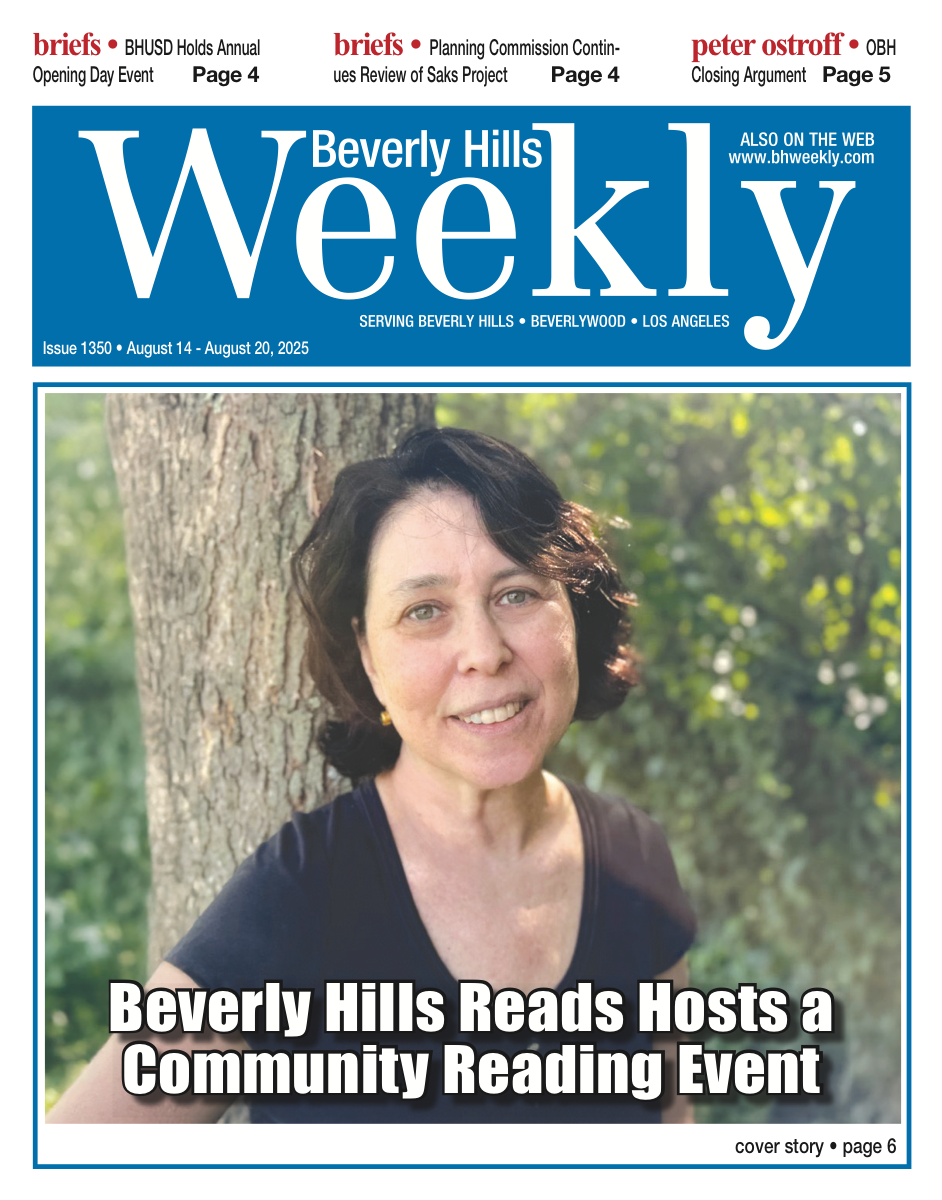
OBH Closing Argument
In a letter to the Beverly Hills City Council, Peter Ostroff expresses strong opposition to the One Beverly Hills developer's request for $550 million in tax-exempt bonds, arguing that it represents a "bait and switch" tactic that poses significant financial risks to the city and its residents. He emphasizes the need for thorough analysis and public accountability before proceeding with such a substantial financial commitment, highlighting widespread resident outrage and concerns about potential liabilities.