Peter Ostroff
A Voice for Beverly Hills — Past, Present, and Future
Flagship v. Cheval Blanc
The article compares the recently approved LVMH Louis Vuitton flagship project, designed by Frank Gehry, with the rejected Cheval Blanc luxury hotel project, highlighting that while the flagship will be architecturally impressive and less controversial, it will generate significantly lower economic benefits for Beverly Hills compared to the high-end hotel. The author expresses a preference for the Cheval Blanc, noting that many objections to it have since been addressed.
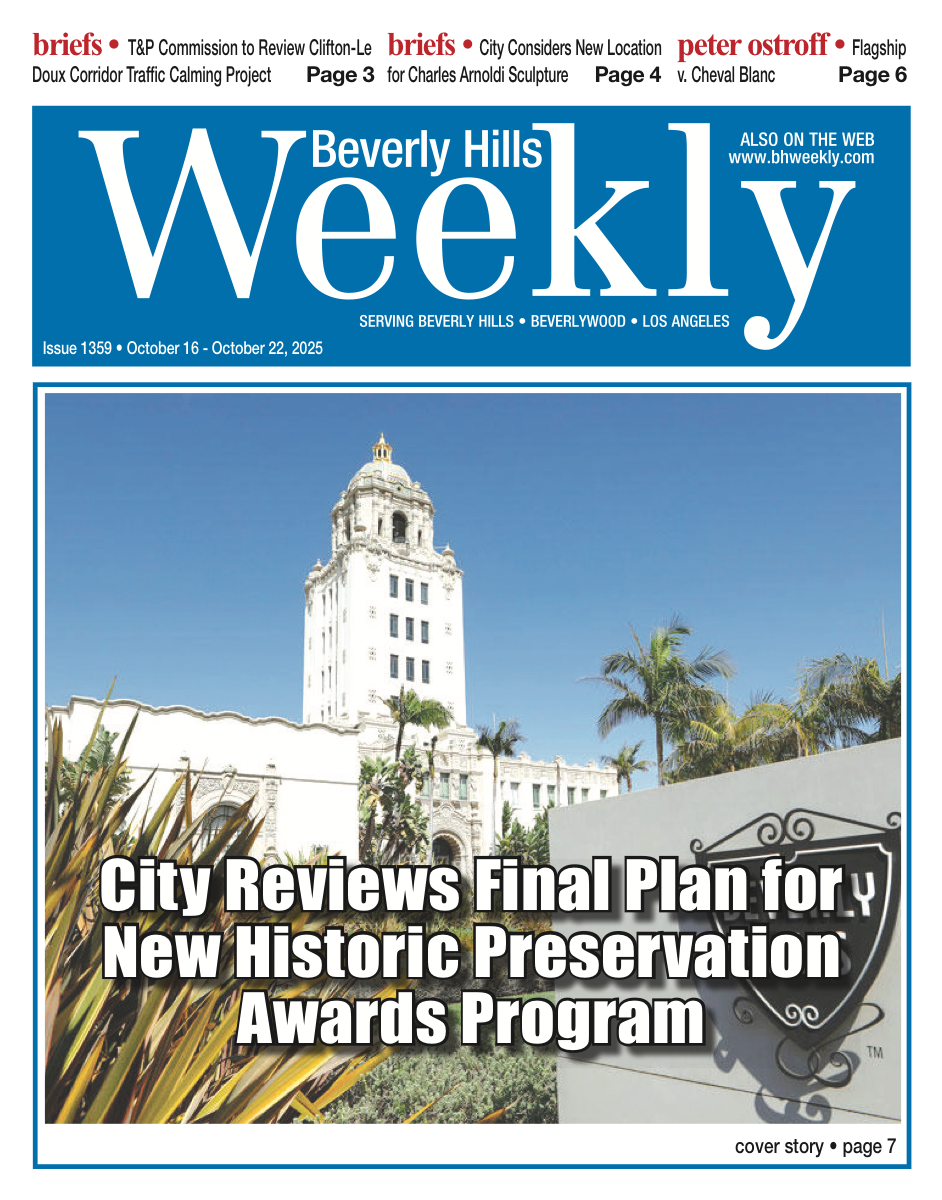
One of my faithful readers [a recent audit confirmed that there are at least three of them] requested that I write about the LVMH Louis Vuitton Flagship project approved by the Planning Commission last week. More specifically, the request was that I compare the current project that was approved and does not seem likely to be challenged with what might have been, the “Cheval Blanc” uber luxury hotel that was approved after completion of all of the City processes but very narrowly rejected by Beverly Hills voters in May 2023.
Notably, some of our City leaders characterized the rejection of this hotel project as a “tragedy.” Beyond that, there was a concern about what, if anything, would happen at the site between Rodeo Drive and Beverly Drive on Santa Monica Blvd.
Now we know.
There will be an architecturally dramatic Frank Gehry designed retail and museum/exhibition space that will include a Louis Vuitton “Flagship.” The details of the “flagship” have not been revealed but we can get some sense of it from the company’s flagships in New York City and Paris. The original New York flagship is currently undergoing construction and renovation and during that process, the company has opened a temporary flagship. That store is spread over five floors and contains a mix of retail, culture and food. For a “temporary” facility it is spectacular and features a 50’ high display of iconic LV trunks.
Similarly, we can only infer what will be displayed in the exhibition/museum space from other Louis Vuitton flagships. That is, there likely will be displays of historic LV trunks, handbags and the work of artists who have historically collaborated with the LVMH family of companies.
In contrast, the Cheval Blanc was to be a very high end hotel, one of a small chain that LVMH has created. It was proposed to have 115 hotel rooms, a private club and some retail with 220,000 sf of floor space in a building that would be as high as nine stories and up to 115’ tall. The hotel rooms were to be very pricy, from $1,100/night to as much as $20,000/night and the private club would likely have been expensive and exclusive. The height and bulk of the proposed hotel was a concern shared by residents as well as concerns about traffic and the alteration of the path of the alley between Beverly and Rodeo that served the merchants on those streets. The project was also opposed by organized labor which funded both the gathering of signatures to put the referendum on the ballot and the campaign to pass the referendum.
The project would have provided significant financial benefits to the City. The Developer had agreed to pay the City $26M as a public benefit fee and another $2M payment for “arts and culture.” Further, the City would have received a Transient Occupancy Tax of 19% of all hotel occupancy charges as well as sales tax revenues from retail and restaurant sales. Most significantly in my mind was the fact that, together with the Aman Hotel planned for the One Beverly Hills development, the Cheval Blanc Hotel would have made our City an even more attractive destination for wealthy travelers from around the world who create great support for our City.
Most of the objections that caused the Cheval Blanc referendum to pass and reject the project have been addressed and eliminated. The new project will be only 45’ tall (or up to 60’ including the rooftop facilities. In addition to its much lower profile, the square footage is significantly less, only around 100,000 square feet. It will apparently generate far less traffic and will not disrupt the alley. In addition to retail, it will have a large exhibition/museum space and a fine-dining restaurant, both available to the public on a reservation basis intended to spread out the usage.
Economically, on the other hand, the new project will offer far less to the City than the Cheval Blanc would have provided. There will be no public benefit fee, no art and culture contribution and no 19% TOT. While the City will receive sales taxes, the City’s share of sales taxes is only 1% and will not offset the loss of TOT revenues.
The new project will be architecturally stunning and there is a lot to like about it. And I like it. But, truth be told, I prefer the Cheval Blanc.
Most of the bases for opposition to the Cheval Blanc and caused it to be rejected (by an extremely narrow margin.
Peter Ostroff is a long-time Beverly Hills resident of over 50 years who retired in 2017 after a 50-year career as a trial lawyer. He was born in Washington, D.C. in 1942. He graduated from Washington University (St. Louis, Mo) in 1964 with a B.A. degree in political science and economics. He graduated from the University of Chicago Law School in 1967 with a J.D. degree. He taught law at Monash University Law School in Melbourne, Australia in 1968. He became a member of the Illinois Bar in 1967 and the California Bar in 1969, He clerked for Hon. Shirley M. Hufstedler of the United States Court of Appeal 1969-70, practiced law with Nossaman, Waters, Scott, Krueger & Riordan and successor firms from 1970 to 1980 and with Sidley Austin from 1980 until 2017. During his full time law practice years he was a Committee Chair and Member of the Council of the American Bar Association, Litigation Section and was President of the Association of Business Trial Lawyers. Since 2018, he has served on the Beverly Hills Planning Commission. In addition to his work on the Commission, Peter has chaired the BHUSD 7-11 Surplus Property Committee and contributed to planning efforts for the District Offices site on S. Lasky Drive and future uses of the Hawthorne School property. He also served as Co-Chair of the Citizens Advisory Committee for the City's Climate Adaptation and Action Plan. He has been married to Anne Y. Ostroff since 2002, has two children, Nick Ostroff and Natalie Anne Cookson and has two grandchildren, Elliott Cookson and Emma Anne Cookson. Some family information is collected under Family Tree in this website. Since April 2024, he has written a weekly column for the Beverly Hills Weekly The columns are collected in this website.
petero@ostroff.laMore from the Archive
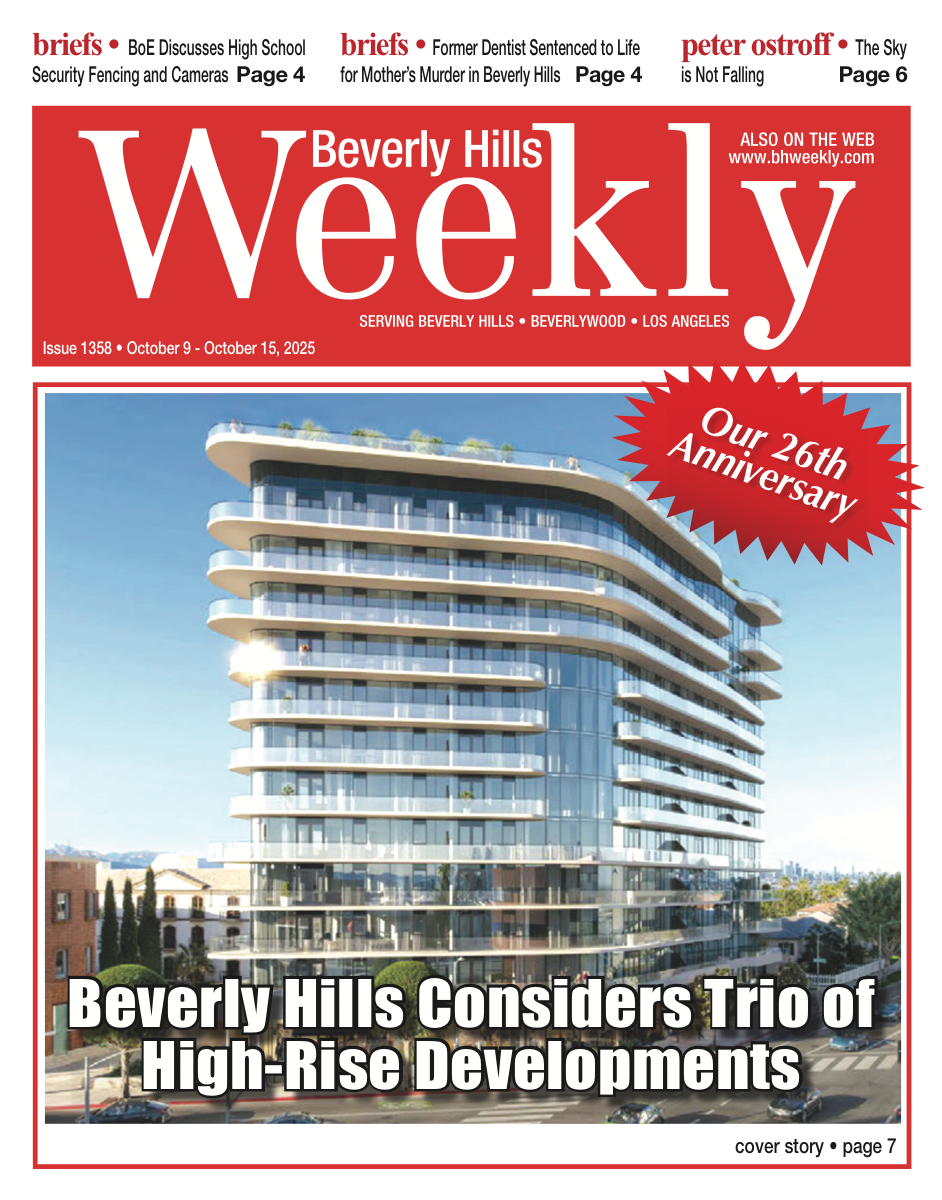
The Sky is Not Falling
Residents of Beverly Hills are expressing concern over state laws that diminish local control over land use and facilitate housing development, leading to potential changes in their community's character. However, despite the aggressive push for housing, current economic conditions and high construction costs may hinder developers' ability to follow through on proposed projects, suggesting that immediate fears may be overstated.
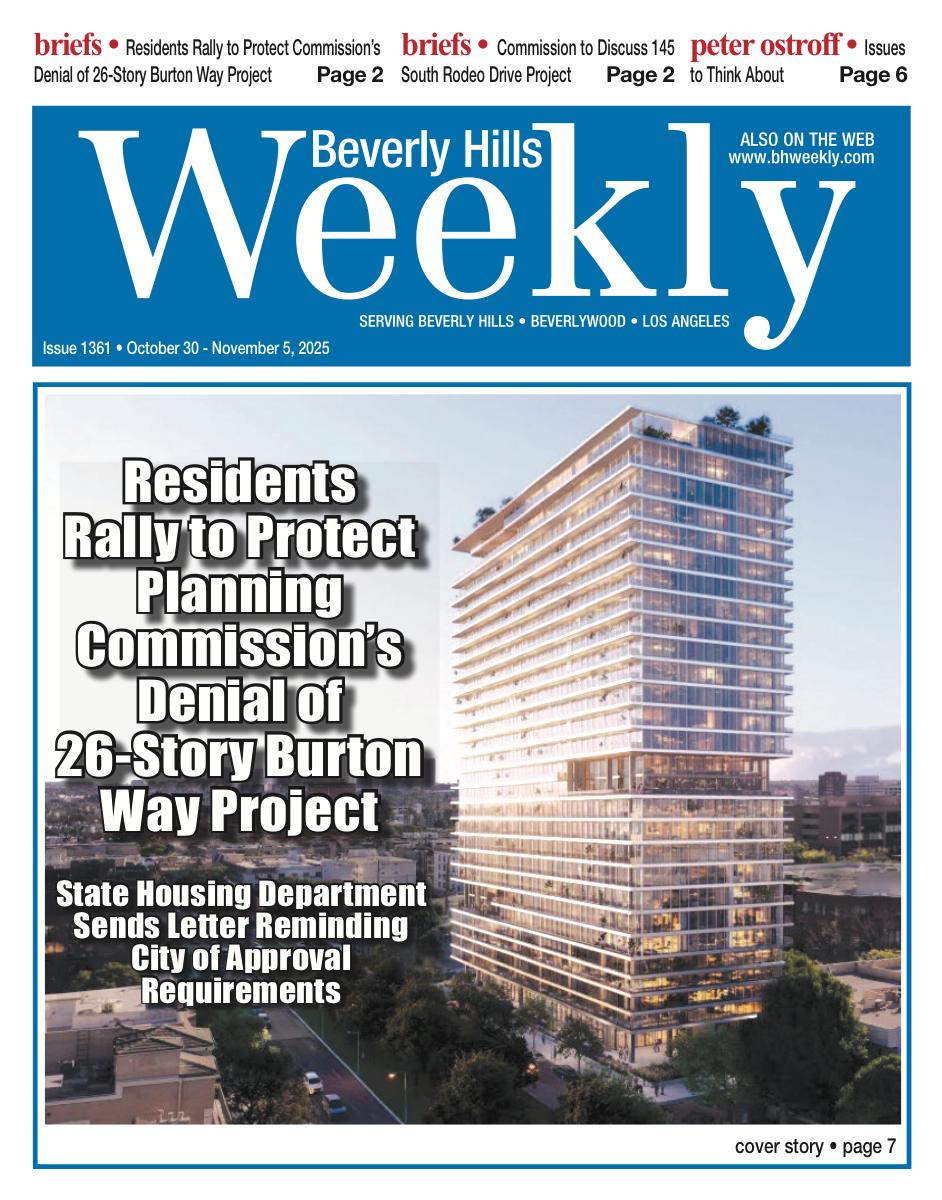
Use to Think About
The article discusses the challenges and changes facing Beverly Hills, particularly regarding new development projects and housing legislation that have sparked resident concerns about neighborhood transformations. It emphasizes the need for informed and accountable candidates in the upcoming City Council and Board of Education elections to navigate these issues effectively and engage the community in meaningful discussions.
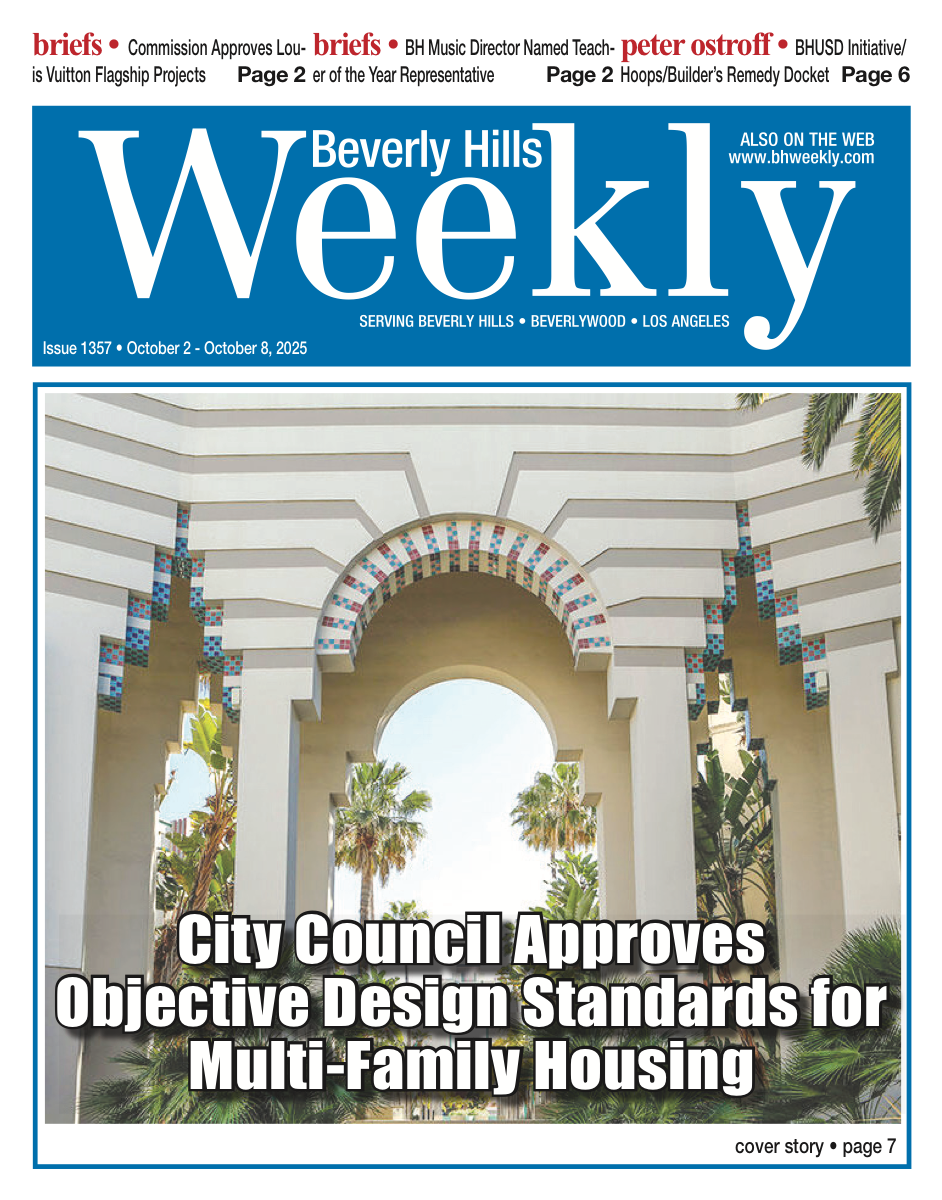
BHUSD Initiative/Hoops/Builder's Remedy Docket
The Beverly Hills Unified School District is restructuring its College and Career Counseling Department to enhance academic support and college readiness for students, with dedicated counselors for different grade levels and a focus on wellness resources. Additionally, several new housing projects under California's Builder's Remedy are set to be reviewed by the Planning Commission, though concerns about inadequate parking and the potential impact on established neighborhoods persist.