Peter Ostroff
A Voice for Beverly Hills — Past, Present, and Future
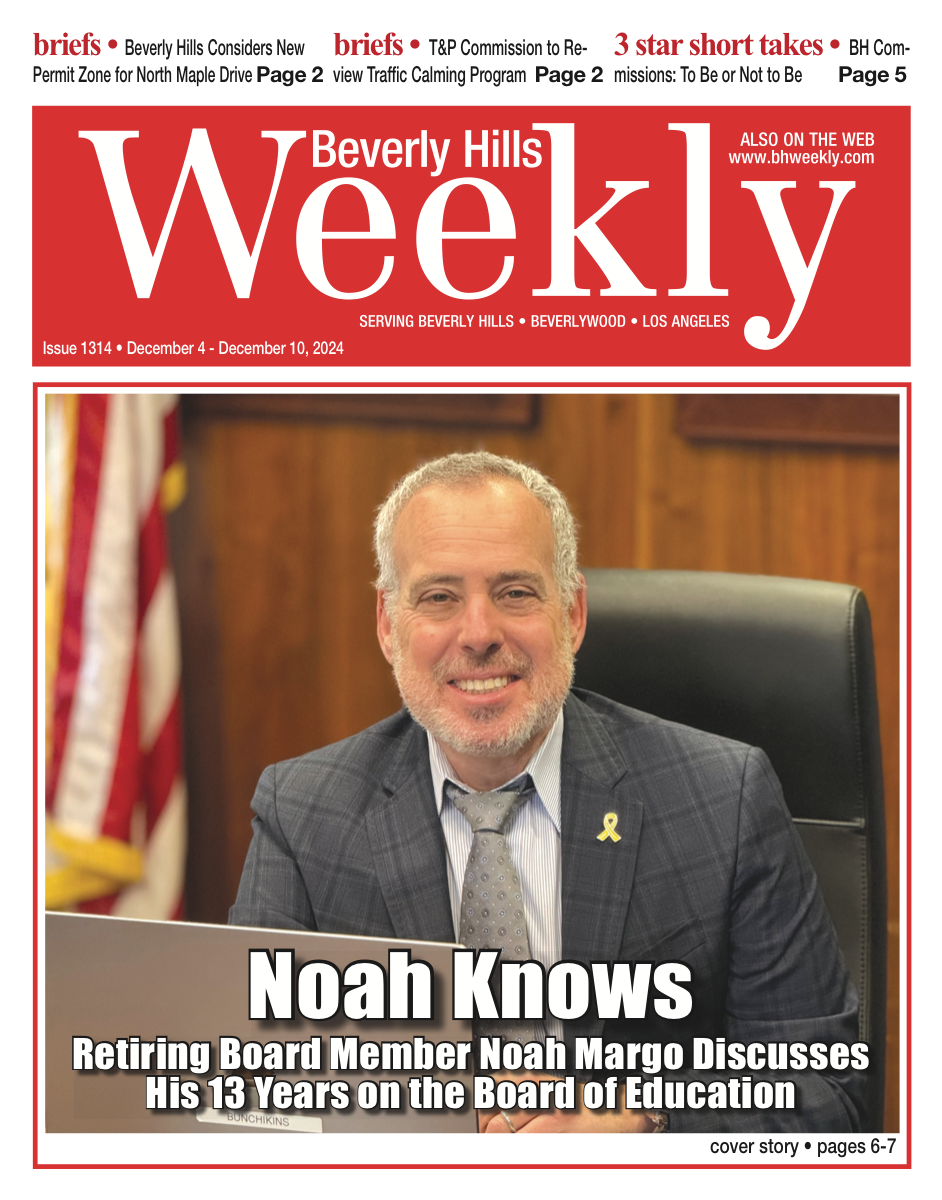
Beverly Hills Commissions: To Be or Not to Be
The article critiques the Beverly Hills Council's proposal to merge several commissions for efficiency, arguing that the Council shows little regard for these bodies, undermining their role as independent advisors. The author suggests that if the Council does not value the commissions' input, they should be disbanded entirely, as their potential benefits to community engagement and informed decision-making are being ignored.
A Meeting of the previously unknown Council Liaison Ad Hoc on Commission Standardization occurred on Monday, November 18.
The ostensible purpose of the meeting was to discuss publicly what apparently had previously been discussed at length privately, the elimination of two commissions by merging the Health & Safety Commission with the Human Relations Commission and by merging the Recreation & Parks Commission with the Arts & Culture Commission. The expressed rationale for raising this issue was to achieve efficiency and economy given that the Commissions’ functions “overlapped” and because the City was facing a deficit of approximately $25M/year.
I will discuss this in more detail but first I want to make two points clearly to avoid any confusion:
Council and Staff have little regard for the Commissions and don’t allow them to play their assigned roles of independent advisors to the Council – as this is the case, rather than nibble at the edges, let’s just eliminate all Commissions (except for the Planning Commission which is required by state law) if the Commissions will be ignored or precluded by bureaucratic roadblocks from doing anything of substance; I do not advocate abolition of the commissions but maintenance of the status quo (plus or minus a Commission or two) is a waste of everyone’s time;
The expenses of supporting the Commissions are no more than a rounding error; if the City was serious about trimming expenses, it would have allowed the two year Blue Ribbon Finance Committee announced by former Mayor Julian Gold at the outset of his term as Mayor to do its job.
Our Councilmembers and our departments’ staff are generally well meaning and generally do good work. On occasion, however, their hubris or arrogance gets the best of them. This is one of those instances.
Let’s examine the situation. The disdain that the Council and staff have for the Commissions is exemplified by the fact that the Commissions immediately affected by these proposed combinations were first notified that the combination was being considered was by a Notice sent at 5:30pm on Friday November 15 of a meeting at 10:15am on Monday morning.
But this is just a symptom of the underlying issue. We have a number of Commissions. Their job, as established by the Municipal Code, is to advise the Council about matters within their purview. The role of staff is to provide administrative support, not micromanage. But this is not what happens with very rare exceptions. Typically, staff sets the agendas for the meetings of the Commissions with little input or regard for what the Commission Chairs have in mind. Then staff controls the meetings by devices such as reports crafted to achieve the desired result and/or lengthy presentations that consume most of the meeting time.
Even the Planning Commission is not immune from the efforts of Council and staff to exercise control. For a number of years, the Planning Commission was charged with reviewing, for consistency with the General Plan, Development Agreements negotiated between two members of the Council and developers who sought major variations from zoning rules. In exchange for allowing those variations, Council would exact substantial payments, in addition to all of the customary charges, as a “public benefit” payment.
The proposed Development Agreement for the One Beverly Hills project was submitted to the Planning Commission to review for General Plan consistency. Staff presented a report which selected some provisions of the General Plan but omitted the requirement of the General Plan for promotion of affordable housing. The Development Agreement for the One Beverly Hills project involved no affordable housing even though at least 35 affordable residential units would have been required by the Beverly Hills Municipal Code. The Planning Commission refused to find that the Development Agreement was consistent with the General Plan given the lack of any provision for affordable housing. This independent advice was viewed by the Council negotiators as insubordination.
Shortly thereafter, the Council retaliated against the Planning Commission by amending the Municipal Code to eliminate any review of Development Agreements by the Planning Commission. The message that even the Planning Commission is expected to toe the line and be mindless “team players” was clear. (I believe that had a public review by the Planning Commission occurred of the Development Agreement for the Cheval Blanc project, the referendum that rescinded the permits granted by the Council could have been avoided or defeated. But we will never know.)
I should emphasize that the Council does not have to take the advice of the Commissions. But wouldn’t the Council’s decisions potentially be aided by independent advice from a cross-section of engaged residents who have taken the time to serve as Commissions?
If Council and staff do not want the input of the Commissions or for the Commissions to take initiative and make proposals within their purview, let’s cut the pretense and disband them all.
I do not doubt the need for a quest for more efficiency and economy. But the City’s major expenses are for employee payroll (including massive overtime expenses) and third party contracts. These include what I consider profligate use of consultants largely as a way to diffuse responsibility for decisions. Further, it works against accountability and responsibility at great expense.
Former Mayor Gold established, at the outset of his term as Mayor, a two year Blue Ribbon Finance Committee under City Treasurer Howard Fisher. The purpose was to examine potential ways to increase City revenues and decrease expenses. It was acknowledged by then Mayor Gold that this project would likely extend beyond his term but that then Vice Mayor Lester Friedman would continue it to completion. During Mayor Gold’s term, the Blue Ribbon Committee addressed revenues. As of today, Mayor Friedman has not requested that the Committee address expenses.
I do assume that reduction of expenses is a major concern of the Council and that some person or persons are addressing this issue. I hope and expect that they will address the major expense components. These do not include the expenses of the Commissions which are very minor and the potential benefits of active Commissions are great.
I personally believe that there is a real prospect that the Commissions could play a valuable role as truly independent advisors. They also play an important role in increasing community engagement in and understanding of the operations of the City.
If the Council does not value or even wish to tolerate the advice of the Commissions, so be it. But the Council should not indulge in or promote the fantasy that its disinterest in independent advice or initiative is in furtherance of efficiency or economy.
Peter Ostroff is a retired attorney and former Beverly Hills Planning Commissioner.

Peter Ostroff is a long-time Beverly Hills resident of over 50 years who retired in 2017 after a 50-year career as a trial lawyer. He was born in Washington, D.C. in 1942. He graduated from Washington University (St. Louis, Mo) in 1964 with a B.A. degree in political science and economics. He graduated from the University of Chicago Law School in 1967 with a J.D. degree. He taught law at Monash University Law School in Melbourne, Australia in 1968. He became a member of the Illinois Bar in 1967 and the California Bar in 1969, He clerked for Hon. Shirley M. Hufstedler of the United States Court of Appeal 1969-70, practiced law with Nossaman, Waters, Scott, Krueger & Riordan and successor firms from 1970 to 1980 and with Sidley Austin from 1980 until 2017. During his full time law practice years he was a Committee Chair and Member of the Council of the American Bar Association, Litigation Section and was President of the Association of Business Trial Lawyers. Since 2018, he has served on the Beverly Hills Planning Commission. In addition to his work on the Commission, Peter has chaired the BHUSD 7-11 Surplus Property Committee and contributed to planning efforts for the District Offices site on S. Lasky Drive and future uses of the Hawthorne School property. He also served as Co-Chair of the Citizens Advisory Committee for the City's Climate Adaptation and Action Plan. He has been married to Anne Y. Ostroff since 2002, has two children, Nick Ostroff and Natalie Anne Cookson and has two grandchildren, Elliott Cookson and Emma Anne Cookson. Some family information is collected under Family Tree in this website. Since April 2024, he has written a weekly column for the Beverly Hills Weekly The columns are collected in this website.
petero@ostroff.laMore from the Archive

2024 Beverly Hills Year in Review
The 2024 Year in Review for Beverly Hills highlights a year marked by political divisiveness, significant developments in local governance and education, and ongoing challenges related to crime and housing. Despite initial concerns, the year concluded with a sense of optimism, underscored by successful elections and important community initiatives.
BHUSD Shocker / Homeless Count
The article discusses the unexpected resignation of BHUSD Superintendent Dr. Michael Bregy, highlighting the need for the Board of Education to address the circumstances surrounding his departure while focusing on finding a suitable replacement to improve the district's academic performance. Additionally, it covers the annual Los Angeles Homeless Count, where volunteers, including the author, found a surprisingly low number of unhoused individuals in their assigned area, raising questions about the effectiveness and scientific accuracy of the counting process.
Writers Bloc and Study Sessions
Andrea Grossman, a long-time Beverly Hills resident, has significantly enriched the local cultural scene through her non-profit Writers Bloc, which hosts literary events featuring prominent authors and public figures. Meanwhile, the Beverly Hills City Council is debating procedural changes for their afternoon Study Sessions, with discussions focusing on the appropriateness of taking action during these meetings, while the Board of Education has opted to select a former principal as Superintendent without a comprehensive search process.