Peter Ostroff
A Voice for Beverly Hills — Past, Present, and Future
Aftermath of Fire – Far and Near
The rebuilding efforts following the devastating fires have been marked by disorganization and conflicting leadership among various stakeholders, leading to minimal progress and widespread dissatisfaction. Additionally, the Beverly Hills Unified School District faces challenges in accommodating displaced students from Palisades Charter High School, balancing compassion with capacity constraints and financial implications.

Aftermath of Fire – Far and Near
In the aftermath of the horrific fires, initial rebuilding efforts have been chaotic. The efforts of BHUSD to help have managed to displease everyone involved.
⸻
Where rebuilding stands
Two weeks ago, I wrote about the desirability, at least in my eyes, for a comprehensive plan coupled with an acquisition of the ravaged property by the State through its eminent domain powers. I expressed concern that absent a coordinated approach and smart planning, the efforts to rebuild would lead to chaos and loss of a unique opportunity.
Now, a progress report. Here is the current status:
Los Angeles Mayor Karen Bass, whose re-election prospects have been diminished, rightly or wrongly, by the fact that the destruction of the Palisades occurred on her watch, quite apart from the quality of her subsequent leadership, appointed developer (and former candidate for Mayor of Los Angeles) Steve Soboroff as Chief Recovery Officer to oversee rebuilding.
The City first announced that Mr. Soboroff would be paid $500K for 90 days work and the money would come from charitable sources, not the City of Los Angeles (a disingenuous claim as the salary payment fund, no matter its source, could go to rebuilding if not to Soboroff). After an uproar, Soboroff and his assistant agreed to work free and Mayor Bass said that his work would be confined to rebuilding a shopping district and other public buildings. Soboroff publicly disagreed with that limitation.
Almost immediately, Soboroff and the Mayor disagreed on the wisdom of re-opening the Palisades. Then, Mayor Bass appointed Hagerty Consulting of Illinois to provide project management for the recovery, reporting not to Soboroff but to Jim Featherstone of the City’s Emergency Management Department. But Councilmember Traci Park, who represents the Palisades and is head of the Los Angeles City’s committee on wildfire recovery, claims that she is the City’s person in charge.
The Los Angeles County Board of Supervisors are actively involved. Governor Newsom has formed a group of business leaders to engage in recovery efforts. To cap off the public sector, President Trump’s head of Special Missions, Ric Grenell, has a role, so far limited to criticizing the announcement of Soboroff’s pay. And the US Army Corps of Engineers and FEMA are involved.
From the private sector, Rick Caruso, who lost to Bass in the race for LA Mayor, has announced a formation of a group of business leaders to focus on rebuilding. Miguel Santana, Snapchat’s Evan Spiegel, and LA Times owner Patrick Soon-Shiong have also announced formation of separate groups to focus on rebuilding.
⸻
Too many chiefs, not enough clarity
Certainly, there is nothing inherently wrong about the fact that so many persons and entities are interested in helping. But there appears no one in charge but lots of different players arm-wrestling for a role. It is no wonder that little has been done after more than a month other than squabbles over where to put the debris caused by the fire. If that’s not chaos, I don’t know what is.
Postscript: On Saturday, February 15, after this column was written but before it was published, the LA Times published Steve Lopez’s article about the rebuilding effort. Mr. Lopez, who I greatly admire, referred to the efforts to date and asked: “Can anyone here play this game?” My observation is that there are far too many chiefs, many of whom are highly competent, likely working at cross-purposes and no one in charge. The “game” cannot be properly played with five quarterbacks or five shortstops on the field at the same time — and without a head coach or manager.
⸻
Closer to home: BHUSD and Pali High
One of the many tragic aspects of the Palisades Fire has been the damage and resulting closure of Palisades Charter High School (Pali). Although classes are being held online, an understandable objective of many students and their parents is to find another school where they can have in-person instruction.
BHHS offers an attractive alternative due to its reputation and approximately 150 Pali students have applied for admission. This has led to a most unfortunate several-sided disconnect between the BHUSD Board of Education, BHUSD Administration, Beverly Hills residents, and Pali students and parents.
On January 14, Governor Newsom issued an executive order that provides, in part, as follows:
“WHEREAS local educational agencies [LEAs] are obligated to immediately enroll students who are now unhoused as a result of the fires throughout the Greater Los Angeles Area pursuant to Education Code section 48850 [relates, among other things, to ‘homeless’ children]
IT IS HEREBY ORDERED THAT:
6. All LEAs are urged to extend every effort to support and facilitate the enrollment of students displaced by the fires, including, but not limited to, facilitating completion and approval of interdistrict transfer requests.”
Notably, some have argued that some legal obligation was imposed on the District to enroll Pali students. But the “whereas” recital refers to an Education Code Section applicable only to foster and homeless children (not children who may have had to find new housing because of the fires) and paragraph 6 uses the term “urged”, not “ordered.” If the Governor had intended to order enrollment, he could have said that.
It is clear to me that while fulfilling the wishes of some Pali students to attend BHHS may be a good thing to do, if practical, there is no legal obligation under the Order or otherwise.
⸻
The capacity dilemma
Shortly after that, the Board discussed the Order, reached the conclusion that the District’s moral/legal obligation, if any, was to accommodate, if possible, students who had been rendered “unhoused” and asked the administration to let the Board know the total capacity for additional students without adding more teachers. The Board also noted that it was predictable that some families whose homes were destroyed or damaged would seek to live in Beverly Hills and that it was important to reserve some of the capacity for new residents who would have the legal right to attend BHUSD schools.
Subsequently, the Board learned that a number of Pali students had been admitted to BHHS and that further enrollment applications were being processed. The Board instructed the administration to pause processing of these applications, leaving more than 100 applications for admission in limbo.
At a Board meeting on February 3, the Board was informed that the Administration had admitted approximately 47 students, who were regarded as “displaced,” but not “homeless.” At the same time, the Board was told that BHUSD had no capacity for Pali students in addition to the 47 without incurring the substantial expense of adding new teachers.
At the same time, some Beverly Hills residents felt that compassionate concerns should allow for the enrollment of a larger number of Pali students, given that the current BHHS enrollment is only around 1,100 students in a school that recently had an enrollment of nearly twice that. Others argued that as a Basic Aid district, BHUSD would receive no additional funding to compensate for the cost of the additional students and the hiring of more teachers and that this generosity would take resources away from students who reside in the City.
No one is happy with the current state of play. But we can fairly observe: “No good deed goes unpunished.”
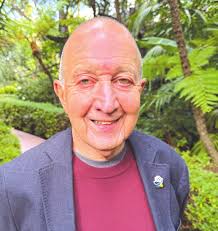
Peter Ostroff is a long-time Beverly Hills resident of over 50 years who retired in 2017 after a 50-year career as a trial lawyer. He was born in Washington, D.C. in 1942. He graduated from Washington University (St. Louis, Mo) in 1964 with a B.A. degree in political science and economics. He graduated from the University of Chicago Law School in 1967 with a J.D. degree. He taught law at Monash University Law School in Melbourne, Australia in 1968. He became a member of the Illinois Bar in 1967 and the California Bar in 1969, He clerked for Hon. Shirley M. Hufstedler of the United States Court of Appeal 1969-70, practiced law with Nossaman, Waters, Scott, Krueger & Riordan and successor firms from 1970 to 1980 and with Sidley Austin from 1980 until 2017. During his full time law practice years he was a Committee Chair and Member of the Council of the American Bar Association, Litigation Section and was President of the Association of Business Trial Lawyers. Since 2018, he has served on the Beverly Hills Planning Commission. In addition to his work on the Commission, Peter has chaired the BHUSD 7-11 Surplus Property Committee and contributed to planning efforts for the District Offices site on S. Lasky Drive and future uses of the Hawthorne School property. He also served as Co-Chair of the Citizens Advisory Committee for the City's Climate Adaptation and Action Plan. He has been married to Anne Y. Ostroff since 2002, has two children, Nick Ostroff and Natalie Anne Cookson and has two grandchildren, Elliott Cookson and Emma Anne Cookson. Some family information is collected under Family Tree in this website. Since April 2024, he has written a weekly column for the Beverly Hills Weekly The columns are collected in this website.
petero@ostroff.laMore from the Archive

Campaign Notes/ Scouting K-Town
The article provides an overview of candidates for the Beverly Hills City Council ahead of the June 2 election, highlighting their qualifications and public perceptions, with a particular focus on Les Friedman, Sharona Nazarian, and Russell Stuart. Additionally, it details a search for the best Korean BBQ venue in Koreatown, ultimately selecting Origin for an upcoming group meeting due to its ambiance and menu offerings.

Beverly Hills City Council 2026-2028
The Beverly Hills City Council has maintained stability with the re-election of Mayor Craig Corman and Vice Mayor Mary Wells, alongside new member Rebecca Pynoos, while voters opted for a conservative approach to governance. The election results also highlighted the strong performance of City Treasurer Howard Fisher and the challenges faced by other candidates, particularly Russell Stuart, who relied heavily on social media rather than direct voter engagement.

New City Manager Ryan Gohlich
Ryan Gohlich, who takes office as City Manager on July 1, has an extensive background in city planning and development, making him a strong candidate for the role amid challenging housing allocation issues. As he prepares to lead, he emphasizes the importance of effective management of city services and public safety, while also acknowledging the complexities of hiring additional police officers and the need for transparency regarding the city's staffing levels.