Peter Ostroff
A Voice for Beverly Hills — Past, Present, and Future
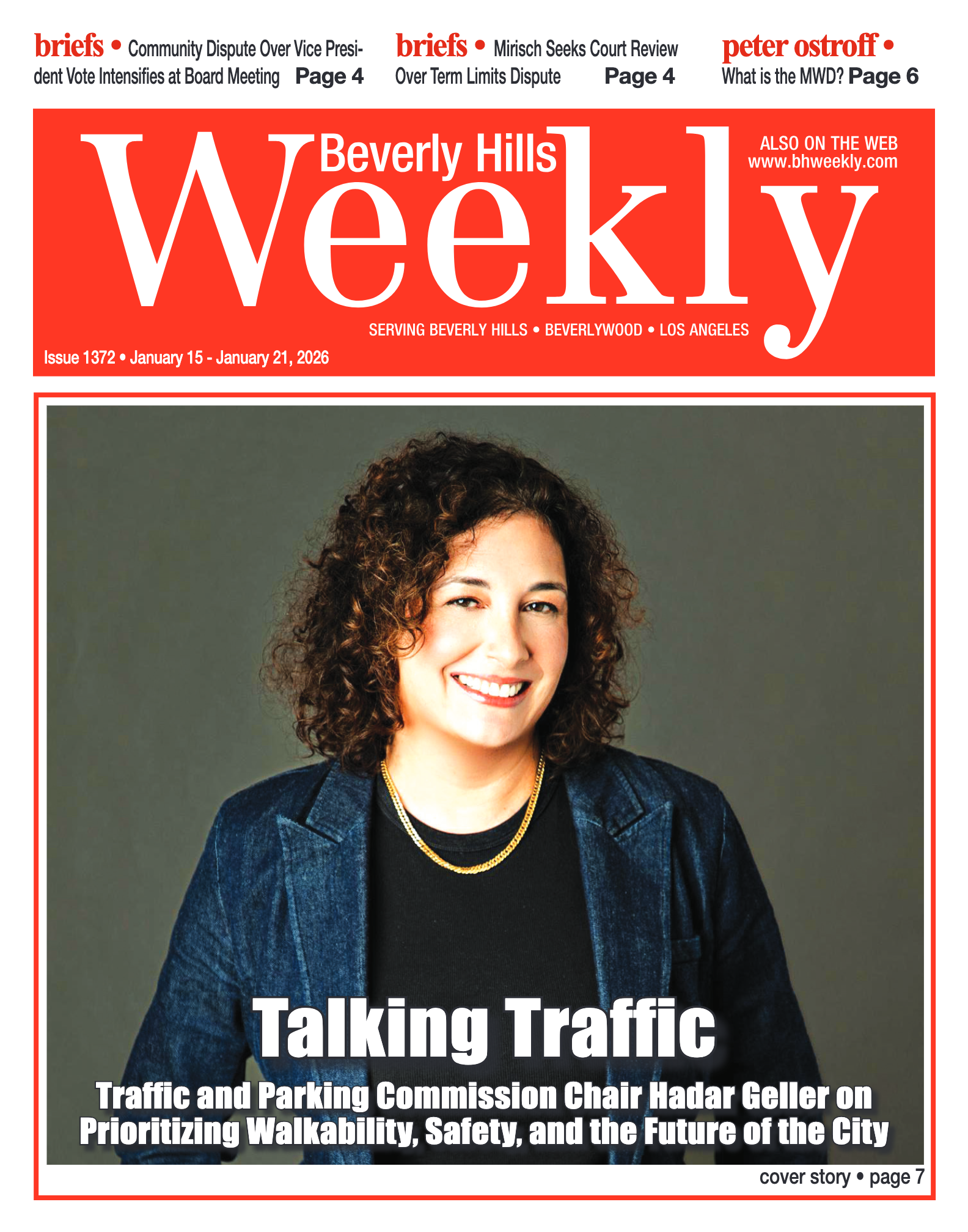
Where is the MWD?
The article explores the water supply for Beverly Hills, highlighting its reliance on the Metropolitan Water District of Southern California (MWD) as the primary wholesaler, while distinguishing it from the Los Angeles Department of Water and Power (DWP). It emphasizes the importance of MWD in providing water to the region, the challenges posed by diminishing water sources, and the city's efforts to enhance local water conservation and alternative supply methods to ensure future sustainability.
Sometimes I write columns because I want to learn about a particular subject – in this case water – and then, somewhat as an afterthought, I write about what I have learned. This is one of those occasions.
Where does Beverly HIlls water come from? The answer, in large part, is from the Metropolitan Water District of Southern California (MWD).
The MWD is a major regional water wholesaler and public agency that provides water to 26 member agencies, cities and counties all located in six counties in Southern California. The Beverly Hills Department of Public Works is one of those member agencies. Each member agency appoints a member to the Board of Directors.
The City’s representative, Dr. Barry D. Pressman, a former chair of the Beverly Hills Public Works Commission, is Vice Chairman of the Board.
Before discussing what the MWD is and does, it is important, for avoidance of confusion, to know that the MWD is NOT the “DWP”, the Los Angeles Department of Water and Power.
The DWP is an agency of the City of Los Angeles and provides water and electric power to the residents of that
City. The DWP has nothing to do with where we Beverly Hills residents get our water.
The grab of water rights from the Owens Valley memorialized in the movie “Chinatown” involves the LA DWP and has nothing to do with MWD or its water.
The history is interesting and complex.
In summary, in the early part of the Twentieth Century, the City of Los Angeles was a developing metropolis. Its population grew from 102,000 in the 1900 census to 376,000 in the 1910 census. In 1914, the City of Beverly Hills was incorporated as a bedroom community independent of Los Angeles to preserve local control over water and other issues such as schools. The 1920 census was the first for Beverly Hills which then had only 576 residents.
At that time, water for Beverly Hills needs was supplied through local wells. In the 1920’s, Los Angeles was able to obtain the Owens Valley water which it transported south through its own aqueduct. At that time, incorporation of Beverly Hills into Los Angeles was considered, at least in part, to assure an adequate water supply to BH and the Owens Valley water imported by the DWP was restricted to use by the City of Los Angeles. Interests in maintaining local control prevailed and prevented that incorporation. And the Beverly Hills needs were thereafter satisfied by a combination of local wells and imported water from the MWD perhaps among others. In 1976, the City discontinued its reliance on local sources and ceased all groundwater production because MWD water was less expensive.
As an aside, today the DWP does purchase a substantial portion of its water from the MWD.
Now, we turn to the present.
While we have experienced some wet conditions in recent weeks, the MWD, not occasional local rainfall, has existential importance as the supplier of water for about 19 million residents of the six counties that it serves because we all live in a desert. It is the largest supplier of treated water in the U.S.
The MWD is the wholesale supplier of water to the Beverly Hills Department of Public Works which, in turn, sells water to its retail residential and commercial customers. Approximately 80 to 90% of the water that we use every day is purchased by the City from the MWD.
The MWD gets its water from sources all far from the 19 million desert dwellers who buy the water. The sources are the California or Sierra Nevada/ Sacramento, San Joaquin delta in the north and the Colorado River in the east. The water from the north is from the State Water Project and comes through the California Aqueduct. Once in the south coastal plain, deliveries are split between the SWP’s West Branch, storing water in Castaic Lake for delivery to the west side of the Los Angeles metropolitan area, and the East Branch, which delivers water to the Inland Empire and the south and east parts of the Los Angeles Basin.
The water from the east comes through the Colorado River Aqueduct. The Colorado River Aqueduct begins at Lake Havasu, just north of Parker Dam, and travels west to Lake Mathews in southwest Riverside County.
MWD maintains several large reservoirs to preserve water for times of drought, and emergencies due to earthquakes, floods or other issues that disrupt the movement of water through the aqueducts. Currently, MWD has over 5 million acre/feet of water in storage in three main reservoirs. One acre/foot – the volume needed to cover one acre of land to a depth of one foot – contains nearly 326,000 gallons of water. As the MWD delivers approximately 1.3 million acre feet of water annually, the emergency supply is nearly four years supply of water.
That’s a lot but there are challenges.
The water from the Colorado River is apportioned by agreed upon allotments between seven states – California, Arizona, New Mexico, Colorado,
Utah, Wyoming and Nevada. And the flow of water has been declining over recent decades so that there is not nearly enough to satisfy the various allotments. If the decline continues, the amount of water coming through the Colorado River Aqueduct could be dramatically reduced. The states are currently renegotiating their allotment agreement which expired at the end of 2025. If an agreement cannot be reached, the federal government will impose one. I will refrain from comment about how a blue state like California might fare in the event of such an imposition.
For decades, California officials have considered and planned a system of one or two tunnels that would bring water from the north under the Sacramento/San Joaquin Delta to modernize and protect California’s core water conveyance network in the face of climate change, earthquakes, and aging infrastructure. This planning process has stumbled along and there is no end in sight.
In both instances there are regulatory, environmental, regulatory and political issues.
The City of Beverly Hills purchases water from MWD and then ensures that the water meets all state and federal safety and quality standards. The
City also maintains storage reservoirs and can use its own treatment plant and reservoir supplies in the event of MWD disruptions.
From experience in recent decades, it seems clear that the supply of water that the MWD can supply through the State Water Project and Colorado
River Aqueduct will diminish over time while population in the region will increase. Some of the water for MWD customers is developed locally through recycling of sewer water, storm water recapture and groundwater wells often with some support from the MWD.
In order to ensure an adequate supply of water, the City is encouraging conservation efforts and developing alternative supplies including groundwater wells, water reclamation and providing underground storage. The City is particularly active in developing ground water wells and, I am told, hopes to supply as much as 25% or more of the City’s needs in future years.
While desalinization would appear feasible given the large body of water to the west of us, I am informed that construction costs, lack of appropriate sites and environmental issues such as where to put the brine make this unrealistic now.
Setting aside the prospect of using the Pacific for hydration, it appears to me that our current and short term water supply issues are in good hands if we can improve quantities of locally sourced water and storage capabilities. More to come.
People Mentioned
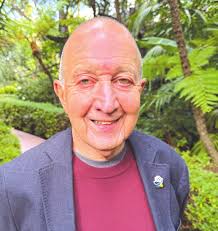
Peter Ostroff is a long-time Beverly Hills resident of over 50 years who retired in 2017 after a 50-year career as a trial lawyer. He was born in Washington, D.C. in 1942. He graduated from Washington University (St. Louis, Mo) in 1964 with a B.A. degree in political science and economics. He graduated from the University of Chicago Law School in 1967 with a J.D. degree. He taught law at Monash University Law School in Melbourne, Australia in 1968. He became a member of the Illinois Bar in 1967 and the California Bar in 1969, He clerked for Hon. Shirley M. Hufstedler of the United States Court of Appeal 1969-70, practiced law with Nossaman, Waters, Scott, Krueger & Riordan and successor firms from 1970 to 1980 and with Sidley Austin from 1980 until 2017. During his full time law practice years he was a Committee Chair and Member of the Council of the American Bar Association, Litigation Section and was President of the Association of Business Trial Lawyers. Since 2018, he has served on the Beverly Hills Planning Commission. In addition to his work on the Commission, Peter has chaired the BHUSD 7-11 Surplus Property Committee and contributed to planning efforts for the District Offices site on S. Lasky Drive and future uses of the Hawthorne School property. He also served as Co-Chair of the Citizens Advisory Committee for the City's Climate Adaptation and Action Plan. He has been married to Anne Y. Ostroff since 2002, has two children, Nick Ostroff and Natalie Anne Cookson and has two grandchildren, Elliott Cookson and Emma Anne Cookson. Some family information is collected under Family Tree in this website. Since April 2024, he has written a weekly column for the Beverly Hills Weekly The columns are collected in this website.
petero@ostroff.laMore from the Archive
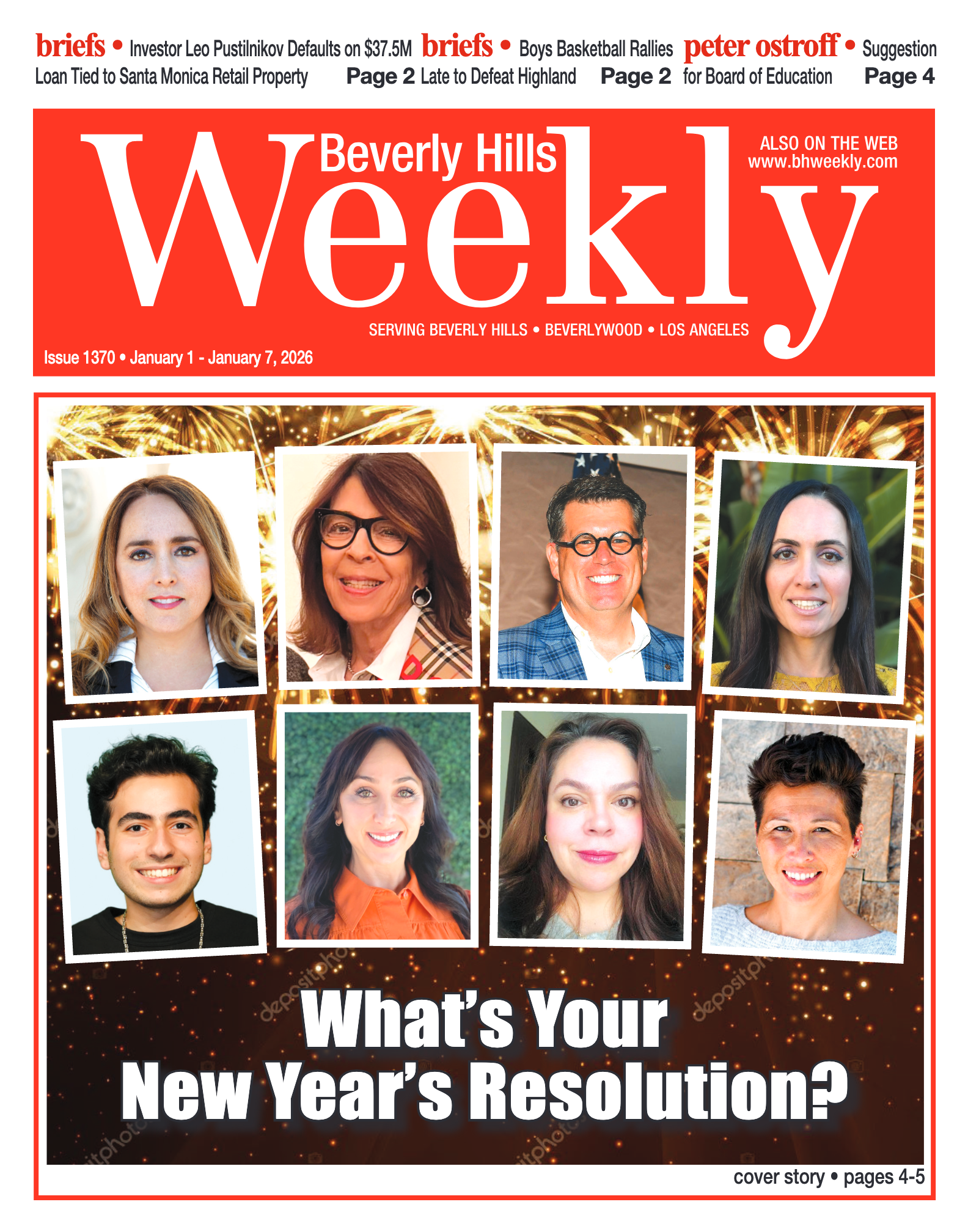
Suggestion for Board of Education
The article discusses concerns about the behavior of the Board of Education in BHUSD, suggesting that their conduct may deter residents from sending their children to local schools, and recommends minimizing meetings and fostering respect to improve community relations. Additionally, it highlights the launch of LoveLockDating.com, a new dating site for seniors aimed at preventing scams and ensuring safety, created by retired physician Dr. Barbara Finck after her negative experiences with online dating.
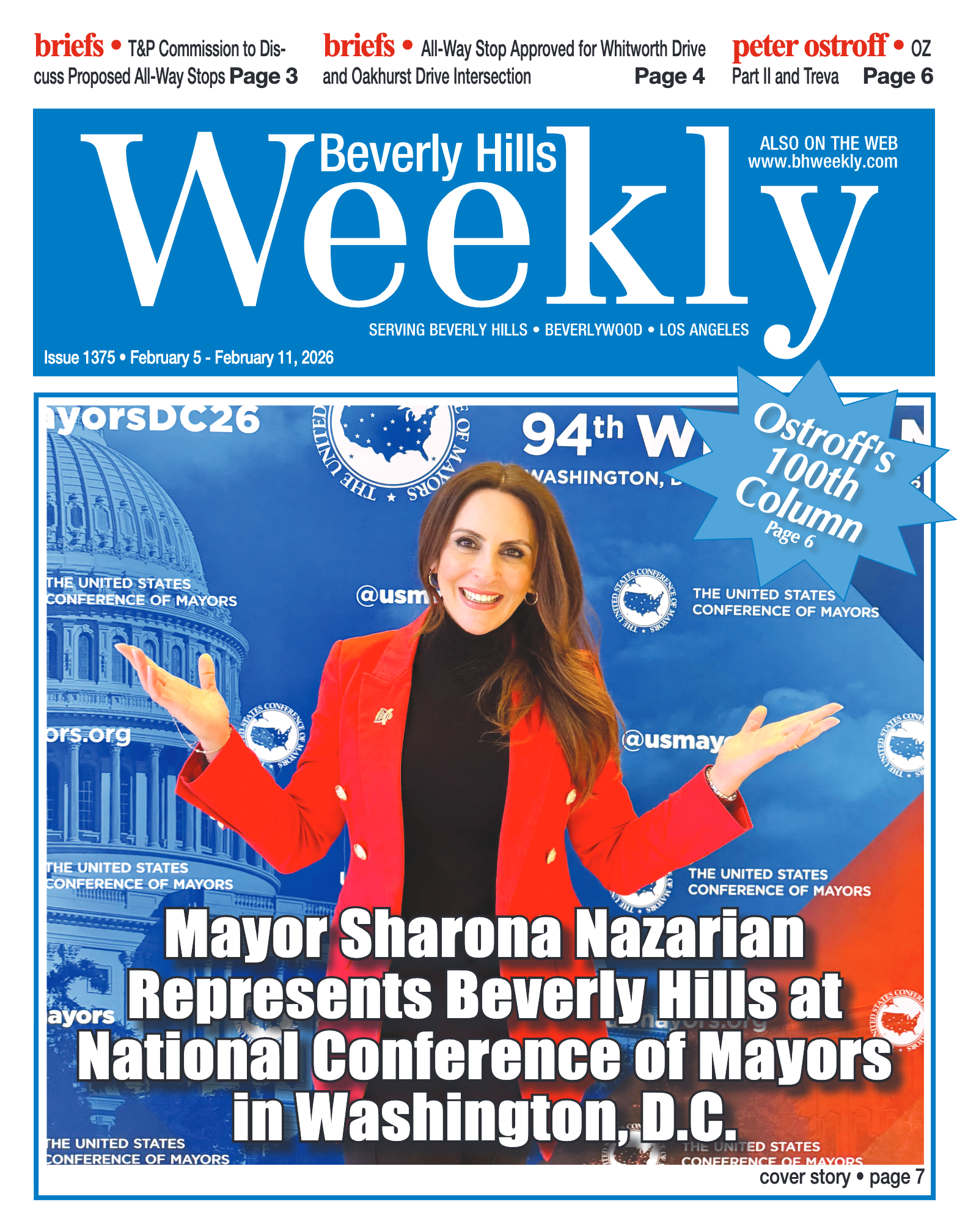
OZ Part II and Treva
The article recounts the author's recent trip to Australia, where they attended significant cricket and tennis events, highlighting the rich culture and history of sports in the country. Additionally, it touches on the launch of the California Post newspaper, the challenges facing print media, and a local political issue involving Councilmember John Mirisch's candidacy amidst term limit disputes.
Books for the Holidays 2025
The article offers a selection of book recommendations for holiday reading, featuring a variety of genres and topics, from legal thrillers and autobiographies to health advice and historical narratives. The author invites readers to share their own book suggestions via email, fostering a community of literary exchange.