Peter Ostroff
A Voice for Beverly Hills — Past, Present, and Future
Books for the Holidays 2025
The article offers a selection of book recommendations for holiday reading, featuring a variety of genres and topics, from legal thrillers and autobiographies to health advice and historical narratives. The author invites readers to share their own book suggestions via email, fostering a community of literary exchange.
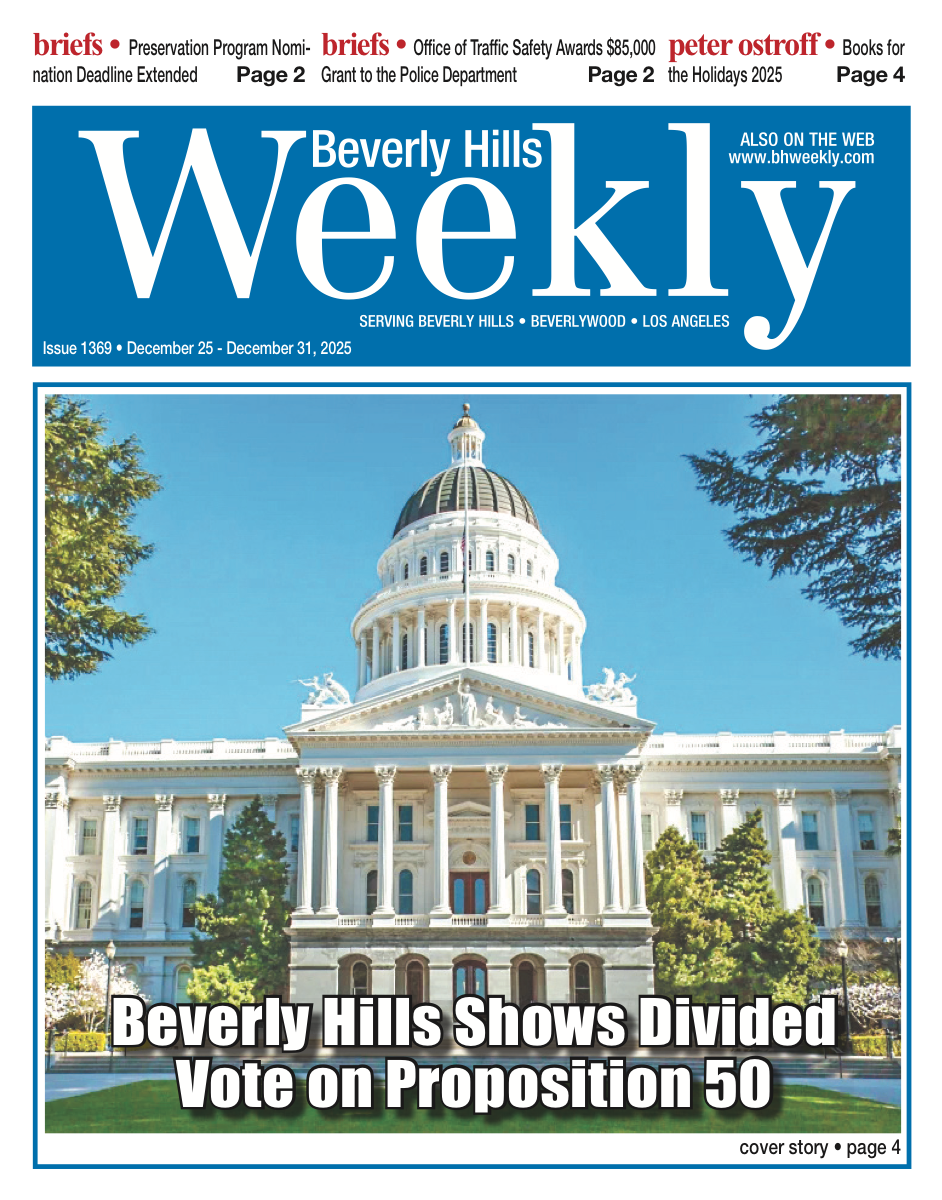
The holidays can be hectic but often we have some quiet time that can be used for my favorite personal pastime, reading.
This is to give some suggestions of some books that you might enjoy or learn from or, best of all, both. As a quid pro quo, I respectfully request that you send me an email at petero@ostroff.la that gives me your suggestions.
In alphabetical order (by author), I suggest: “The Proving Ground” by Michael Connelly. The Lincoln Lawyer Mickey Haller is back but this time he has abandoned criminal law for a civil case in which he represents the plaintiff. The case involves whether an artificial intelligence company whose chatbot told a teenage boy that it was ok to kill his girlfriend was liable to Mickey’s clients, the parents of the victim. The “proving ground” is the place in front of the jury box where a trial lawyer makes his opening and closing arguments to the jury. While Harry Bosch has but one brief mention, for the first time Mr. Connolly puts himself in the book in the thinly disguised form of an author who is writing about artificial intelligence. “Who Knew”, the autobiography of Barry Diller. This is a detailed tale of the life of Mr. Diller, a graduate of Beverly Hills High School, mostly of interest to me because of the unending mention of Beverly Hills luminaries, present and past. “How Not to Age – The Scientific Approach to Getting Healthier as You Get Older” by Michael Gregor, M.D. Dr.
Greger is a physician, author and speaker who advocates a whole food plant-based diet and an opposition to animal derived food products. This approach is not for everyone and not without controversy but this book and others by Dr. Greger including “How Not to Die” and “How Not to Diet” offer some thought provoking insights and even some persuasive evidence to support his position. “Make Me Commissioner – I Know
What’s Wrong with Baseball and How to Fix It” by Jane Leavy. You probably guessed that no list of book recommendations from me would be complete without a baseball book. This is not Jane Leavy’s best baseball book. For a Dodgers fan, nothing could beat her bio of the greatest Dodgers lefthanded pitcher “Sandy Koufax–A Lefty’s Legacy”. But this one is pretty good and has some ideas for improving major league baseball. “The Heaven and Earth Grocery
Store” by James McBride. An engaging story of the relations between poor blacks and Jews in the impoverished “Chicken Hill” neighborhood of Pottstown, Pennsylvania, on the one hand, and the outside world, on the other hand, in the mid-1930s. For me this was evocative of the Petworth, Washington,
DC neighborhood where I spent my earliest years not too long after that. This is the December 2025 selection of the venerable Mature
Men’s Book Discussion Group whose members, for the most part, are old enough to remember times like those that are depicted. “1929 – Inside the Greatest Crash in Wall Street History and How it Shattered a Nation” by Andrew Ross Sorkin.
This is a detailed very engaging narrative of how the Crash happened. It is a valuable history with substantial parallels to the 2007 crash caused by unregulated bad behavior. I did not find it instructive about the perils of the long bull market that we are now still enjoying (sort of) except for the inescapable concern that what goes up must come down. “100 Rules for Living to 100: An Optimist’s Guide to a Healthy Life” by Dick
Van Dyke. On December 13, 2025 he hit the Century Mark. For starters, it is impossible for me to think of Mr. Van Dyke without a smile coming to my face. He played the roles of Bert the street painter and, importantly and somewhat obscurely, the ancient and doddering bank president Mr.
Dawes. He gave the show stopping “Railroads through Africa” speech to young Jane and Michael Banks about the importance of depositing “tuppence” in the bank.
The film was released in late August 1964, a few weeks before I entered the grim and oppressive atmosphere of the University of Chicago Law School. I saw it several times that winter to remind me that there really was light and melody in the world.
As you might expect, the 100 rules are all upbeat and include “Don’t Act Your Age”, “Don’t Count on the Big Break”, “Some Secrets You Shouldn’t Tell”, “Go
Nuts (But Maybe Not That Nuts)” and the particularly helpful “Win an Oscar”. The book is dedicated to Mr. Van Dyke’s wife Arlene who is in her early fifties. You are free to infer whatever you want from that. “American Kings - A Biography of the Quarterback” by Seth Wickersham.
OK, so indulge me one more sports book.
This is an in depth treatment of the most demanding position in team sports. A quarterback not only has to dictate the play that his team will undertake and execute his own part but also know what each of the other ten of his own teammates are doing and what each of the other team’s eleven are doing. And survive. This book tells the history of the position through profiles of some of the best – from UCLA’s Bob Waterfield to Granada Hills H.S. star John Elway; from Y.A.Tittle to Johnny Unitas; from Joe Namath to Roger Staubach; from Terry Bradshaw to Tom Brady.
Finally, I asked my friend Professor Chat at Chat GPT to recommend a book that would give some practical advice about the use and pitfalls of using artificial intelligence. Here is what the good professor recommended: “Future-Proof Yourself: An AI Era Survival Guide” by Taehoon Kim. “Future-Proof Yourself is a practical guide that helps readers navigate the fast-changing world of artificial intelligence in everyday life. The book begins by explaining how computers learn from data in simple, relatable terms, and gradually introduces the methods used in modern AI…Looking ahead, the book explores emerging trends such as the integration of AI with digital twins, wearable devices, and virtual environments.” Happy reading.
People Mentioned
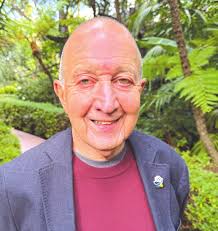
Peter Ostroff is a long-time Beverly Hills resident of over 50 years who retired in 2017 after a 50-year career as a trial lawyer. He was born in Washington, D.C. in 1942. He graduated from Washington University (St. Louis, Mo) in 1964 with a B.A. degree in political science and economics. He graduated from the University of Chicago Law School in 1967 with a J.D. degree. He taught law at Monash University Law School in Melbourne, Australia in 1968. He became a member of the Illinois Bar in 1967 and the California Bar in 1969, He clerked for Hon. Shirley M. Hufstedler of the United States Court of Appeal 1969-70, practiced law with Nossaman, Waters, Scott, Krueger & Riordan and successor firms from 1970 to 1980 and with Sidley Austin from 1980 until 2017. During his full time law practice years he was a Committee Chair and Member of the Council of the American Bar Association, Litigation Section and was President of the Association of Business Trial Lawyers. Since 2018, he has served on the Beverly Hills Planning Commission. In addition to his work on the Commission, Peter has chaired the BHUSD 7-11 Surplus Property Committee and contributed to planning efforts for the District Offices site on S. Lasky Drive and future uses of the Hawthorne School property. He also served as Co-Chair of the Citizens Advisory Committee for the City's Climate Adaptation and Action Plan. He has been married to Anne Y. Ostroff since 2002, has two children, Nick Ostroff and Natalie Anne Cookson and has two grandchildren, Elliott Cookson and Emma Anne Cookson. Some family information is collected under Family Tree in this website. Since April 2024, he has written a weekly column for the Beverly Hills Weekly The columns are collected in this website.
petero@ostroff.laMore from the Archive
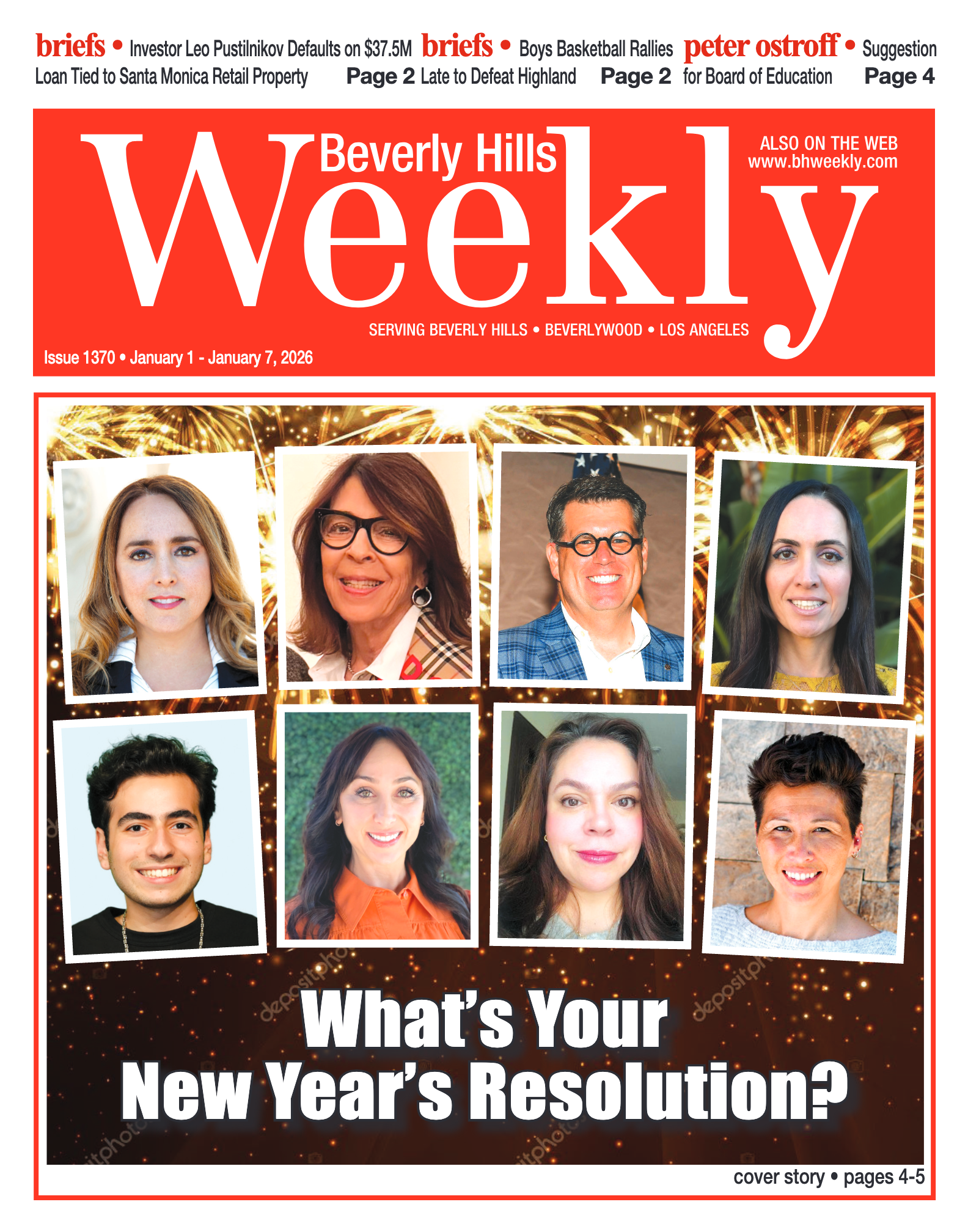
Suggestion for Board of Education
The article discusses concerns about the behavior of the Board of Education in BHUSD, suggesting that their conduct may deter residents from sending their children to local schools, and recommends minimizing meetings and fostering respect to improve community relations. Additionally, it highlights the launch of LoveLockDating.com, a new dating site for seniors aimed at preventing scams and ensuring safety, created by retired physician Dr. Barbara Finck after her negative experiences with online dating.
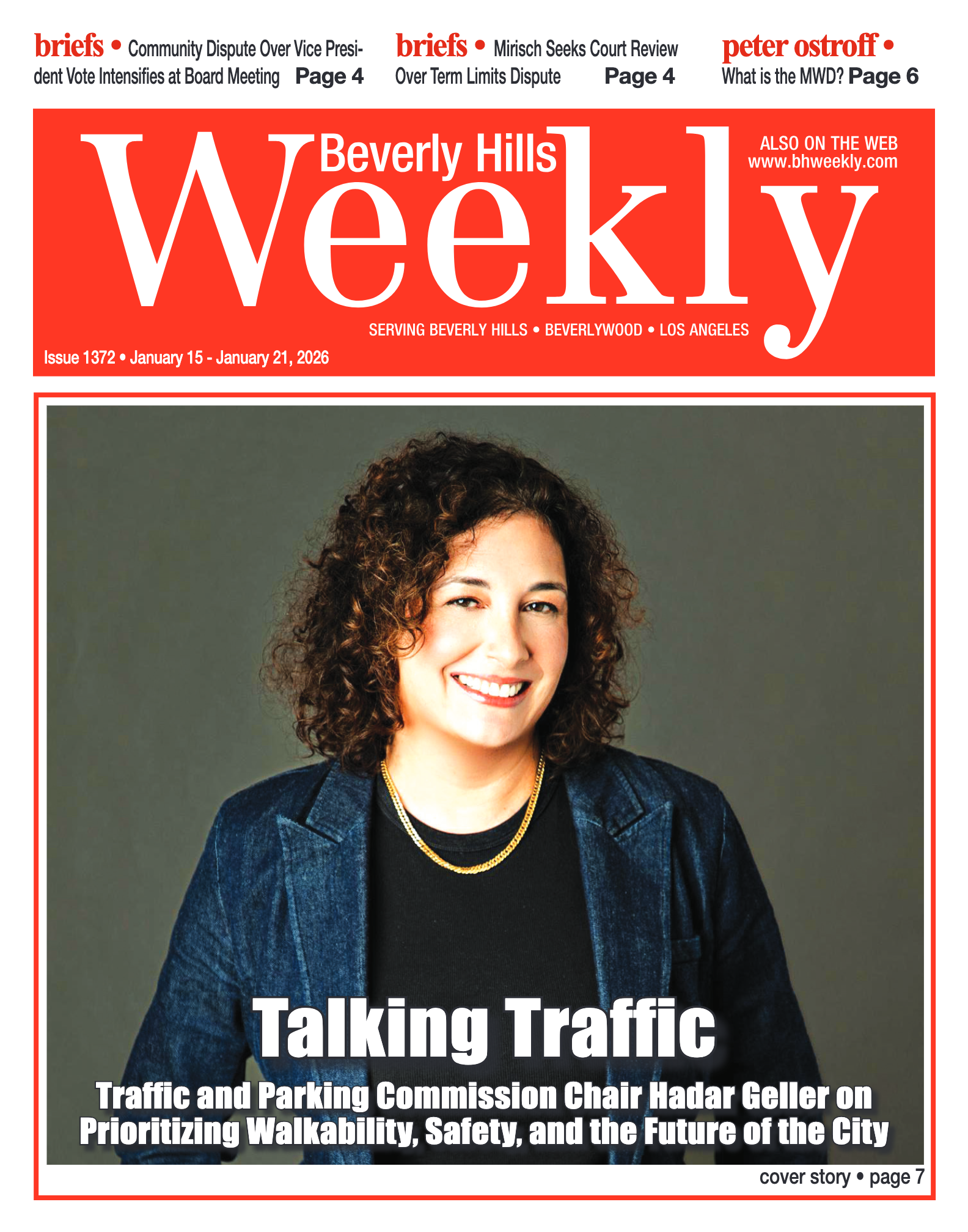
Where is the MWD?
The article explores the water supply for Beverly Hills, highlighting its reliance on the Metropolitan Water District of Southern California (MWD) as the primary wholesaler, while distinguishing it from the Los Angeles Department of Water and Power (DWP). It emphasizes the importance of MWD in providing water to the region, the challenges posed by diminishing water sources, and the city's efforts to enhance local water conservation and alternative supply methods to ensure future sustainability.
Mrs. Marcus
The article pays tribute to Mrs. Rachelle Marcus, who has made significant contributions to the Beverly Hills Unified School District over her decades-long career as an educator and Board President, highlighting her commitment to improving educational opportunities and school performance. As she prepares to conclude her term, she reflects on her achievements and challenges while advocating for continued enhancements in academic standards and the responsible use of technology in education.