Peter Ostroff
A Voice for Beverly Hills — Past, Present, and Future
Captain Max Subin / Seoul/Mongolia June 2026
City Manager Ryan Gohlich announced the promotion of Captain Max Subin to Chief of the Beverly Hills Police Department, marking the first internal appointment in years; Subin, a well-respected member of the department since 1999, emphasizes community safety and aims to enhance departmental operations. Meanwhile, a travelogue details a recent trip to Mongolia, highlighting its rich history, cultural experiences, and the challenges posed by rapid urban growth and infrastructure development.
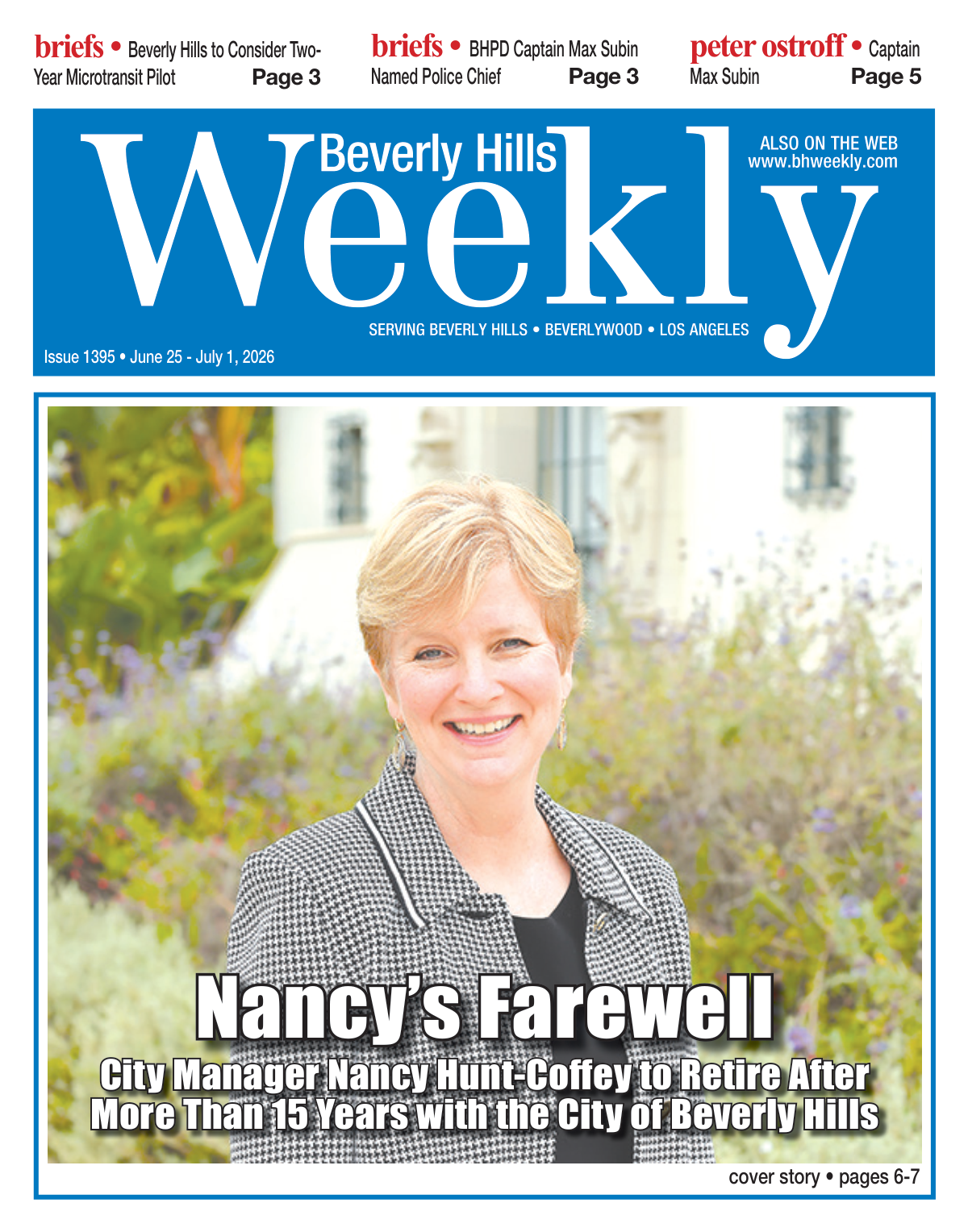
On Tuesday June 23, City Manager Ryan Gohlich announced that for the first time in many years, the City has hired a new Chief from within BHPD, Captain Max Subin, who has been a member of the department since 1999. Captain Subin, currently a Captain within the BHPD head of the department, has done almost everything within BHPD. He has served in Patrol, Crime Suppression, Detectives, Community Relations and Professional Standards. He is widely known in the community and universally well liked. His current role is Captain of the Administrative Services Division, one of the department’s three major divisions. The division oversees functions such as personnel and training, records, communications, budgeting, policy and compliance, and other administrative operations. He earned both his Bachelor’s Degree and Master’s in Public Administration from California State University, Northridge. He also attended the California Police Chiefs Executive Leadership Institute at the Drucker School of Management at Claremont Graduate University in 2021. Chief Subin told me: “It’s the honor of my professional career to service as Chief of the Beverly Hills Police Department. “Priority number one is the safety of this community. I look forward to listening to our staff, our community and addressing any areas in which we can improve. “I will continue to monitor the latest in technology and also prepare for the next Metro station opening and high profile sporting events coming to the region. “We are a destination where everyone wants to be. One of the reasons is because we’re one of the safest communities in America and we will keep it that way.” As Chief, Subin will lead a department of 154 sworn and 112 civilian staff. Subin succeeds Chief Mark Stainbrook who is retiring on June 26 after almost five years with the City of Beverly Hills.
*** Seoul/Mongolia June 2026 Anne and I returned earlier this week from a two week journey to Mongolia and I thought I would tell you a bit about this country in case you are inclined to do something that former Mayor Bob Wunderlich once described as “stepping outside of one’s comfort zone.” Notably, we were not the first of the inhabitants of the Beverly Hills bubble to visit Mongolia. Former Mayor John Mirisch and Rotary Club President and
always engaged Sandy Pressman have visited this extraordinary place. I am certain that there are others. As you may recall, Anne’s standard for destinations is “If I haven’t been there, I want to go.” A visit to Mongolia exemplifies this philosophy. Before we embarked, I knew nothing about Mongolia. When asked whether we were going to Inner Mongolia or Outer Mongolia, my response was “I don’t know.” It turns out that Inner Mongolia is a part of China. What was once Outer Mongolia is now the independent country of Mongolia. Mongolia is the most sparsely populated country in the world with 3,5 million people spread over a territory that is the size of Germany, France and Spain, with a population of 200 million people, combined. It is landlocked surrounded by Russia to the north and China to the south. Faced with the choice, Mongolia threw in its lot with Russia. For the most part, Mongolia uses Russia’s Cyrillic alphabet to write its words. Mongolia’s signs look Russian but they are simply Russian characters spelling out, phonetically, Mongolian words. Mongolia was part of the Soviet Union until the SU collapsed in around 1990 and has been a democracy ever since. Historically, it has been a nomadic country predominantly populated by herders who move their animals with the seasons. It has a brutal climate with little rain and very, very cold winters. It has abundant natural resources including copper, nickel and rare minerals which are increasing the country’s prosperity. About one half of the population now lives in and around the capital, Ulaanbator (UB) with around 1.7M people up from around 500,000 in 1990. It’s growth has been spurred by job opportunities which have attracted people from the nomadic life style. We started in UB and the first impression is that it is a modern city with numerous hi-rise residential and commercial buildings. Not unlike Tokyo of thirty years ago. The second impression is that its infrastructure has fallen far behind the rapid population growth fueled as the children of the herders come to the big city for its job opportunities. The result is horrendous traffic and numerous hi-rise residential projects, some 30 or 40 stories tall, that are stalled. The traffic is the result of roads that were built for a much smaller city that is now attracting thousands of residents from all over the country. The stalled projects are a function of the
unavailability of infrastructure (water and power connection to allow for their completion. But never mind, the ShangriLa Hotel was very comfortable and there were lots of very good restaurants around. Mongolia has a glorious history. Under the leadership of Genghis Kahn and his grandson Kublai Khan and others, in the 13th Century the Mongols assembled the largest contiguous empire that the world has ever known before or since. Unlike other empires, British, French, Dutch, Spanish, its purpose was not conquest for commercial purposes, but, rather, for peaceful existence. It did not survive. Our adventure started in UB and covered the ancient capital in the north, the Altai mountains of the far west and the Gobi desert in the south. The country is vast and all air connections are through UB so we were in and out of that city several times. This is a bit of an issue because the only decent hotels are in the center of the city and the airport is one to three hours away by car depending on traffic. You must be prepared to spend quite a bit of time in transit. When planning your visit, you must bear in mind that Mongolia is a pretty cold country. UB is at the same latitude as New York City but does not have the benefit of the Gulfstream. We were told that it is the world’s coldest capital city. In the winter, temperatures can reach - 40 degrees Celsius or - 104 degrees Fahrenheit. There was a brief snowfall on June 20. On our first day in Mongolia, we traveled by four wheel drive van from UB to the Husain Nuruu National Park. The exclusive means of ground transportation is in these vans over rocky unpaved tracks. We quickly got used to this but the Mongolians have a lot to learn from tourist oriented African countries such as South Af-
rica, Botswana, Namibia and Zimbabwe. At the National Park, we saw some unusual wildlife featuring the “takhi” or Przewalski’s Horse a species of horse now being re-introduced after becoming extinct due to over hunting. We also saw something called a marmot. We then visited the ancient capital of Mongolia, Kharakhorum which has an enormous former Erden Zu monastery, now a museum. It was built in 1585 and was affiliated with a sect of Tibetan
Buddhism. There is not much left of the ancient capital and not much left of old monasteries. Today, approximately 50% of Mongolians identify as Buddhists. Most of the rest are atheists. At the time that Russian direct rule commenced in around 1910, we were told that approximately 30% of the male population were Buddhist monks. Pursuant to the Soviet anti-religious policies, thousands were killed. After the side trip to Kharakhorum, we returned to UB and joined a trip offered by Nomadic Adventures with a group of nine other travelers from the US and Canada. While in UB, we visited the Jinghiss Khan Museum which was very impressive and informative and a monastery which was not so much. We flew from UB to the Altai Mountains on the far west of the country. While I am thinking about it, a word or two about the food. In UB, there are restaurants of almost every kind. But you would likely be challenged to find a kosher restaurant of a pastrami sandwich. Seafood in this land locked country is somewhat hard to find. Rather, you will easily find Mongolian specialties such as buuz, a meat or vegetable stuffed dumpling, as well as tsuivan, a noodle dish mixed with meat and vegetables or grilled vegetables and stir fries. Traditional dishes include: shorlog (Mongolian barbecue or shish kebab), horhog (roasted sheep), buuz (steamed meat dumplings), chansan mah (boiled meat on the bone), khuushuur (fried meat pies), and guriltai shol (mutton noodle soup). Being candid, I would rate the food available in Mongolia as a four of a ten point scale. But I am confident that by the time you visit, it will have improved. We landed at Ulgii visited the Eagle Hunter Cultural Center and stayed at Three Eagle Camp. This is where we had our first experience with accommodations in Gers, felt and canvas tents with latticed walls. These are the homes of nomadic people and ubiquitous throughout the country. Ours at Three Eagle Camp was ok but exemplified the wisdom of my view that if the Good Lord had intended for me to sleep rough, he/she would not have invented the Ritz Carlton. The highlight of the visit to the Altai Mountains was learning about and visiting Kazakh eagle hunters—who, on horseback, pursue hares and foxes with trained eagles. We visited the home (ger) of an eagle hunter’s family and I was allowed to pose with a hunting eagle perched on my “powerful” forearm. The setting of the Three Eagle Camp is magnificent — It is situated at the foot of the majestic Tsambagarav Mountain, a permanent snow-capped peak in the Altai Mountains that stands at 13,783 feet. But it is cold
and windy. From there we returned to UB, stayed overnight and then flew to the Gobi desert in the south. Our home for four different stays in UB was the Shangri La Hotel which is outstanding by every measure. And it is connected to a very large modern mall that features several restaurants,
lots of shops and a supermarket that would compare favorably with Gelson’s and is open from 6a to midnite, seven days a week. We spent four nights in Gobi at the Three Camel Lodge. This was a much more comfortable experience and there were two highlights of the visit — camel riding and attending a Naadam or festival. The camels are magnificent two humped
animals who can survive for weeks or months without water. I rode (straddled) one for an hour through desert and sand dunes. Walking was a challenge for two days following this experience. The Naadam that we attended was one of dozens held throughout the country leading up to a national competition in UB in July. It features competitions in three “manly” sports that are at the heart
of Mongolian culture — archery (where women compete), horseback racing and wrestling. Bottom line: a very interesting trip; Mongolia has great potential for growth given highly educated people (100% literacy rate) and natural resources. Infrastructure must catch up with rapid urban expansion and economic potential.
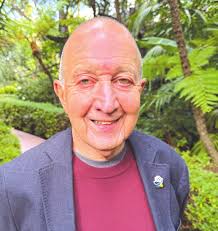
Peter Ostroff is a long-time Beverly Hills resident of over 50 years who retired in 2017 after a 50-year career as a trial lawyer. He was born in Washington, D.C. in 1942. He graduated from Washington University (St. Louis, Mo) in 1964 with a B.A. degree in political science and economics. He graduated from the University of Chicago Law School in 1967 with a J.D. degree. He taught law at Monash University Law School in Melbourne, Australia in 1968. He became a member of the Illinois Bar in 1967 and the California Bar in 1969, He clerked for Hon. Shirley M. Hufstedler of the United States Court of Appeal 1969-70, practiced law with Nossaman, Waters, Scott, Krueger & Riordan and successor firms from 1970 to 1980 and with Sidley Austin from 1980 until 2017. During his full time law practice years he was a Committee Chair and Member of the Council of the American Bar Association, Litigation Section and was President of the Association of Business Trial Lawyers. Since 2018, he has served on the Beverly Hills Planning Commission. In addition to his work on the Commission, Peter has chaired the BHUSD 7-11 Surplus Property Committee and contributed to planning efforts for the District Offices site on S. Lasky Drive and future uses of the Hawthorne School property. He also served as Co-Chair of the Citizens Advisory Committee for the City's Climate Adaptation and Action Plan. He has been married to Anne Y. Ostroff since 2002, has two children, Nick Ostroff and Natalie Anne Cookson and has two grandchildren, Elliott Cookson and Emma Anne Cookson. Some family information is collected under Family Tree in this website. Since April 2024, he has written a weekly column for the Beverly Hills Weekly The columns are collected in this website.
petero@ostroff.laMore from the Archive

The Sensational South/Metro/Mr. Kole
The article discusses a town hall meeting focused on zoning issues and proposed multifamily residential projects in Beverly Hills, highlighting community efforts to advocate for residents' interests in the "Sensational South." It also addresses the upcoming subway service and security concerns, while emphasizing the need for better transportation solutions and facilities to encourage local residents to utilize the new transit system.
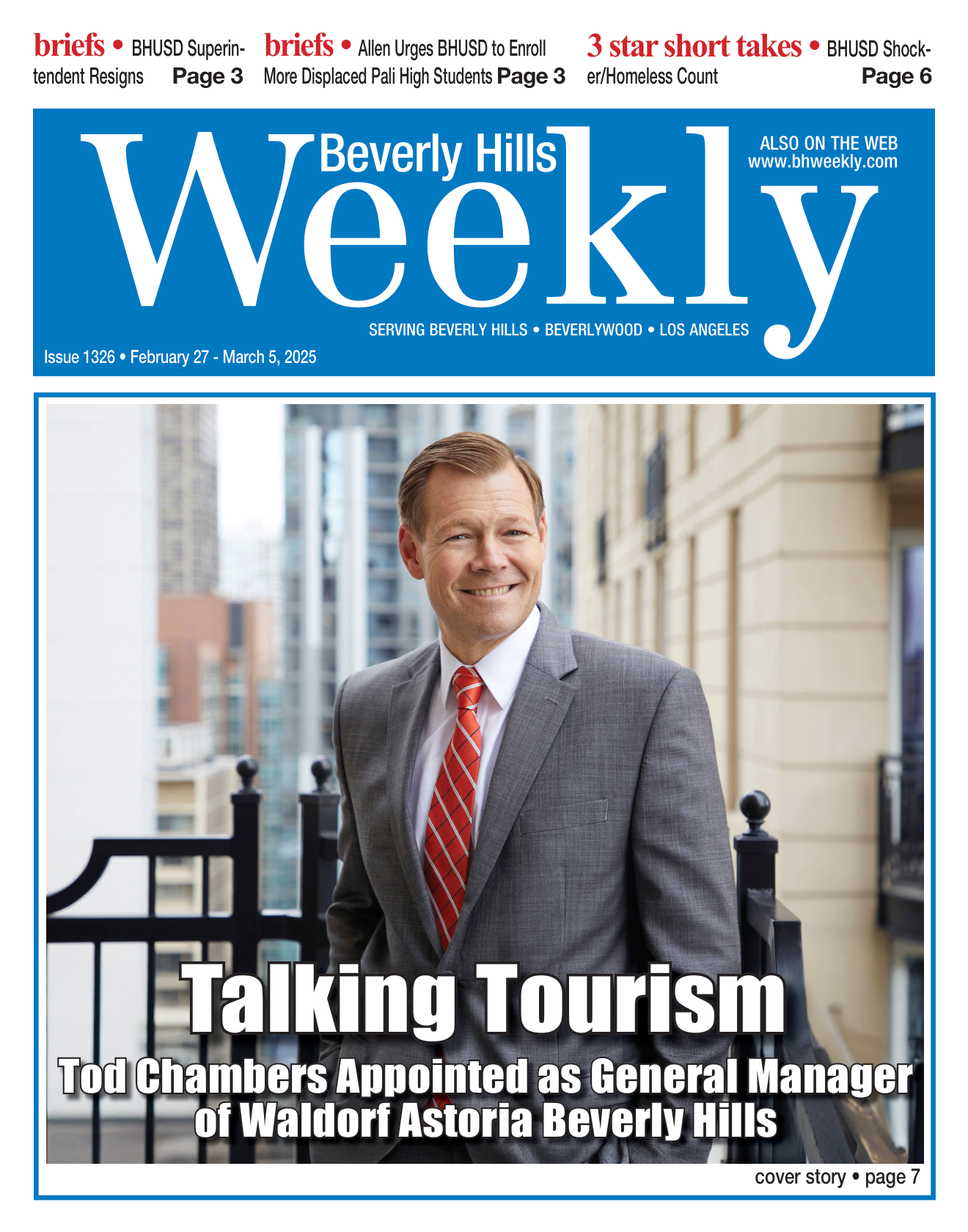
BHUSD Shocker / Homeless Count
The article discusses the unexpected resignation of BHUSD Superintendent Dr. Michael Bregy, highlighting the need for the Board of Education to address the circumstances surrounding his departure while focusing on finding a suitable replacement to improve the district's academic performance. Additionally, it covers the annual Los Angeles Homeless Count, where volunteers, including the author, found a surprisingly low number of unhoused individuals in their assigned area, raising questions about the effectiveness and scientific accuracy of the counting process.
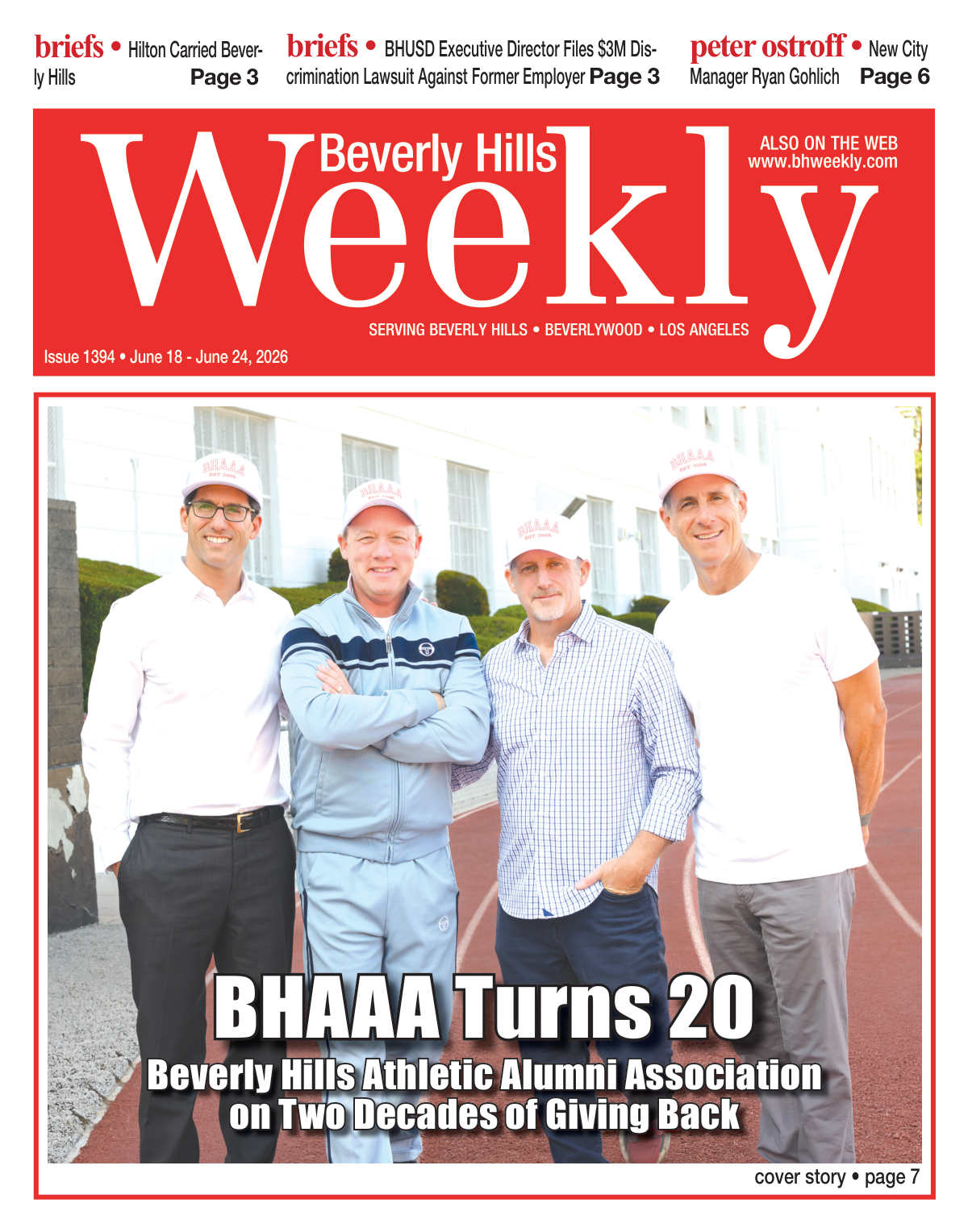
New City Manager Ryan Gohlich
Ryan Gohlich, who takes office as City Manager on July 1, has an extensive background in city planning and development, making him a strong candidate for the role amid challenging housing allocation issues. As he prepares to lead, he emphasizes the importance of effective management of city services and public safety, while also acknowledging the complexities of hiring additional police officers and the need for transparency regarding the city's staffing levels.