Peter Ostroff
A Voice for Beverly Hills — Past, Present, and Future
Builder's Remedy/New Housing Law/Political Violence
The article discusses Leo Pustilnikov's aggressive pursuit of five "builder's remedy" housing projects in Beverly Hills, emphasizing his strategy to increase project size in response to city opposition. It also highlights the recent California legislation (SB 79) that further diminishes local control over land use, allowing for increased height and density of housing near transit stations, and reflects on the troubling rise of political violence in the U.S., advocating for civil discourse and human connection.

Builder’s Remedy/New Housing Law/Political Violence
I have heard a lot about Leo Pustilnikov and his efforts to develop five “builder’s remedy” projects in the City including his trial court victory ordering the processing of his project on Linden Drive. I was pleased that he agreed to speak with me on September 12 about the status of his plans.
Notably, Mr. Pustilnikov says that he is not a real estate developer but, rather, is a real estate investor with a focus on “complex situations.” And like it or not, that’s what we have.
Mr. Pustilnikov has taken a very aggressive approach to applications for entitlements. He says that he wants the City to “work with him” but that Beverly Hills has fought his applications every step of the way. His stated position is that the more the City fights his projects, the larger the projects will become and the greater the City’s potential liability will be.
Under California’s Housing Accountability Act and its builder’s remedy provision, multifamily projects that provide a % of affordable units may bypass a City’s zoning rules unless the City has adopted a Housing Element of its General Plan that has been certified by the state as compliant with the law. The City’s Housing Element was certified in early 2024 and applications for projects for which a Preliminary Application had been submitted prior to that time are eligible for builder’s remedy treatment.
Mr. Pustilnikov filed the first Beverly Hills builder’s remedy application in 2022 for a project on Linden Drive. He currently has applications for five builder’s remedy projects in Beverly Hills. The projects with # of stories, units and parking spaces are as follows:
Location Height # of Units Parking
Linden 19 stories 163 units (33 affordable) 126 spaces
Hamilton 8 stories 90 units (18 “ ) 13 spaces
Maple 12 stories 65 units (13 “ ) 15 spaces
Oakhurst 11 stories 25 units (5 “ ) 14 spaces
Tower Dr. 8 stories 55 units (11 “ ) 14 spaces
Recently, Mr. Pustilnikov has announced, but not yet filed an application with the City, that the Linden project will be increased from 19 stories and 200 feet tall to 36 stories, 400 feet tall. It seems likely to me that he will amend the other applications to increase height and density. This is consistent with his theme that the more the City delays approvals, the bigger the projects will become.
His bigger threat is that if the City does not “work with him” he will sue to invalidate the state’s certification of the City’s Housing Element. If successful, this will, in theory, re-open the window for more large builder’s remedy projects. He points out that he has obtained a tentative court ruling that the Redondo Beach Housing Element was improperly certified and will do the same with the Beverly Hills Housing Element. I have reviewed the court ruling that he is relying on and the alleged Redondo Beach defects are not in any way applicable to the Beverly Hills certified Housing Element. So I asked him: “On what basis would you challenge the Beverly Hills Housing Element. He refused to say, stating only “That’s for me to know.” Fair enough but I cannot take seriously unexplained threats.
It appears that, with Mr. Pustilnikov’s recent victory in which the court ordered the City to process the Linden Drive application, he is sitting in the catbird’s seat holding all the cards. (As you know, I love cliches.) So, why the threats? Why is it so important that the City “work with” him (translation: negotiate)?
***
Last week, the California legislature passed and sent to the Governor another significant “housing” bill, SB 79, further eroding local control over land use. Most observers believe that the Governor will sign this bill into law.
It’s purpose is to increase height and density for housing projects near certain transit stops. Most significantly for the City are provisions that pertain to the new La Cienega and Reeves/Beverly Metro subway stations. Under SB 79, height limits are increased to 9 stories adjacent (sharing a border) to the stations, 7 stories within a ¼ mile of the station and 6 stories between ¼ and ½ mile from the stations. Density is increased to 120 units/acre and a 3.5 Floor Area Ratio (square footage of the structure may be 3.5x the lot size).
Significantly, these rules allow for such development not only in areas zoned for multifamily residential, mixed use or commercial uses. This could result in a significant change by allowing residential development in the Triangle or on Wilshire Blvd. now zoned solely for commercial use. For a number of reasons, the City has precluded any residential development in the Triangle.
There is some question as to whether these rules apply to property zoned for single family residential uses but it is likely that it does.
Similar to other recent enactments, there is a requirement for affordable units of 7% extremely low income, 10 % very low income or 13 % low income. While the state density bonus laws apply to projects allowed under SB 79, importantly, there is a cap that limits height to the levels allowed by the act and does not require a local authority to grant density bonus law increases in height beyond what the applicable SB 79 limit permits.
I have touched upon some of the highlights of this legislation. Undoubtedly, there will be numerous complexities to be worked through. But it is fair to say that this new law, if and when enacted, could have a significant impact on the City.
***
Before Charlie Kirk’s tragic assassination, I did not know of him any more than I knew of Democratic Minnesota legislator Melissa Hartman who was assassinated in June along with her husband at her home in Minneapolis.
Like most of you, I was horrified by these examples of escalating political violence in this country from all sides. And I don’t know what to do about it but I do know that no good can come of it.
Mr. Kirk himself had words about this when he spoke a few months ago: ‘When things are moving very fast and people are losing their minds, it’s important to stay grounded. Turn off your phone, read scripture, spend time with friends, and remember internet fury is not real life. It’s going to be OK.
‘When you stop having a human connection with someone you disagree with, it becomes a lot easier to commit violence.
‘What we as a culture have to get back to is being able to have a reasonable disagreement, where violence is not an option.”
This advice should be an important part of Mr. Kirk’s legacy.
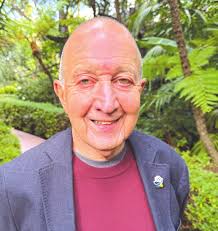
Peter Ostroff is a long-time Beverly Hills resident of over 50 years who retired in 2017 after a 50-year career as a trial lawyer. He was born in Washington, D.C. in 1942. He graduated from Washington University (St. Louis, Mo) in 1964 with a B.A. degree in political science and economics. He graduated from the University of Chicago Law School in 1967 with a J.D. degree. He taught law at Monash University Law School in Melbourne, Australia in 1968. He became a member of the Illinois Bar in 1967 and the California Bar in 1969, He clerked for Hon. Shirley M. Hufstedler of the United States Court of Appeal 1969-70, practiced law with Nossaman, Waters, Scott, Krueger & Riordan and successor firms from 1970 to 1980 and with Sidley Austin from 1980 until 2017. During his full time law practice years he was a Committee Chair and Member of the Council of the American Bar Association, Litigation Section and was President of the Association of Business Trial Lawyers. Since 2018, he has served on the Beverly Hills Planning Commission. In addition to his work on the Commission, Peter has chaired the BHUSD 7-11 Surplus Property Committee and contributed to planning efforts for the District Offices site on S. Lasky Drive and future uses of the Hawthorne School property. He also served as Co-Chair of the Citizens Advisory Committee for the City's Climate Adaptation and Action Plan. He has been married to Anne Y. Ostroff since 2002, has two children, Nick Ostroff and Natalie Anne Cookson and has two grandchildren, Elliott Cookson and Emma Anne Cookson. Some family information is collected under Family Tree in this website. Since April 2024, he has written a weekly column for the Beverly Hills Weekly The columns are collected in this website.
petero@ostroff.laMore from the Archive
Unique Favoritism/Board Under Fire
The article discusses the controversy surrounding a proposed exception to a new ordinance in Beverly Hills that would allow landmarked properties to be rented out for shorter terms, raising concerns of favoritism toward a specific property owner. Additionally, it critiques the Board of Education's handling of a recent decision regarding the display of Israeli flags in schools, highlighting community outrage and the need for open, accountable discourse on leadership issues within the district.

BHUSD Initiative/Hoops/Builder's Remedy Docket
The Beverly Hills Unified School District is restructuring its College and Career Counseling Department to enhance academic support and college readiness for students, with dedicated counselors for different grade levels and a focus on wellness resources. Additionally, several new housing projects under California's Builder's Remedy are set to be reviewed by the Planning Commission, though concerns about inadequate parking and the potential impact on established neighborhoods persist.
Thumbs on the Scales, a Quick Turnabout
Peter Ostroff's column critiques the Planning Commission's proposal to allow short-term rentals for landmarked houses, arguing that it unfairly favors a specific case without evidence of greater maintenance costs compared to non-landmarked homes. He also highlights a controversial decision by the BHUSD Board to display the Israeli flag, which was quickly reversed due to community backlash, emphasizing the need for the Board to focus on academic issues rather than political matters.