Peter Ostroff
A Voice for Beverly Hills — Past, Present, and Future
What Were the Voters Trying to Tell Us?
In the recent City Council election, Mary Nakae Wells and Craig Corman emerged victorious, reflecting their strong community ties and experience rather than a desire for significant change, as both incumbents opted not to run. The election results highlighted the candidates' qualifications and the lack of substantial political funding influence, with issues like the Cheval Blanc Hotel project and personal security concerns playing minimal roles in voter decisions.
Listen to this article
ElevenLabs · Burt Reynolds™
In a surprising turn of events, after a City Council campaign that lasted over six months in which 10 of our residents sought two open seats, the results were actually known on election night. Current residents Mary Nakae Wells, a member of the Beverly Hills Unified School District Board of Education, and longtime resident Craig Corman, a member of the Cultural Heritage Commission who served eight years on the Planning Commission, were elected by wide margins.
Although I had some sense of who would do well, I fully expected that it would be days if not weeks before we would see conclusive results.
We were very fortunate to have a number of outstanding candidates who were well qualified to serve on the City Council. Most of the ten ran very sophisticated, intense campaigns.
What explains the results and what can we learn from the fact that the final results were not nearly as close as I among others expected?
Do the results reflect an appetite among the voters for change? Not at all.
Two incumbents who had been part of a leadership alliance for a number of years decided not to run for re-election. Thus, change is inevitable no matter who is elected. So notions of “throw the rascals out” were not at play. We can anticipate that the change would be substantial no matter which of several of the candidates were elected.
Are the results reflective of the role of money expenditures? Although former
Speaker of the California Assembly
Jesse Unruh is supposed to have said that “money is the mother’s milk of politics”, all of the candidates were funded well enough, to a large extent self-funded, to get their messages out.
Unlike in 2020, no substantial Political
Action Committee funds were expended on behalf of any candidate. There was no repeat of the 2020 experience when commercial interests spent six figure $ on behalf of two candidates. I am hopeful that this absence of Political Action
Committee funding support will remain the case going forward.
Did support for or opposition to the Cheval Blanc Hotel project have an impact? Most members of the City government supported the project, but in a low turnout referendum, our residents rejected it. A very vocal few tried to make this a campaign issue and deny support to anyone who had favored the project.
This strategy flopped in this election as it has whenever substantial union support was not in play.. Most of the candidates had supported the Cheval Blanc project.
Only one candidate, Sharon Persovski, campaigned based on her opposition, which did not translate into many votes.
Not many residents appear to support the mindless “no” on anything in excess of 45’.
Did concerns about personal security and criminal activity play a substantial role? Not really. Most if not all of the candidates gave prominent mention to the need for more robust law enforcement generally and visible law enforcement around the future subway stops including a BHPD substation at the Wilshire/La
Cienega station. There was no daylight between the four leading candidates,
Corman, Wells, Alissa Roston or
Myra Demeter on this issue apart from
Corman’s advocacy of a city prosecutor who would take over prosecutorial responsibility for crimes committed within the city that the County District Attorney would not prosecute.
Was experience in City government a distinguishing characteristic? Not particularly. Most of the candidates had completed Team Beverly Hills and some had completed the Citizens Police Academy.
Between them they had served for dozens of years on City Commissions (Corman on Planning and Cultural Heritage; Demeter on Health & Safety and Planning; Roston on two Commissions; and Demeter, Roston and Nooshin Meshkaty all served two terms on the Board of Education). And the fact that, if elected, Wells would leave her term as a member of the
Board of Education several months prior to completion was not to her significant detriment.
Negative campaigning is troublesome because even where not factually based sometimes it works. I am told that there were some in this election and fully understand that the targets of false accusations take great offense. It is not my view that whatever occurred had a material impact on the results.
So, what happened?
In short, Corman has been a lifelong City resident who has been well respected by all who have known him throughout the years. He was able to present himself as experienced and knowledgeable about City affairs and capable of applying good judgment to deal with the issues confronting the city however and whenever they would arise.
Wells is very well known to the residents who are deeply involved and invested in BHUSD. She has played a leadership role in dealing with the many challenges of the pandemic and the construction issues facing the District. She is perceived as someone who has successfully navigated “choppy seas” with a firm hand on the tiller.
Roston and Demeter appeared to most voters as very similar – both were longtime residents of the southwest part of the city; both were City Commissioners; both sent several children through the
Beverly HIlls schools and both served two terms as members of the BHUSD Board of Education. In both cases, their service on the board was at least a decade ago so they did not command the same high and generally positive profile with current parents of school district children as Wells enjoyed. While Demeter had recently held the high profile position as Chair of the Planning Commission, Roston had been President of the Rotary Club of Beverly Hills. Their substantive views were similar and they are good friends..
It is reasonable to assume that they took votes from each other and interesting to speculate about what would have resulted if only one of them had been running.
Russell Stuart, now a close fifth, is really a newcomer to the City political scene. He has not had much involvement up to now with the City government but was able to leverage his position as the only candidate who was a registered Republican and endorsements from Republican organizations into a very respectable showing. If Mr. Stuart decides to seek office in the future, we may learn whether the Republican support is a floor or a ceiling.
I must emphasize that I respect and admire the campaigns of several of the other candidates and do not mean to denigrate the extraordinary efforts of any of them. They campaigned well and successfully.
Craig and Mary simply did it better.
Peter Ostroff is a retired attorney and former Beverly Hills Planning Commissioner.
People Mentioned
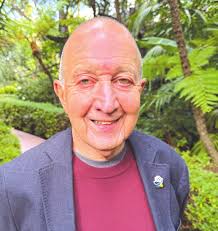
Peter Ostroff is a long-time Beverly Hills resident of over 50 years who retired in 2017 after a 50-year career as a trial lawyer. He was born in Washington, D.C. in 1942. He graduated from Washington University (St. Louis, Mo) in 1964 with a B.A. degree in political science and economics. He graduated from the University of Chicago Law School in 1967 with a J.D. degree. He taught law at Monash University Law School in Melbourne, Australia in 1968. He became a member of the Illinois Bar in 1967 and the California Bar in 1969, He clerked for Hon. Shirley M. Hufstedler of the United States Court of Appeal 1969-70, practiced law with Nossaman, Waters, Scott, Krueger & Riordan and successor firms from 1970 to 1980 and with Sidley Austin from 1980 until 2017. During his full time law practice years he was a Committee Chair and Member of the Council of the American Bar Association, Litigation Section and was President of the Association of Business Trial Lawyers. Since 2018, he has served on the Beverly Hills Planning Commission. In addition to his work on the Commission, Peter has chaired the BHUSD 7-11 Surplus Property Committee and contributed to planning efforts for the District Offices site on S. Lasky Drive and future uses of the Hawthorne School property. He also served as Co-Chair of the Citizens Advisory Committee for the City's Climate Adaptation and Action Plan. He has been married to Anne Y. Ostroff since 2002, has two children, Nick Ostroff and Natalie Anne Cookson and has two grandchildren, Elliott Cookson and Emma Anne Cookson. Some family information is collected under Family Tree in this website. Since April 2024, he has written a weekly column for the Beverly Hills Weekly The columns are collected in this website.
petero@ostroff.la