Peter Ostroff
A Voice for Beverly Hills — Past, Present, and Future
What to Do About the Commissions?
The article discusses the ineffective functioning of city commissions, which are meant to serve as advisory bodies to the City Council but often fall under staff control, stifling independent input and engagement. The author suggests that commission chairs should take more control of meeting agendas and that neighborhood associations should be established to provide genuine resident representation, ultimately leading to a better-informed Council.
First, in establishing each of these commissions, the Council enacted ordinances that specified that the commission would act as an “advisory body” to the Council on matters within their purview. This means that the commissions are intended to provide a channel of communication and advice not simply rubber stamp the views of staff or consultants. They are charged with providing that advice to the Council, not staff, not a department head, not to the Office of the City Manager but to the Council.
The Commissioners are told in the city’s Commissioner’s Handbook that they should think of themselves as “the eyes and ears of the City Council” and to advise the Council after in-depth discussions at meetings where public input is encouraged.
Second, each commission has a staff liaison who, in consultation with the Commission chair, creates the agenda for Commission meetings. This means that the Commission chair has an important if not dispositive role and, for example, may object if staff suggests that an agenda item is for “discussion purposes only” (which insures that nothing will result) and insist that, where appropriate in their judgment, items be for direction and recommendation to Council.
Finally, the role of the staff liaison is to provide “administrative support”. That means that the staff liaison support, not direct or control the work of the commission.
In current practice, some commissions do not fulfill this advisor to the Council role. Staff tends to control both the agendas and functioning of our commissions which often precludes any independent voice or channel of communication. In practice, commission advice is stifled. Unfortunately, through inertia or feeling of powerlessness, the commissions simply let this happen.
As a result, the commissions do not fulfill their proper role. Members of the commissions often are frustrated and become disaffected so neither the purpose of generating knowledgeable advice nor the purpose of creating a feeling of engagement is accomplished.
I have two suggestions for improvement.
First, the commission chairs should be more aggressive in providing input for their meeting agendas to ensure time for meaningful discussion and to permit discussion of advice and direction, not only discussion. In short, put their big boy or big girl pants on and insist on taking an appropriate level of control.
Second, at the initiative of either a commission or the Council, commissions should provide advice in the form of written reports on appropriate subjects or issues to the Council. Solely by way of example, the Public Works Commission could provide a report regarding the status of the Cabrillo “reservoir”; the Traffic & Parking Commission could provide a report on the “permit parking” program. These reports could be drafted by an ad hoc committee of commissioners, not staff, and then submitted to the full commission for discussion and approval before submission to the Council.
At present, too few residents are applying for open Commission positions. I suspect that changing the operations in practice of the commissions to make service more meaningful will attract more applicants.
What do you think?
***
Neighborhood “Associations”
I have often felt that one of the things that has been missing from discussions of significant projects is meaningful and accurate input of a true sense of the residents of various neighborhoods over things that affect the neighborhood directly.
From time to time, issues arise that stimulate somewhat uniform comment from a substantial number of concerned residents. But what we do not have are truly representative associations that study issues of special concern to the group. We do not have neighborhood associations that have substantial memberships, perhaps charging nominal dues, that elect a leadership and then formulate positions that represent a true consensus. Instead, what we have is self-appointed individuals or small groups who purport, without any principled basis, to speak for a large number of residents. Often, these self-appointed “leaders” come to Commission or City Council meetings and ask for substantial additional time to make their views known. Generally, these requests are denied in part because there is no way to determine that these individuals speak for anyone other than themselves.
Notably our councilmembers are elected at large, not by districts. This is entirely appropriate for a small city that does not have diverse groups where a small majority could control or diminish the impact of distinct minorities. Our current councilmembers are from the “Flats”, the Hillside and the Southeast so not every area is covered.
There are times when the special concerns and knowledge of residents of a particular neighborhood would be valuable input into Commission’s or Council’s decisions.
It seems to me that there is a better way than to have nothing more than the voices of self-appointed individuals whose “association” meetings occur in front of their own bathroom mirrors.
OK, call me “pollyanna” but hear me out.
That is, that residents of various areas of the City, from Trousdale to the Southwest get together and create truly representative associations that can form and communicate a consensus on behalf of the residents of their area.
If the Commissions would play their intended roles and if we had truly representative neighborhood associations, we would have a better informed Council. And that would be a good thing.
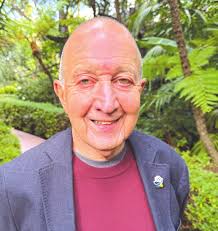
Peter Ostroff is a long-time Beverly Hills resident of over 50 years who retired in 2017 after a 50-year career as a trial lawyer. He was born in Washington, D.C. in 1942. He graduated from Washington University (St. Louis, Mo) in 1964 with a B.A. degree in political science and economics. He graduated from the University of Chicago Law School in 1967 with a J.D. degree. He taught law at Monash University Law School in Melbourne, Australia in 1968. He became a member of the Illinois Bar in 1967 and the California Bar in 1969, He clerked for Hon. Shirley M. Hufstedler of the United States Court of Appeal 1969-70, practiced law with Nossaman, Waters, Scott, Krueger & Riordan and successor firms from 1970 to 1980 and with Sidley Austin from 1980 until 2017. During his full time law practice years he was a Committee Chair and Member of the Council of the American Bar Association, Litigation Section and was President of the Association of Business Trial Lawyers. Since 2018, he has served on the Beverly Hills Planning Commission. In addition to his work on the Commission, Peter has chaired the BHUSD 7-11 Surplus Property Committee and contributed to planning efforts for the District Offices site on S. Lasky Drive and future uses of the Hawthorne School property. He also served as Co-Chair of the Citizens Advisory Committee for the City's Climate Adaptation and Action Plan. He has been married to Anne Y. Ostroff since 2002, has two children, Nick Ostroff and Natalie Anne Cookson and has two grandchildren, Elliott Cookson and Emma Anne Cookson. Some family information is collected under Family Tree in this website. Since April 2024, he has written a weekly column for the Beverly Hills Weekly The columns are collected in this website.
petero@ostroff.la