Peter Ostroff
A Voice for Beverly Hills — Past, Present, and Future
Visit to Sri Lanka
The article provides an overview of a recent trip to Sri Lanka, highlighting its appealing natural beauty, friendly people, and rich cultural history, while contrasting it favorably with India in terms of tourism potential and cleanliness. Despite ongoing challenges such as infrastructure issues and a complex political history, the author expresses optimism about Sri Lanka's future growth in the tourism sector, noting significant improvements underway.
Listen to this article
ElevenLabs · Burt Reynolds™
We recently spent two weeks visiting the Asian country of Sri Lanka (SL). As you may be planning a trip to SL, you may find this report helpful.
Bottom line assessment: Sri Lanka is India in a much more attractive package. It has great and accessible wildlife, beautiful mountains and beaches, lots of Buddhist and Hindu temples ancient and not so ancient and a fascinating complicated history. And it has none of the dirt and abject poverty of India or, for that matter, omnipresent cows in the streets. The people are friendly but foreigners are not constantly accosted by locals with their hands out as is a hallmark of any visit to India. It is a great place to visit and likely to get much better in the near term.
First some basic facts.
What is Sri Lanka (“Resplendent Island”)? Formerly known as Ceylon, SL is a large island (approximately 300 miles north to south and 200 miles east to west) off the southern tip of India. Much like Sicily off the boot of Italy. It has around 23 million inhabitants, roughly 75% Sinhalese Buddhists, 15% Tamil Hindus with substantial Muslim and Christian populations. According to ChatGPT there are fewer than 100 Jews living in Sri Lanka but there is a Chabad center in the capital, Colombo.
SL’s history is, shall we say, a turbulent one and the turbulence persists up to the present. Turbulence requires people and there is evidence of a human presence going back 300,000 to 500,000 years but that is likely largely irrelevant to your visit. Skipping ahead, parts of SL were colonized by the Portuguese in around 1520 who dominated the coastal areas and were largely in it because SL had the best cinnamon and other spices.
In 1658, the Dutch helped a king of SL liberate the country from the Portuguese and then took over themselves. The Dutch East India Company, the world’s first multinational conglomerate, waged war, built fortresses and exploited its own cinnamon monopoly with great efficiency for over 150 years.
After the French defeated the Dutch in a war in 1795, the Dutch king escaped to England for protection. At the urging of the British, the Dutch king ordered te Dutch colonies including Ceylon to submit to British protection. And before long, in 1815, SL became a British colony.
The British unified the country with its tender mercies and cleared vast tracts of forests and grazing lands for coffee cultivation. Coffee was an immensely profitable cash crop and for decades coffee was the principal product. But nothing lasts forever an in 1869 a blight started destroying coffee trees. This blight spread across the country and within 15 years the economy was on the brink of collapse. Tea became the savior and until today, tea has been a backbone of the economy with help from rubber and coconuts. But generally what goes around comes around and tea planters today struggle due to a tea brokerage system that I don’t understand well enough to explain. So many tea growers are turning back to coffee.
Here is where you come in: tourism is relatively small today but I see tremendous potential that has up to now faced numerous obstacles.
In 1948, the Brits left and the Dominion of Ceylon became an independent country. The name was not changed to The Democratic Socialist Republic of Sri Lanka until 1972. There have always been tensions between the Sinhalese in the south and the Tamils who predominate in the north and northeast parts of the island. While, unlike the chaos in India at independence, the transition to independence was peaceful. However, the tensions have often gone from unrest and terrorism to full on civil war on several occasions. The most recent civil war ended only in 2009 and repair of a divided country commenced only then. And the progress has been interrupted by some ISIS terrorism, government mismanagement and corruption and some catastrophic weather events.
Against that backdrop, the economic development and tourism glass is only a small amount full but with tremendous potential for growth. SL is a stunningly beautiful country with warm and friendly people. There is none of the overwhelming panhandling and begging that is omnipresent in India. None.
There are majestic mountains and endless beaches with warm Indian Ocean water. Infrastructure is lacking. Roads are narrow and filled with dilapidated trucks and busses, tuk tuk three wheelers and motorbikes. And potholes. A 50 mile road journey can take four or five hours. A monsoon a few weeks before our arrival had washed out much of the country’s railroad tracks so no train service was available.
Our visit was not without its excitement. The U.S. and Israel attacked Iran while we were in SR. Among other things, one of the U.S. expressed objectives was to destroy the Iranian navy. Accordingly, a U.S. submarine sank an Iranian “warship” off the southern coast of SL and the Iranian survivors were brought to a hospital in Galle, SL where we were then staying. Fortunately, we had no need for a hospital bed while visiting.
I am optimistic about the future of SL and its tourism industry because help is on its way and the potential for growth is enormous. Currently only 10% of the economy is from tourism and only .2% is from the US. Rapid improvement of infrastructure is underway as n/s and e/w highways are under construction as is an international airport is being built at Jaffna in the far north. This will supplement the major airport at Colombo on the s/w coast.
Our trip involved hiking 4 to 8 miles a day through tea plantations and small villages. Along the way we visited Buddhist and Hindu temples some of which were centuries old. We stayed in small (generally less than ten room) hotels. These were luxurious (as you may know, I believe that if the good Lord wanted us to stay in mediocre accommodations, he or she would not have invented Peninsula or Aman resorts). But there aren’t very many of such places now. More are on the way.
So, Sri Lanka is getting there. And soon you may be too.
***
There have been developments in the City Council race since I departed from the Beverly Hills Bubble on February 20.
A Superior Court judge rejected John Mirisch’s efforts to run for reelection. I believe the judge got it wrong but, as you know, my crystal ball is broken.
Further, Board of Education member Russell Stuart has announced that he is now running for election to the City Council. This surprised me for several reasons. These include that he committed in writing to me when he was running for Board of Education in late 2024 that, if elected, he would complete his four year term before running for another office. Specifically he said: “Yes, I am fully committed to serving my entire four-year term and following through on my promises to improve our schools and strengthen the relationship between parents and the district.” I reported this commitment in Beverly Hills Weekly Issue # 1307 dated October 17, 2024. Mr. Stuart is now in only the 15th month of his 48 month term. On March 7 and 10, I asked him via email and text messages to explain the reasons that he is prepared to abandon his commitment. As of press time on March 11, I received no response.
There are other issues relating to Mr. Stuart that I will perhaps discuss later but for now the best that I can say is that his candidacy raises some yellow flags..
People Mentioned
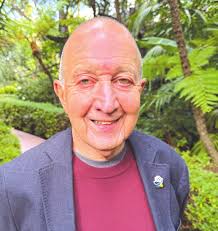
Peter Ostroff is a long-time Beverly Hills resident of over 50 years who retired in 2017 after a 50-year career as a trial lawyer. He was born in Washington, D.C. in 1942. He graduated from Washington University (St. Louis, Mo) in 1964 with a B.A. degree in political science and economics. He graduated from the University of Chicago Law School in 1967 with a J.D. degree. He taught law at Monash University Law School in Melbourne, Australia in 1968. He became a member of the Illinois Bar in 1967 and the California Bar in 1969, He clerked for Hon. Shirley M. Hufstedler of the United States Court of Appeal 1969-70, practiced law with Nossaman, Waters, Scott, Krueger & Riordan and successor firms from 1970 to 1980 and with Sidley Austin from 1980 until 2017. During his full time law practice years he was a Committee Chair and Member of the Council of the American Bar Association, Litigation Section and was President of the Association of Business Trial Lawyers. Since 2018, he has served on the Beverly Hills Planning Commission. In addition to his work on the Commission, Peter has chaired the BHUSD 7-11 Surplus Property Committee and contributed to planning efforts for the District Offices site on S. Lasky Drive and future uses of the Hawthorne School property. He also served as Co-Chair of the Citizens Advisory Committee for the City's Climate Adaptation and Action Plan. He has been married to Anne Y. Ostroff since 2002, has two children, Nick Ostroff and Natalie Anne Cookson and has two grandchildren, Elliott Cookson and Emma Anne Cookson. Some family information is collected under Family Tree in this website. Since April 2024, he has written a weekly column for the Beverly Hills Weekly The columns are collected in this website.
petero@ostroff.laMore from the Archive
OZ Part II and Treva
The article recounts the author's recent trip to Australia, where they attended significant cricket and tennis events, highlighting the rich culture and history of sports in the country. Additionally, it touches on the launch of the California Post newspaper, the challenges facing print media, and a local political issue involving Councilmember John Mirisch's candidacy amidst term limit disputes.
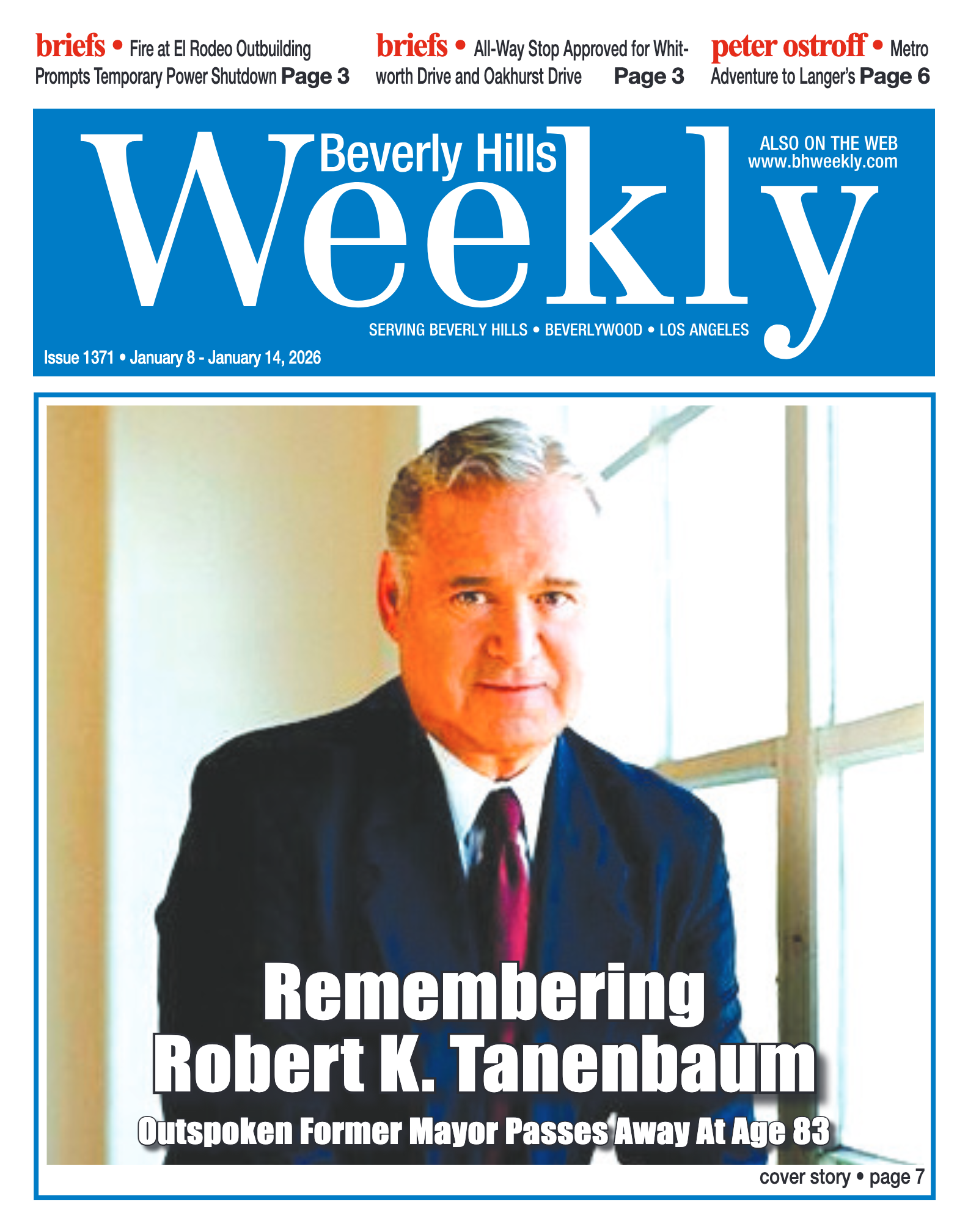
Metro Adventure to Langer's
The article recounts a public transit journey taken by Beverly Hills Weekly Publisher Josh Gross and the author to Langer's Deli, highlighting the efficiency and affordability of using the bus and subway in Los Angeles compared to driving. It also touches on the contrasting experiences of different neighborhoods in the city and concludes with a note about a helpful city service for residents considering solar energy installations.
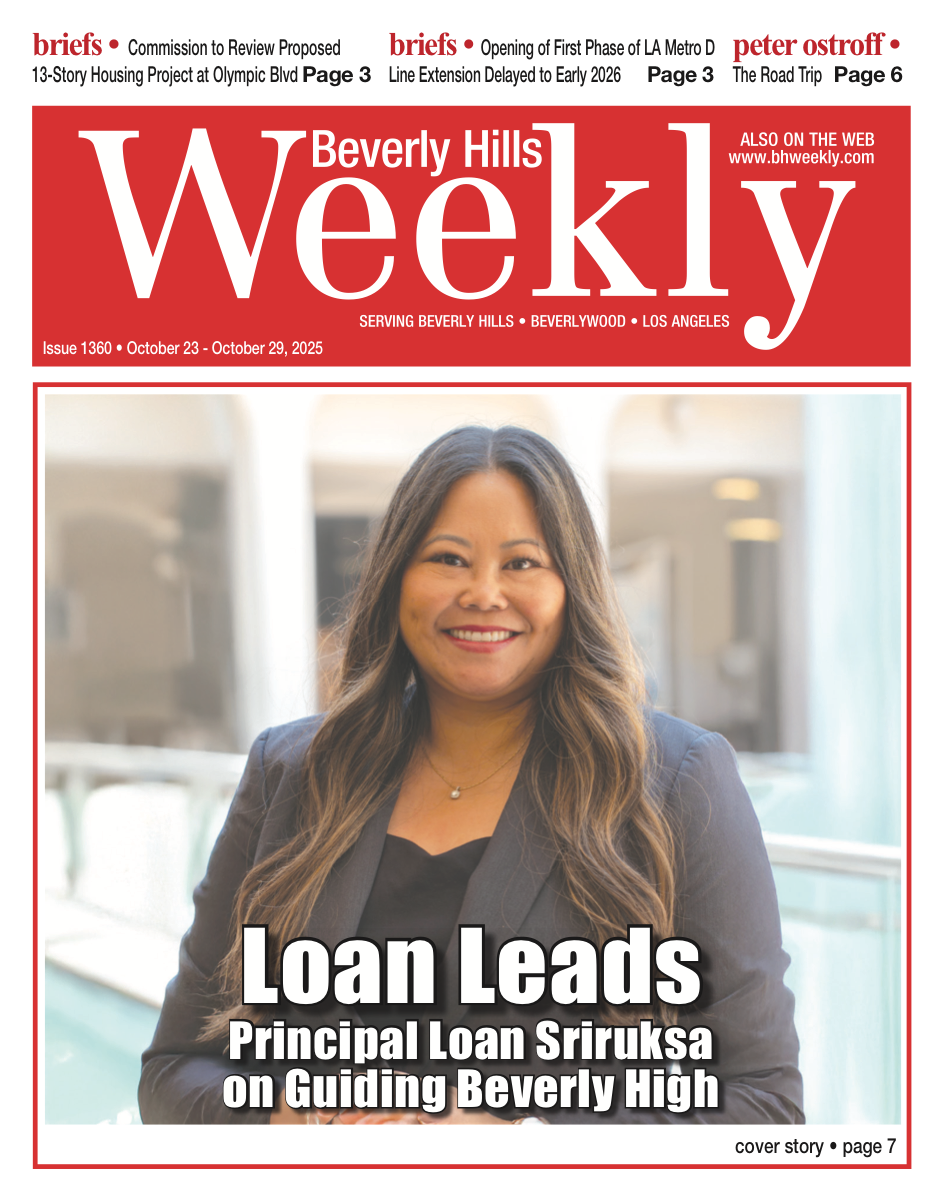
The Road Trip
The author recounts a memorable road trip through the Midwest with his friend Martin, highlighting their visit to the University of Notre Dame for a football game and their explorations in Chicago and Bentonville, Arkansas. The trip serves as a humorous reflection on the cultural differences encountered outside their southern California bubble, as well as a reminder to embrace life's experiences while checking off items from their bucket lists.