Peter Ostroff
A Voice for Beverly Hills — Past, Present, and Future
The Joy of Reading
The article expresses the author's deep love for reading, highlighting how it has been a lifelong passion that provides joy and fulfillment, especially through participation in a book club with friends. The author reflects on the importance of reading for pleasure, the variety of books enjoyed, and the personal connections formed through literature.
I love to read.
In fact, reading is my default condition.
More specifically, I am referring to reading for enjoyment. This includes reading for random information such as what I find in a daily newspaper or magazine or website or reading a book, fiction or non-fiction.
I cannot imagine how I would fill my time without reading.
Whatever I happen to be doing, subconsciously I am just trying to get it over with so that I can return to reading a book or surfing the internet for information. The internet has been both a great boon providing so much information as well as a huge distraction. For example, if I am reading a book and a character is introduced with a Serbian name (i.e. something that ends in “ic” as in Novak Djokovic, I will immediately search the internet for Serbia.
But I enjoy these distractions, it is my uninhibited freedom to do what I want.
On retirement, one of the first things that I did was to reach out to a bunch of contemporaries to start a book club. My parents had belonged to a book club for many years.which I always envied. But no one had ever invited me to join one. So, why not start one. The Mature Men’s Book Discussion Group has been going strong for more than six years. We have discussed more than fifty books in that time, many of which I never would have heard of but for its selection by one of the mature (oxymoron or not) men. The discussions are rarely serious and present the opportunity for a wide variety of topics of interest to a bunch of boyfriends. Most of us live in or near Beverly Hills. The Beverly Hills group includes Eliot Finkel, Joel Krischer, Howard Fisher, Bruce Howard (no relation to Howard Fisher), Tom Levyn and, sometimes, Bob Wunderlich.
The book selections are not always great but there is no rule that says that you have to read any particular selection. And there has been a wide variation from “The Adventures of Tom Sawyer and Huckleberry Finn” (a special two volume selection) to “Evicted” (providing insights into the plight of the unhoused), to “One Hundred Years of Solitude” (winner of the Nobel Prize that I found unreadable) to “Sandy Koufax – A Lefty’s Legacy” (what could be better?) to “The Personal Memoirs of Ulysses S. Grant” (surprisingly riveting) to the most current selection “The Demon of Unrest” (an eye-opening account of the six months between the election of Abraham Lincoln as President in November 1860 and the attack on Fort Sumter in early 1861.
In fact, my rule of thumb which applies both to MMBDG selections and any other book or article that I start to read – if I can put it down, I will. In other words, I only read that which holds my interest.
It is important to note that my love of reading did not extend to my academic career. I had and continue to have no interest in reading anything that I am required to read. The only D grade that I got in college was in American History. We were required to read one book a week about aspects of our country’s history. I would not and did not do it.
Reading cases in law school was a pleasure that eluded me from 1650 King’s Bench (who can forget Vaughn against Menlove which resolved the pressing issue of whether Mr. Menlove was found liable for accidentally burning down Mr. Vaughn’s barn) to the present in which we addressed whether you could put a “price tag on justice”. If you are curious about that, the answer is of course we can and do every day.
But reading for pleasure was instilled in me at an early age.
It started with the sports pages when I followed the sad exploits of the Washington Senators. I knew that I could always know how they were doing because they were shown as WASHINGTON in the standings printed in the Washington Post.
My skills were tested early on when the standings one day reflected “wondrous nats” because the normally hapless Senators (also known as the “Nats” for Nationals) won nine straight games in April of 1949. I had no idea what was meant by “wondrous nats” and was devastated about the disappearance of my team until my father explained what had happened. Not to worry, the Senators still finished last.
Much more important than just reading the American League standings were the Thursday nite trips with my father to the Petworth Branch of the Washington DC public library. At that time, we lived in the Petworth neighborhood about a mile north on Georgia Avenue from the library. There is no Revolutionary War hero named Petworth, the neighborhood was named after a village in Sussex England.
The Petworth branch was in a beautiful Georgian Revival building and had opened a few years earlier in 1939. After being used for military purposes during WWII, it returned to its intended uses in the late 1940’s, just in time for me to fall in love with it. More specifically, I fell in love with a series called Childhood of Famous Americans, a set of 220 books illustrated by silhouettes. Titles included “Ben Franklin – Printer’s Boy”, “Allen Pinkerton –Young Detective”, Booker T. Washington – Ambitious Boy”, “Betsy Ross –Girl of Old Philadelphia” and, of course, “Babe Ruth – Baseball Boy.”. I was allowed to check out five of these books at a time and nothing could make me happier.
Today, I read a mix of hard copy and ebooks. I like reading books, generally fiction, set in places that I am visiting. One of my favorites in this regard was James Michener’s “Centennial” set in the Colorado Rockies that I read while visiting Estes Park, Colorado. I also like books set in places that I am familiar with. I have probably read every Michael Connolly book featuring Harry Bosch or Mickey Haller (the “Lincoln Lawyer”). And I like books about trials like Scott Turow’s “Presumed Innocent”, Robert Traver’s “Anatomy of a Murder”, Leon Uris’ “QBVII” or John Grisham’s very first book “A Time to Kill.” Other favorites include Wilbur Smith’s historical African adventure stories, John LeCarre and Gerald Seymour’s and Peter Watt’s multi-volume epic story of Australia.
I also like to read books written by friends. I just finished “Amy Unbound” which is the second volume of the Feldman Family Saga written by my college classmate Martin Sneider which will be the featured book at the July meeting of the MMBDG and just picked up “Riots and Rockets, A Dash of the Army, A Dose of Politics and A Life in the Law” by my law school classmate Bill Bowe who, among other things, served as General Counsel of the Encyclopedia Britannica.
Where do I find books to read? Sources include the WSJ Saturday Book Review Section and the Book Review section of the NY Sunday Times and various book sites such as CrimeReads, Bookbub, Thriftbooks, , Book of the Month Club and Bookshop.
From time to time, I may be presumptuous enough to recommend something to you.
Peter Ostroff is a retired attorney and former Beverly Hills Planning Commissioner.
People Mentioned
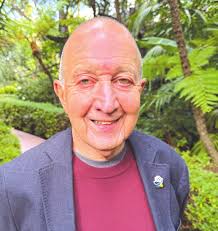
Peter Ostroff is a long-time Beverly Hills resident of over 50 years who retired in 2017 after a 50-year career as a trial lawyer. He was born in Washington, D.C. in 1942. He graduated from Washington University (St. Louis, Mo) in 1964 with a B.A. degree in political science and economics. He graduated from the University of Chicago Law School in 1967 with a J.D. degree. He taught law at Monash University Law School in Melbourne, Australia in 1968. He became a member of the Illinois Bar in 1967 and the California Bar in 1969, He clerked for Hon. Shirley M. Hufstedler of the United States Court of Appeal 1969-70, practiced law with Nossaman, Waters, Scott, Krueger & Riordan and successor firms from 1970 to 1980 and with Sidley Austin from 1980 until 2017. During his full time law practice years he was a Committee Chair and Member of the Council of the American Bar Association, Litigation Section and was President of the Association of Business Trial Lawyers. Since 2018, he has served on the Beverly Hills Planning Commission. In addition to his work on the Commission, Peter has chaired the BHUSD 7-11 Surplus Property Committee and contributed to planning efforts for the District Offices site on S. Lasky Drive and future uses of the Hawthorne School property. He also served as Co-Chair of the Citizens Advisory Committee for the City's Climate Adaptation and Action Plan. He has been married to Anne Y. Ostroff since 2002, has two children, Nick Ostroff and Natalie Anne Cookson and has two grandchildren, Elliott Cookson and Emma Anne Cookson. Some family information is collected under Family Tree in this website. Since April 2024, he has written a weekly column for the Beverly Hills Weekly The columns are collected in this website.
petero@ostroff.la