Peter Ostroff
A Voice for Beverly Hills — Past, Present, and Future
Open Letter to the New City Council
The article addresses the upcoming swearing-in of the new Beverly Hills City Council, emphasizing the importance of effective governance and public engagement as they navigate significant issues such as housing development, public safety, and accountability. It encourages the Council to prioritize communication with residents, restore public participation practices, and establish clear responsibilities among members to enhance the city's decision-making processes.

Dear members of the incoming Beverly Hills City Council:
You will be sworn-in next Tuesday.
Whether you are incumbents or newly-elected, in a real sense, you are members of a brand new Council because of the addition of two new faces or 40% of the Council. You have a unique opportunity to have an impact that will affect the city for years to come.
These are some ideas regarding just where to start.
First, of course, you should be educated about matters in progress. Ask the City
Manager, City Attorney and department heads to provide you with an orientation regarding what is underway, what is working and what is not, including in closed session where appropriate or to just the two new Councilmembers. You cannot make prudent decisions without being up to date on the entire context of any issue. Much of the context often is, properly, disclosed only in closed session. (I am reminded of a recent Presidential candidate who advocated closing down the prison for alleged terrorists at Guantanamo Bay Cuba, until he was elected and given a thorough security briefing. The prison remains open.) You don’t always know what you don’t know.
Importantly, you should make clear that you want brief reports from the leaders of each department so that you are not buried in detailed staff reports.
Public Participation. There seems to be a general sense among some of our residents that they are not being heard and that their views are not respected by our city government. There are some steps that can help to alter that sense. First, you should make it known, individually and collectively, that you are always open to hearing from residents and provide contact information to facilitate communication. On matters that will be placed on the Council agenda for decision, you should encourage written communication prior to the meeting and welcome non-repetitive public comment at the meetings. A small step will be to restore immediately the practice of allowing each public speaker at least three minutes to address the Council. While it is important that our Council meetings be conducted efficiently, it is at least equally important that our residents feel that they have had a fair opportunity to make their views known about matters that are often central to their quality of life in their neighborhoods.
You should also restore the longstanding practice (recently changed by the current Council) of having the Planning Commission review in public meetings any proposed Development Agreements at least for consistency with the General Plan.
There are those who believe that had the Commission been able to hold a public hearing on the Cheval Blanc project Development Agreement, issues could have been aired that would have diminished the opposition. Of course, this did not occur because the Council took the Planning Commission out of the equation in the wake of the One
Beverly Hills hearings in which members of the Planning Commissions expressed the view that the Development Agreement should have made provision for affordable housing at least consistent with the City’s 10% requirement.
Enhance Accountability. It is important that you make some changes that will increase Council and individual accountability for actions taken and not taken. Government by committee, i.e. by a five person Council, has many challenges. These include the fact that since no individual councilmember has responsibility for any issue or decision, no one has responsibility or accountability. If no one individual is responsible, no one individual is accountable. [Try finding someone who will take responsibility for the Fiber to the Premises Project which was dropped with little to show for it after years of work and very substantial expenditures of City funds!]
For every important city department or activity or program, I would assign to one council member the responsibility of learning about and keeping abreast of those activities and ensuring that regular reports are made to the Council While it is necessary and appropriate to rely to some degree on the Departments and their staffs (and certainly let them do their jobs free from micromanagement), excessive reliance is a problem and also thwarts any prospect for accountability. Administratively, it would be helpful to publish a chart with each Council agenda packet briefly summarizing the status of all major projects. Notably, a group of charts showing the status of all development proposals is prepared as part of the agenda packet for the Planning Commission.
Residential Housing Development.
After a lot of work and the presentation of proposals that could have a significant impact on our City’s housing at a potentially very high cost, the state certified our Revised Housing Element in the form submitted in mid-February 2024. This involves the identification of sites within the city for more than 3000 new housing units by 2029 including more than 1600 residential units for very or very low income persons or families. A key component of the City’s proposal that was accepted, is the commitment by the City to cause the construction of more than 550 such units on two sites now owned by the City and a third that the City plans to acquire. To make a long discussion very short, this will be far, far easier said than done.
I propose that the Council Establish a small ad hoc committee of one or two members of the Planning Commission and one or two members of the Council who will meet regularly with the City Attorney and planning staff to monitor compliance with the very substantial obligations that we have ostensibly undertaken to effect and as necessary, adjust, the RHE This must be in closed or otherwise confidential session because there are difficult legal issues that may arise including the status of “builders’ remedy” projects and the consequences of failing to meet housing construction projections. Ideally, one person, knowledgeable about real estate development should be designated to be in charge of this effort. [The ad hoc committee should be established very quickly as we are already well into the eight year cycle.] Major Litigation. While the City is always facing litigation challenges, there are two pending cases that uniquely present enormous damages claims.
One is the claim by the DuPont Clinic which, among other things, offers abortion services, that the City wrongfully interfered with and was a substantial cause of the termination of its lease for medical space on Wilshire Blvd. in the City.
The other is a threatened “class action” regarding the treatment of minorities on Rodeo Drive during the pandemic.
In the first, the soon to be former Mayor, the City Manager and the City Attorney are all individually named as defendants.
These persons cannot properly manage the City’s response to the litigation because they are conflicted due to their personal potential liability for compensatory and punitive damages. In the second, similar conflict dynamics are present. It is critical that you have advice sooner rather than later regarding the overall strategy for resolving both matters, independent of the personally involved city officials. Accordingly, you should hire independent counsel who will report directly to you in closed session so that you can be certain that we are pursuing the optimal strategies for the best possible resolution. [The need for this is quite urgent given that the DuPont case is set for trial in January 2025 and each month the City is spending substantial amounts on legal fees.]
City Auditor. Some candidates during the campaign urged the restoration of the office of a City Auditor. My sense is that they really want a City Investigator or Inspector General which I favor, but only when needed. The difference is both structural and substantive. Structurally, our city generally does not have a substantial number of issues for which independent investigation is required. Thus, a new city permanent office and infrastructure is not required. Substantively, when and if such an investigation may be desirable, (past examples where this could be useful include the multiple discrimination lawsuits against BHPD; whether the Fiber to the Premises Project should continue) a person expert in that particular area could be retained to investigate and make recommendations.
Blue Ribbon Finance Committee. At his installation as Mayor, Julian Gold said that he would establish a “blue ribbon” finance committee under the direction of City Treasurer Howard Fisher that would assess long term requirements for and sources of funds. Mayor Gold also proposed that this committee would continue its work under then Vice Mayor Friedman once he takes office as Mayor. Mayor Gold appointed Joshua Greer, Vicki Mense and David Mirharooni to work with Treasurer Fisher.
This Committee recently presented its initial report to the Council. Unfortunately, this report does not quantify future needs or areas where costs can be reduced and only partially addresses new sources of revenues. The primary focus of this report is a discussion of adding revenues by raising taxes. There is only a brief general mention of the prospect of generating revenue from underutilized City real property. This is a serious omission akin to ignoring the hippopotamus in the City’s bathtub. For years, concerned citizens have identified underutilized city properties and quantified potential additional revenues for the City but nothing has been done. This complex subject may be the subject of a future column. If this Committee continues after the conclusion of Mayor Gold’s term, it will be important that you give specific direction for future work.
This should include attempting to quantify to the extent possible the needs for additional funds over the next years (including from the City’s real estate) and also how to cut costs or at least slow the increases.
Several council candidates advocated “zero-based budgeting” for City Departments. More specifically, on a rotating basis, Council should look at the entirety of a department’s proposed budget and evaluate every line item or group of line items rather than simply taking the existing budget and making changes only when the need for more funds or other specific changes are anticipated. [Consider further direction and some alteration structure of this Committee.]
Coldwater Canyon Drive. Coldwater is a dangerous thoroughfare for approximately one mile of a residential neighborhood. For the past many months, it has been torn up while the storm drains are replaced. This project has also resulted in destruction of the sidewalks and constant flows of water onto and into people’s yards.
For several years, the residents of this neighborhood have witnessed serious (including fatal) accidents and have been trying to work with the Public Works Department to calm the traffic on a long term basis. These efforts have not resulted in a plan that will to some degree alter the character of the road. What is clearly needed (but opposed by the Public Works Department and the City Engineer) is some combination of traffic signals, stop signs and I hope to never see another Builder’s Remedy project where we have little local control. Our city failed us here, allowing 16 major projects to come in, and we need an approved Housing Element in 2029 that proactively addresses our regional housing needs and protects what we love about the unique livability of our city.
Ariel Rofeim:
Qualifications?
I’m a Beverly Hills attorney and former BHPD Cadet who understands the importance of public safety and responsible leadership. At 33, I bring the perspective of the next generation while honoring the values that built Beverly Hills; protecting our residents, supporting our businesses, and preserving the character of our city.
Why?
I am a product of Beverly Hills and care deeply about its future. I’m running because I believe the character of our city is under pressure, and how we navigate the next few years will have generational consequences. This moment requires new, homegrown energy. My generation has the greatest stake in what comes next and I believe I am the candidate who can contribute on day one.
Change:
I want to restore urgency in how our city addresses issues affecting residents. Public safety concerns, vacant storefronts, and growing traffic frustration have lingered too long and undermined our quality of life. I will prioritize recruitment and retention within our police department and work alongside BHPD leadership to ensure they are able to implement proactive safety in our community. As a former BHPD Cadet, I understand the demands of the profession and will work to ensure our officers have the resources, staffing, and support needed to make Beverly Hills the safest city in the world.
Clay Saunders:
Qualifications?
Raised in a military family as the son of a retired U.S. Army Colonel, I work worldwide and want to bring that vision and experience to Beverly Hills. I am an entrepreneur and national security strategist serving in a leadership role as West Coast Ambassador for the Gold Institute for International Strategy, working directly with Members of Congress, senior U.S. military generals, and representatives of the European Parliament.
Why?
I want to serve the people of Beverly Hills by protecting public safety and supporting strong safety reform. Having converted to Judaism, I am committed to standing against antisemitism and ensuring safety in schools, synagogues, and temples, so Beverly Hills can be a leading example of a safe city.
Change?
Public safety is my top priority. With the arrival of the Metro extension, I will support strong safety reforms with police at every Beverly Hills station and metal detectors at schools, synagogues, and temples. I promise to enforce strict building height limits and support businesses by developing BHS (Beverly Hills Support for small business) programs.
Roger Tanenbaum:
Qualifications?
My JD from Pepperdine Law and BBA from Loyola Marymount University prepare me for fiscal and governmental affairs.
Managing the literary and business career of my father, former Mayor Robert K. Tanenbaum, I oversaw public relations, speaking engagements, scheduling, and property management. I learned the importance of preparedness, foresight and fairness.
Why?
My years working alongside my father taught me how to lead proactively and manage details. Reactive leadership is costly and damaging. We’ve seen how quickly the balance between commercial vitality and residential quality of life can be disrupted, as with the Builders Remedy.
I’m saddened that many on the South feel underserved as the subway and affordable housing projects move forward. I’d prioritize Beverly Hills as our HOME, focused on preserving our spirit amid growing outside pressures.
Ongoing gatherings across the city and Weekly Walks are just two ways I plan to talk and work together constructively with our residents.
Looking ahead, I’ll focus on infrastructure, a top priority. Our electricity grid is especially urgent given rapid growth in AI.
I have the time, energy, and deep love for our city. It would be my honor to represent you.
Change?
My priority starts with values. I believe in “Home-Grown.” As large corporations expand their influence, it’s crucial we support local talent and entrepreneurship; never taking our residents or small businesses for granted. While welcoming new opportunities, there’s need to protect and uplift the people and businesses that give Beverly Hills its character and humanity.
That includes leadership. Whenever possible, we should hire from within— people who understand our community and are invested in its success. Strengthening “Home-Grown” talent reinforces who we are.
As of press time, candidates Kole and Stuart did not respond.
People Mentioned
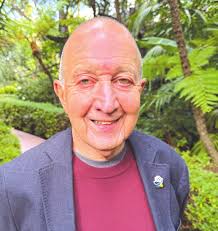
Peter Ostroff is a long-time Beverly Hills resident of over 50 years who retired in 2017 after a 50-year career as a trial lawyer. He was born in Washington, D.C. in 1942. He graduated from Washington University (St. Louis, Mo) in 1964 with a B.A. degree in political science and economics. He graduated from the University of Chicago Law School in 1967 with a J.D. degree. He taught law at Monash University Law School in Melbourne, Australia in 1968. He became a member of the Illinois Bar in 1967 and the California Bar in 1969, He clerked for Hon. Shirley M. Hufstedler of the United States Court of Appeal 1969-70, practiced law with Nossaman, Waters, Scott, Krueger & Riordan and successor firms from 1970 to 1980 and with Sidley Austin from 1980 until 2017. During his full time law practice years he was a Committee Chair and Member of the Council of the American Bar Association, Litigation Section and was President of the Association of Business Trial Lawyers. Since 2018, he has served on the Beverly Hills Planning Commission. In addition to his work on the Commission, Peter has chaired the BHUSD 7-11 Surplus Property Committee and contributed to planning efforts for the District Offices site on S. Lasky Drive and future uses of the Hawthorne School property. He also served as Co-Chair of the Citizens Advisory Committee for the City's Climate Adaptation and Action Plan. He has been married to Anne Y. Ostroff since 2002, has two children, Nick Ostroff and Natalie Anne Cookson and has two grandchildren, Elliott Cookson and Emma Anne Cookson. Some family information is collected under Family Tree in this website. Since April 2024, he has written a weekly column for the Beverly Hills Weekly The columns are collected in this website.
petero@ostroff.la