Peter Ostroff
A Voice for Beverly Hills — Past, Present, and Future
Importance of Local Newspapers
The article emphasizes the critical role local newspapers play in community accountability and public awareness, highlighting how their decline has left cities like Richmond, CA, without independent news sources to scrutinize local government actions. It argues that without robust local journalism, citizens lack essential information about governance and community issues, which undermines democratic processes and civic engagement.
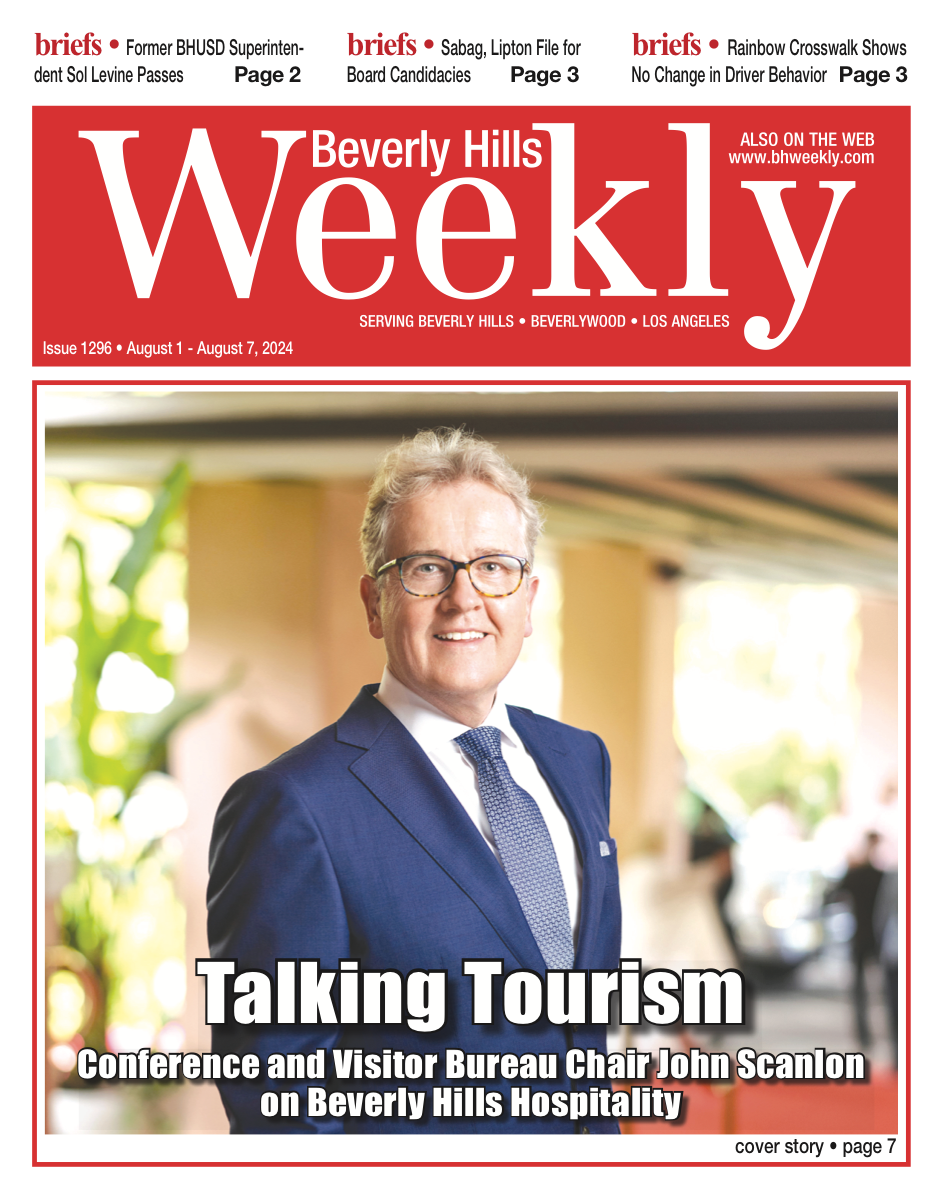
I have always been a print newspaper junkie. When I was a young child, my hometown of Washington, DC had four general circulation daily newspapers, The Washington Post (where I worked as a copy boy), the Evening Star, the Times-Herald and the Washington Daily News (where I worked as a reporter of high school sports). Jacqueline Bouvier was a “camera girl” photographer for the Times Herald when she met her future husband, John F. Kennedy.
I read every paper every day and worked at the Daily News and Post in the late 1950’s and early 1960’s.
Then I discovered that NYC had seven general circulation daily newspapers (not counting the Wall Street Journal or the Brooklyn Eagle; the Eagle was fatally injured when the Dodgers abandoned the borough of Brooklyn for LA) and Boston had four (not counting the Christian Science Monitor). One summer I spent several weeks with my grandmother Sophie Ostroff who then lived in Willimantic CT halfway between Boston and NYC. I had my pick of the best of both cities’ papers and was in hog heaven.
Working my way through newspapers was the way that I learned to read and then how I learned about the world.
Most of these newspapers have now disappeared and the number has dwindled from 15 to five or six.
Major metropolitan newspapers were once the sole source for news about a community, a city, a region, the country and the world. The digital age has decimated daily newspapers. A majority of the daily newspapers that existed fifty years ago no longer exist. People get much of their news from online news sites and social media. In the absence of robust local newspapers, local weekly newspapers are the only source for community news.
A July 24 LA Times story focused on the situation in Richmond, CA, a city of more than 100,000 in Contra Costa County in northern California. There are no daily or other independent newspapers covering events in Richmond. There is one weekly, the Richmond Standard, which is owned and published by Chevron Oil. Not coincidentally, Chevron is the largest employer, the largest taxpayer and, some say, the largest polluter. But, apart from the Standard, Richmond has no other source of local news.
What is that situation likely to provide regarding the city’s most important commercial operation?
So what happens in the absence of an independent news source?
Most importantly, there is no public watchdog. There is no publication to report on local government or hold accountable officials for their action or inaction.
Notably, our city is governed by a five person Council. Our school district is governed by a five person Board. Simply put most charitably, this is government by committee.
I have some favorite sayings about committees. For example, a zebra was intended to be a horse but was built by a committee. More importantly, when a committee is in charge of something, no one is in charge. But this is what we have.
Given this situation, it is very difficult to hold anyone responsible or accountable for anything. The approach that our departments or staff play complicates matters further. Often the first time that Council or the Board is exposed in any meaningful way to an issue is when it receives a staff report in a public meeting. Often these staff reports (which are frequently prepared by outside consultants) are so lengthy and detailed that there is no time or energy remaining for meaningful examination. This, too, makes accountability a challenge.
Accountability is only possible when the public is aware of what our Council and Board are doing including the positions and is informed about actions of individual “committee” members. As a member of the Beverly Hills Planning Commission, I learned that while issues such as peace in the Middle East or secure borders are important to many of our residents, nothing is more important than whether there will be bike lanes that interfere with parking on residential streets or whether a large multifamily building will be erected near a street already impacted by heavy traffic.
Awareness and direction can come only from our robust weekly newspapers, perhaps assisted, for better or for worse, by social media chatter.
Let’s look specifically at what public discourse in Beverly Hills would look like without the Courier, the Weekly and, to some degree, the Press. First and foremost, we would not have even basic information about what the Council and Commissions are doing about issues such as land use, plans for the arrival of the subway or park development. We would be less likely to have any information about what is on the Council agenda or whether vacancies exist on city commissions. The School Board now must also tackle vital issues. Without our local newspapers, it would be difficult to follow what the board is doing.
Our local newspapers, like newspapers everywhere, have been badly hurt by the digital age. Advertisers simply are not supporting print media. In the case of Beverly Hills, the newspapers are highly dependent on revenues from advertising by the City, specifically notices of openings on commissions, notices of proposed actions at upcoming meetings and other promotions of city events.
While the revenues are of vital importance, the heavy reliance on revenues from city advertising creates the opportunity for members of city government to reward newspapers that provide favorable coverage and punish those who do not. For this reason, it is important that there be long term arrangements between the city and the newspapers which provide for objective guidelines for advertising placement (e.g. all legally required ads in all three newspapers with rates set by the relative audited print circulation of the newspapers) and limits discretion of city officials or employees in ad placement.
This is the only way to ensure that opinionated and provocative voices such as mine will continue to be heard.
***
An update on the school board election.
Last week I wrote about the upcoming election as I was concerned that there were only three announced candidates for three open seats. This was a concern because if there were only three candidates, the election would be canceled and the three current candidates would be deemed elected to the School Board. Without a campaign there would be no real opportunity for a public discussion regarding the issues facing BHUSD and an assessment of the views of candidates regarding those issues.
This is an important race because the board must address some vital issues in the coming months and years. These include the smooth transition to El Rodeo, the completion of the construction at the high school, how best to use the now closed Hawthorne campus which is a great opportunity for the city and, most importantly, how to improve the quality of education at all of our schools.
The good news is that a fourth candidate, Sigalie Sabag, has announced her candidacy. And there may be others. The more the merrier.
Prospective candidates have until August 14 to file nomination papers with the County Registrar-Recorder. Filing information can be found at lavote.net.

Peter Ostroff is a long-time Beverly Hills resident of over 50 years who retired in 2017 after a 50-year career as a trial lawyer. He was born in Washington, D.C. in 1942. He graduated from Washington University (St. Louis, Mo) in 1964 with a B.A. degree in political science and economics. He graduated from the University of Chicago Law School in 1967 with a J.D. degree. He taught law at Monash University Law School in Melbourne, Australia in 1968. He became a member of the Illinois Bar in 1967 and the California Bar in 1969, He clerked for Hon. Shirley M. Hufstedler of the United States Court of Appeal 1969-70, practiced law with Nossaman, Waters, Scott, Krueger & Riordan and successor firms from 1970 to 1980 and with Sidley Austin from 1980 until 2017. During his full time law practice years he was a Committee Chair and Member of the Council of the American Bar Association, Litigation Section and was President of the Association of Business Trial Lawyers. Since 2018, he has served on the Beverly Hills Planning Commission. In addition to his work on the Commission, Peter has chaired the BHUSD 7-11 Surplus Property Committee and contributed to planning efforts for the District Offices site on S. Lasky Drive and future uses of the Hawthorne School property. He also served as Co-Chair of the Citizens Advisory Committee for the City's Climate Adaptation and Action Plan. He has been married to Anne Y. Ostroff since 2002, has two children, Nick Ostroff and Natalie Anne Cookson and has two grandchildren, Elliott Cookson and Emma Anne Cookson. Some family information is collected under Family Tree in this website. Since April 2024, he has written a weekly column for the Beverly Hills Weekly The columns are collected in this website.
petero@ostroff.la