Peter Ostroff
A Voice for Beverly Hills — Past, Present, and Future
How I Got to Beverly Hills
The article recounts the author's journey to Beverly Hills in the late 1960s and 1970s, highlighting his search for a job and a beach lifestyle after law school, his involvement in the failed incorporation of Malibu, and the personal tragedies that ultimately led him to settle in Beverly Hills for a better family environment. It reflects on the significant changes in Malibu over the decades and the author's experiences as both a lawyer and a father.

In April 1969, after law school and a few misadventures in Australasia and the far east, I came to Southern California to look for two things: a job and a beach.
After four winters in Chicago (which, as you likely know, is not a place fit for human habitation unless your idea of a fashion statement involves a parka and earmuffs), the beach was a priority. And I found one – La Costa Beach in Malibu. As an incidental matter, I found an apartment at 22147 Pacific Coast Highway, on the hillside of PCH, not the beach side. It was a small apartment, one bedroom, fully furnished with all utilities included for $140/month. (I had to do some scraping for the security deposit.) And it was a time of body surfing and beach volleyball. In addition I wasted some time as well.
I found a job with a law firm in downtown Los Angeles but this column is not about that except for a few sentences for context. Twenty years later, the young lawyer who hired me, Dick Riordan, became the Mayor of Los Angeles. A year or so earlier, I had been introduced to Warren Christopher (who later became the United States Secretary of State under President Carter and much later than that became my close neighbor when he lived on Monte Cielo Drive). He introduced me to Judge Shirley Hufstedler, the first woman to serve on a federal Court of Appeal. She offered me a job as one of her two law clerks. I jumped to accept this very prestigious position which was far beyond my limited academic achievements. She was later, in 1979, appointed by President Carter to be the first Secretary of Education and would likely have been the first woman on the United States Supreme Court but President Carter was not re-elected so this didn’t work out.
OK, enough name-dropping.
In the summer of 1969, apart from the beach and work activities mentioned above, I had to study for the California Bar Exam. In those days, this was an ordeal that involved night classes after work all summer long followed by a three day exam at the end of August. Two years earlier I had done this in Chicago. But California was different.
Let me give you an example. In 1969, the beach side of PCH was not built up into the wall to wall $10M beach cottages that exist today. So I could cross the highway, go thru a hole in the fence and be on an empty beach. Just me and my outlines of California law. And that is exactly what I would do to study for the California Bar Exam. Notably, local control meant and still means that a group of residents smaller than the entire County would have influence over development. It didn’t mean then and it doesn’t mean now that a small group opposed to everything would always be able to stop any project. [I’m certain that you know who I am talking about.] This incorporation option was frowned upon by developer interests who fought us every step of the way. In order to incorporate an unincorporated area, boundaries had to be established and approved by the County Local Area Formation Commission (“LAFCO”) which also had to determine that the new city would be financially sound. Then the residents of that area would be able to vote “Yea” or “Nay” as to whether incorporation as a City should occur.
Ultimately LAFCO signed off but only after including a “poison pill” in our efforts. In those days (and today as far as I know), old Malibu had no sewer system but, rather, the single family residences relied upon septic tanks which was a factor that, as a practical matter, precluded intense development. There was a concern that the septic tanks would have to be replaced with a sewer system at tremendous cost. The poison pill that LAFCO slipped into our incorporation “soup” was to include within the borders of the proposed new City of Malibu, a large subdivision called “Sunset Mesa”, just to the west of the Getty Villas on Pacific Coast Highway. Sunset Mesa was a large development with relatively small lots but lots of voters. Importantly, Sunset Mesa had sewers and its residents had no interest in being saddled with being part of a city which would have to incur massive costs to install sewers for other residents who lived to the west.
While keeping you in suspense as to how this turned out, I must disclose that I decided to run for election to the five person new city council that would take office if a majority of the voters within the boundaries of the proposed new city elected to incorporate. My campaign posters said “Let Malibu Stay Malibu” which meant let’s minimize unreasonable development that would change the character of the community. There were no incumbents and there were twenty-seven candidates for the five slots on the new city council.
For months and months, while trying to build a law practice and being a father to my growing family, I spent an enormous number of hours in furtherance of the incorporation of the new city and, of course, my own candidacy. On the personal side, in July, 1976, during the BiCentennial, we took our then 18 month old son, Nick [BHHS Class of 1993], to Hawaii. He was in the pool at the Maalaea Surf on the island of Maui and as I walked up to him he smiled and said, unprompted, “Dada!” I could have burst with pride and happiness.
In September 1976, my second son, Alexander Aaron was born. He was named after my paternal grandfather Aaron. He was an adorable little boy. I called him “Dondi-man” because I thought that he looked like a toddler called “Dondi” who had his own comic strip.
The election was in November, 1976. For historical context, you will recall that Jimmy Carter was then elected President of the United States. The incorporation of the proposed City of Malibu was rejected by a handful of votes. The Sunset Mesa vote against incorporation was massive and dispositive. For the record, I finished fifth in the city council election and, therefore, was elected. (I have no knowledge as to how I did in Sunset Mesa but am confident that I polled strongly in the Big Rock Mesas area.) But for the defeat of incorporation, I would have been serving a four year term as a member of the Council of a new city and my life, likely, would have turned out quite differently and I would not be writing this column.
(P.S. – there is now a city of Malibu. It was incorporated in 1991. Sunset Mesa was not included within the borders of the new city and Sunset Mesa remains an unincorporated but intensely developed part of Los Angeles County.)
Some of the main proponents of incorporation were Anita Green (her son Larry Green is an executive with Cain Development and is managing the development of One Beverly Hills), Margot Feuer, Vic Gainer (his family started LaQuinta Inns) and Jerry Lewy (then an oil company executive spending most of his time in Iran – how times have changed).
A leading opponent was realtor Jack Corrodi. Jack and I had a series of debates at the Malibu Shakey’s Pizza – free pizza but buy your own beer.
I have sometimes fantasized that if I run for Beverly Hills City Council, I would publicly debate John Mirisch at a local coffee shop. If you think that I am too old or too unpopular to run, reflect on this: I am a few weeks younger than President Biden and I have never lost a city council election.
After the disappointment of the defeat of incorporation, I was entirely burned out on the affairs of Malibu and turned my attention to family and building a law practice. That law practice was then entering a new exciting phase. It was a phase that endured for many years – the opportunity to address and attempt to solve international commercial disputes using the unique to America tool of high stakes litigation. In 1977, I spent a week in apartheid era South Africa and a month in still post war Japan. Those countries were and the world was very different then but my future course was set. That course did not vary until I retired from the active practice of law at the end of 2017.
Sometime after the 1976 election, events occurred that made life in Malibu untenable.
Most significantly, in August 1979, little Alex (“Dondi-man”) drowned in our swimming pool. By far, this was the most excruciatingly painful event of our lives for all of us. And it remains so. He is in my mind every day and in my prayers every night. All that I could do was try to put one foot in front of the other and try to set an example that would honor his memory.
Around this same time, there was a large rock slide on the City side of Big Rock Mesas Drive. This cut off the Pacific Coast Highway access to the City of Los Angeles and required a long ride through Malibu Canyon Road to the San Fernando Valley or a walk along the beach through the tides around the slide area. PCH was closed for months.
Notably, Malibu in the 1970’s was very different from the Malibu of 2024. By dint of incorporation and the Coastal Commission, it has been spared even as of today the intense development of other beach communities such as the South Bay cities of Los Angeles County or, more analogously, Newport Beach. Change has nonetheless occurred. In the 1970’s it was still mostly an old beach community populated by residents who had been there for many years. The high-end community with expensive restaurants and shops had yet to occur. The schools were mediocre and if you wanted to go out for a meal or a movie you drove to Santa Monica.
In any event, it was time to move. Malibu was not a place to raise a young family and our home held painful memories. While we looked in the Palisades, Santa Monica, Brentwood and the environs, it was clear that Beverly Hills was by far the best for many reasons including the fine public schools. Fortunately, in late 1979 we found a beautiful Spanish house built in 1929 at 512 N. Alta Drive that we could afford (barely). However, it was many months before we could afford to furnish it.
In August 1980, our spectacular daughter Natalie Anne was born named after my mother Ann The dark clouds that had haunted us lightened but did not entirely go away..
So that was my path to Beverly Hills.
People Mentioned
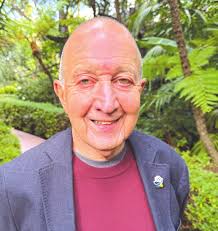
Peter Ostroff is a long-time Beverly Hills resident of over 50 years who retired in 2017 after a 50-year career as a trial lawyer. He was born in Washington, D.C. in 1942. He graduated from Washington University (St. Louis, Mo) in 1964 with a B.A. degree in political science and economics. He graduated from the University of Chicago Law School in 1967 with a J.D. degree. He taught law at Monash University Law School in Melbourne, Australia in 1968. He became a member of the Illinois Bar in 1967 and the California Bar in 1969, He clerked for Hon. Shirley M. Hufstedler of the United States Court of Appeal 1969-70, practiced law with Nossaman, Waters, Scott, Krueger & Riordan and successor firms from 1970 to 1980 and with Sidley Austin from 1980 until 2017. During his full time law practice years he was a Committee Chair and Member of the Council of the American Bar Association, Litigation Section and was President of the Association of Business Trial Lawyers. Since 2018, he has served on the Beverly Hills Planning Commission. In addition to his work on the Commission, Peter has chaired the BHUSD 7-11 Surplus Property Committee and contributed to planning efforts for the District Offices site on S. Lasky Drive and future uses of the Hawthorne School property. He also served as Co-Chair of the Citizens Advisory Committee for the City's Climate Adaptation and Action Plan. He has been married to Anne Y. Ostroff since 2002, has two children, Nick Ostroff and Natalie Anne Cookson and has two grandchildren, Elliott Cookson and Emma Anne Cookson. Some family information is collected under Family Tree in this website. Since April 2024, he has written a weekly column for the Beverly Hills Weekly The columns are collected in this website.
petero@ostroff.la