Peter Ostroff
A Voice for Beverly Hills — Past, Present, and Future
Gridiron Conquest et al.
The Beverly Hills Football Normans achieved a significant victory against Hawthorne, with standout performances from players like Brody Bell and Eli Strzelecki. In other news, the One Beverly Hills luxury condo project is raising funds through "Founder Bonds," which has raised concerns about the financial implications and responsibilities of the developer, Cain, prompting calls for transparency from city officials.

Hats off to the Beverly Hills Football Normans for a big win over Hawthorne on Friday. Noteworthy contributors to the victory were two-way standout center and defensive lineman Brody Bell (I knew his late grandfather, Beverly Hills resident and prominent lawyer Les Bell), running back Eli Strzelecki who scored four touchdowns, quarterback Luca Brenner and Ethan Norsworthy who made a key interception.
Notwithstanding my local bias, however, my favorite current southern California football player is Santa Margarita running back Petero.
In other sports news, on Wednesday October 21, the Normans girls volleyball team faced Whittier High in the CIF Southern Section Playoffs.
***
The Wall Street Journal reported on October 13 about an unusual form of funding for the fabulous One Beverly Hills project under construction on the City’s western border.
At the outset, I should explain that I am a big fan of this project and believe that, when completed, will provide great benefits to the City and all of its residents, whether or not they ever visit it.
Most of what I will be describing is based on the WSJ article and my own legal research and other internet research that may or may not be accurate. I have not been able to verify much of the facts with the developer. In fact, I am not entirely clear on the identity of the developer. The City’s own CFD documents identify Oasis BH, LLC, a Delaware LLC, as the “Developer.” They further state that Oasis BH is the indirect parent of BH Luxury Residences, LLC, which owns approximately 13.24 acres of the property included in the proposed CFD. Then, the project director is Larry Green who is Senior Managing Director, Cain Development/Cain International. For simplicity, I will refer to the developer as “Cain”.
The headline of the WSJ story is “The Luxury Beverly Hills Condo Project Borrowing Money From Its Future Residents” The reference to borrowing is the sale of bonds, called “founder bonds” by the developer, to persons who have entered into contracts to buy condominium units once they have been constructed.
More specifically, purchasers of the roughly 150 condominium units are being offered Founder Bonds paying 5%. The 5% interest rate is lower than market – US Treasury bonds, regarded as the most risk-free bonds that you can buy, currently pay more than 5%. The bonds are generally about 30% of the condominium purchase price. Participation is described as voluntary, but every buyer so far had agreed to buy them. As a result Cain had raised approximately $350 million through sale of these bonds and reportedly hopes to raise in total more than $1.6 billion.
The WSJ reports that Cain says it already has sufficient funding to complete the project without the Founder Bonds, and that Founder Bond proceeds would replace some of the equity Cain committed to the project. This funding reportedly includes $2.8B from J.P. Morgan and $1.5B from VICI, a total of $4.3B in addition to the hoped-for $1.6B from the sale of Founder Bonds which brings the Cain borrowing to $5.9B.
And that is what bears some analysis to determine just how much “skin in the game” Cain will have. In part, that depends on what it will cost to complete construction. I don’t know that number. Commercial Observer articles dated February 19, 2025 and March 23, 2026 estimate $5.2B.
That information, if accurate, raises questions.
If before completion construction costs rise dramatically and/or condominium sales slow or do not generate revenues consistent with current projections that could cause a problem.
And if Cain has already drawn out substantial J.P. Morgan/VICI financing together with up to $1.6 billion—from Founder Bond purchasers Cain could have withdrawn or all or a substantial amount of its own – it will have spent $5.2B but recovered $5.9.B.
Cain’s economic position is then very different from a developer that still has $1–2 billion of its own unrecovered capital invested in the project. It will have already made a $700M profit.
That doesn’t necessarily mean Cain would abandon the project. There are guarantees, reputational considerations, loan covenants and other incentives such as the prospect of future projects but undoubtedly its incentives would be diminished if all of the construction costs have been recovered.
And there is a further complication.
California law generally prohibits the use by a developer of buyer’s deposits paid, as an example, as part of an agreement to buy a condominium once it has been constructed. Money “paid or advanced…for or on account of the purchase” of the condominium may not be used by the developer until the purchase has been completed.
If a California court was asked to determine whether the ostensible purchase of a “Founder Bond” was in reality a deposit, it would look to the substance and purpose of the payment, not just the label. Notably, I have not been able to identify any California transactions that resemble the Cain “Founder Bonds”. It is fair to say that a determination that the amounts paid for the bonds and used by Cain for construction costs or return of its equity in the project, could cause complications.
The City has conditionally agreed to issue bonds (“Mello-Roos” bonds) that would be sold to reimburse Cain for certain infrastructure improvements after those improvements have been completed. Repayment of those bonds is not the responsibility of the City but, rather, solely the responsibility of the owners of the condominiums and other aspects of the project.
I do not intend to suggest that the issuance of the Founder Bonds could in any way subject the City to any additional responsibility or risk of liability.
I do suggest that, because of the importance of completion of this unique project to our City and our residents, that our City financial watchdogs stay apprised of the status of all aspects of the development of One Beverly Hills.
At present, we know nothing about the financial condition and status of Cain (or whatever entity is ultimately responsible) and no ability to have any influence over the use of funds.
Although, Cain financial representatives committed to answer my questions no later than October 20, they did not.
On October 20, Cain presented requests that the City Council grant special concessions regarding, among other things, short term rentals of condominium units. I understand that the Council tentatively (but, importantly, not finally) granted some concessions subject to reviewing the specific terms at a meeting in early November.
My strong recommendation to the Council is that any such concessions be subject to disclosure by Cain of financial position of the development and, perhaps, restrictions and conditions on its use of loan proceeds including the loans from JP Morgan, the mezzanine lender, the founder bonds purchasers and any other significant sources of funds.
***
On Sunday October 18, I attended a fundraiser for our California State Assemblymember, Rick Chavez Zbur.
Mr. Zbur, now running for re-election to a third term, is a prominent member of the state legislature and serves as Assembly Democratic Caucus Chair. There is no probability that he will be defeated and we can anticipate that he will have more authority as time goes on. Beverly Hills activists Thomas White and Ken Goldman are on his District 51 Neighborhood & Community Associations Advisory Committee.
He spoke about a number of important issues and gave a very strong endorsement to California Senate candidate Brian Goldsmith who is running to replace our termed out Senator Ben Allen who is running for California Insurance Commissioner.
Don’t forget to vote.
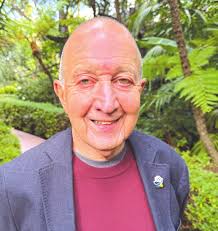
Peter Ostroff is a long-time Beverly Hills resident of over 50 years who retired in 2017 after a 50-year career as a trial lawyer. He was born in Washington, D.C. in 1942. He graduated from Washington University (St. Louis, Mo) in 1964 with a B.A. degree in political science and economics. He graduated from the University of Chicago Law School in 1967 with a J.D. degree. He taught law at Monash University Law School in Melbourne, Australia in 1968. He became a member of the Illinois Bar in 1967 and the California Bar in 1969, He clerked for Hon. Shirley M. Hufstedler of the United States Court of Appeal 1969-70, practiced law with Nossaman, Waters, Scott, Krueger & Riordan and successor firms from 1970 to 1980 and with Sidley Austin from 1980 until 2017. During his full time law practice years he was a Committee Chair and Member of the Council of the American Bar Association, Litigation Section and was President of the Association of Business Trial Lawyers. Since 2018, he has served on the Beverly Hills Planning Commission. In addition to his work on the Commission, Peter has chaired the BHUSD 7-11 Surplus Property Committee and contributed to planning efforts for the District Offices site on S. Lasky Drive and future uses of the Hawthorne School property. He also served as Co-Chair of the Citizens Advisory Committee for the City's Climate Adaptation and Action Plan. He has been married to Anne Y. Ostroff since 2002, has two children, Nick Ostroff and Natalie Anne Cookson and has two grandchildren, Elliott Cookson and Emma Anne Cookson. Some family information is collected under Family Tree in this website. Since April 2024, he has written a weekly column for the Beverly Hills Weekly The columns are collected in this website.
petero@ostroff.la