Peter Ostroff
A Voice for Beverly Hills — Past, Present, and Future
Grecian Holiday
The article recounts a couple's extensive journey through Greece, highlighting their experiences across various islands and historical sites, such as Athens, Santorini, and Mount Olympus, while reflecting on the country's rich history and cultural significance. The author emphasizes the beauty and uniqueness of Greece, urging readers to visit while they still can, as the population is declining and the islands are heavily reliant on tourism.
We spent much of September and early October visiting Greece and I thought that I would report on what we did and share my impressions. As you probably, Greece is the cradle of western civilization. It is home to approximately 20 UNESCO World Heritage sites.
Our travels are prompted by Anne’s philosophy of “If I haven’t been there, I want to go” and by my philosophy of “Do it while you can.” Actually, Anne points out that I have an acute case of “FOMO” (fear of missing out). Whatever!
Greece was one European country in which neither of us had spent much time – Anne had spent a couple of days in Athens while on a cruise more than 25 years ago and we had visited one or two eastern Greek islands while traveling in a small boat off the west coast of Turkey about ten years ago but that was it.
So, shortly after Labor Day, 2024, it was off to Greece. Our itinerary was extensive and comprehensive. Anne’s planning efforts were supplemented by assistance from our world class travel advisor, Maynard Zhang (mz@mztravel.co) who provides highest quality travel assistance.
We were on two published Butterfield and Robinson trips, one to the islands and one to the mountains.
We went from the Peloponnese peninsula to the very well known Cyclades Islands (Santorini, Paros, Naxos, Folegandros, Sifnos, etc.) in the east to Mount Olympus and towns and villages in the north and then back to Athens.
Geographically, Greece is quite small, about the same size as Alabama. One of the most striking features is the islands. There are 2000 of them and collectively, they comprise about 20% of the landmass of Greece. Not much of Greece is more than 50 miles from the sea.
For the visitor, this means that whenever you are near the coast, there are spectacular views not only of the water but also of numerous neighboring islands.
So, in mid-September, we set off to explore and learn. We landed in Athens late at night and stayed at an airport hotel before being picked up for a three hour drive to the spectacular Amanzoe hotel near Porto Heli on the east coast of Peloponnese, peninsula on the southernmost part of mainland Greece.
Amanzoe is part of the Aman chain that will be coming to Beverly Hills as part of the One Beverly Hills complex. We have stayed in several Aman hotels and Amanzoe is right up there with the best. It has the feel of an ancient Greek temple and was a perfect place to recover from jet lag.
After two days we drove back to Athens airport for a flight to Santorini, one of the largest Cyclades Islands located about 120 miles southeast of the mainland, where we would start our Butterfield and Robinson hiking, biking and snorkeling trip.
Santorini’s volcano, which constitutes a magnificent sight, formed the island and gave it its current shape and geomorphology by a massive volcanic eruption, thousands of years ago. We were there because this is where our group trip began.
Santorini is very, very touristy. When the NYT wrote a story recently about how tourists were overrunning parts of Europe, Santorini was the poster child. However, it is very picturesque with white painted buildings spilling down the steep volcanic slopes punctuated by a few structures with bright blue painted domes. It was exactly what you would expect a Greek island to look like.
We had a memorable dinner at a restaurant high on the cliffs (aptly named: “Volcano”) with a spectacular view of the sickle shaped island, the Aegean and neighboring islands.
Notably, all of these Cyclades islands are very rocky and very, very dry. Most of them have no water at all other than very occasional rainfall. They have large desalination plants that produce non-potable water for bathing and irrigation. But there is very little vegetation. These are not tropical rainforest islands. They rely heavily on tourism and have a season that extends from March-April thru October or so and shut down entirely during the off-season.
We took a local ferry to the island of Folegandros. For the most part, residents use these ferries to commute among the islands. Few have airports and island residents typically work on islands other than where they live. Folegandros is much smaller than Santorini and has only a few hundred permanent residents. It is relatively untouched by international tourism. We visited some interesting Greek orthodox churches and spent most of our time hiking up and down the hills. There were also good snorkeling opportunities.
From Folegandros we took another ferry to the island of Sifnos, passing several of the Cyclades islands. Here, we had one of several dinners at a local taverna. I loved these. There were always lots of olives and hummus followed by grilled seafoods and meats. Small lamb chops sold by the kilo were my personal favorites. Here we climbed up and down to visit the whitewashed Chrysopigi Monastery.
We also visited a farm and were hosted by George the owner. He proudly showed us all of the crops that he was growing without water. He told us that his tomatoes, while smaller, tasted much better and sweeter than those grown with water. To me, all of his crops and animals looked like they needed water. But what do I know?
Two days later, we took another ferry to a much larger island, Paros. For a dose of culture (one dose every three or four days is enough for me) we visited the Panagia Ekatontapiliani, a landmark Byzantine church from the 4th century A.D. We also visited an organic family farm. Because we were running late and it was getting dark, the tour of the farm was blessedly short. They served us dinner which was pretty bad (somehow they didn’t get the memo that Anne doesn’t like chicken and I didn’t want to eat their version) which was made worse by the fact that we were serenaded by three local musicians through the meal. And you were expected to act as if you appreciated their efforts. No, thank you. But the views were magnificent.
We took a day trip to the neighboring island of Naxos, by far the largest of the islands other than Santorini. We took a long bike ride up and finally down a volcanic mountain and did some snorkeling in a secluded bay.
Paros had a vibrant nightlife scene and we had a memorable dinner on the waterfront.
The next day, we flew from Paros to Thessaloniki to commence our trip to the Greek mountains. Thessaloniki, previously known as Salonika, has a rich history as it was a major center of the Roman, Byzantine and Ottoman empires. For me the most notable aspect is that for a period of time in the 19th and early 20th century, Salonika was the only majority Jewish city in Europe. As far as I know, there were and are no others.
Today, it is a major Greek port city on the Thermaic Gulf of the Aegean Sea. It appears prosperous and modern but our stay was short as this was the beginning of the trip to the mountains.
This started with the archaeological site of UNESCO-listed Vergina, one of the country’s most important historical destinations. There were tombs of the father and son of Alexander the Great among others and the extensive ruins of a palatial complex. En route to our hotel in the small town of Agios Dimitrios, we drove along the slopes of Mt. Olympus.
From there we visited Metsovo, a town in Epirus, in the mountains of Pindus. In the region of Zagori, we went on our first truffle hunt. The expert truffle hunter was a woman and she was assisted by truffle hunting dogs. She raised the dogs from birth by feeding them truffles with their mother’s milk. She uses dogs rather than pigs (which I understand are traditionally the truffle hunters), because it is much more difficult to prevent the pigs from eating the truffles that they had discovered. This was great fun and she found a large number of commercially saleable truffles with capable assistance from me and the others in the group.
After our visit to the mountains, we flew to Athens. We had three days there and saw three major sites, the Acropolis in Athens, the home of the oracle at Delphi and the Temple of Poseidon.
Athens, of course, is the capital of Greece and home to 30-40% of the Greek population. It is a large cosmopolitan city dominated by the Acropolis, a word that literally means the highest point in the City. On the Acropolis are the ruins of the Parthenon, the temple of the goddess Athena. From the Acropolis you can see the city spreading out and climbing the hills that surround the city. The Acropolis Museum displays a comprehensive mythological depiction of ancient Athens as it never was.
On our last two days, we went to Delphi to visit the oracle and south of Athens to visit the Poseidon Temple. The oracle provided great insights into the affairs of Beverly Hills which I shall share with you when the time is right. Our drive to the Poseidon Temple was along the coast where there were miles of expensive looking condos and a huge development that is planned to provide a Greek Riviera.
Our itinerary home included a stopover in Istanbul. The international airport has overtaken Singapore’s Changi airport as the best airport in the world. It is spectacular – worth a visit! It is a very beautiful enormous modern building which opened only two or three years ago. We had a layover from 11pm to 7am. We went directly to the very large Turkish Airlines lounge. It is open 24 hours a day unlike most lounges that close from late night to morning. They offer sleeping suites (free) and showers. We got one of the suites and had a decent night’s sleep. When they run out of suites, they offer sleeping pods like the Japanese capsule hotels for 15 Euros per night. Flights leave and take off for all parts of the world at all times day and night. Worth a trip to Turkey
Final impressions:
Greece is a small country with a rich history. It had democratic states 3000 years ago and the relics are everywhere. In Athens, you can barely turn a corner without seeing ancient temple remains. It is a Greek Orthodox country and most Greeks are members of the church. During the 400 year reign of the Ottoman (Turkish) Empire it had a substantial Muslim population. When the Ottoman Empire collapsed early in the Twentieth Century, the Christian population of Turkey moved to Greece and the Muslim population of Greece moved to Turkey. A grim partition that is a depressing story.
For a visitor, Greece is a very distinct part of Europe. I found the Greeks to be a very handsome people. Their appearances are not uniform – some look like Italians and some look like Swedes. The food is varied and, except for chicken, generally outstanding, and reasonably priced.
Most noticeable is the fact that the population is homogeneous – almost all inhabitants of Greece are Greeks; unlike other European countries, there are very few Asians or Africans. Further, the population of Greece is declining due primarily to low birthrates. The Aegean Islands are rapidly losing people.
All in all – a terrific place to visit so “Do It While You Can!”
Peter Ostroff is a retired attorney and former Beverly Hills Planning Commissioner.
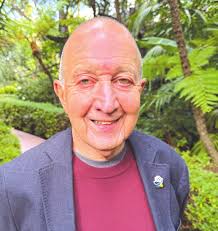
Peter Ostroff is a long-time Beverly Hills resident of over 50 years who retired in 2017 after a 50-year career as a trial lawyer. He was born in Washington, D.C. in 1942. He graduated from Washington University (St. Louis, Mo) in 1964 with a B.A. degree in political science and economics. He graduated from the University of Chicago Law School in 1967 with a J.D. degree. He taught law at Monash University Law School in Melbourne, Australia in 1968. He became a member of the Illinois Bar in 1967 and the California Bar in 1969, He clerked for Hon. Shirley M. Hufstedler of the United States Court of Appeal 1969-70, practiced law with Nossaman, Waters, Scott, Krueger & Riordan and successor firms from 1970 to 1980 and with Sidley Austin from 1980 until 2017. During his full time law practice years he was a Committee Chair and Member of the Council of the American Bar Association, Litigation Section and was President of the Association of Business Trial Lawyers. Since 2018, he has served on the Beverly Hills Planning Commission. In addition to his work on the Commission, Peter has chaired the BHUSD 7-11 Surplus Property Committee and contributed to planning efforts for the District Offices site on S. Lasky Drive and future uses of the Hawthorne School property. He also served as Co-Chair of the Citizens Advisory Committee for the City's Climate Adaptation and Action Plan. He has been married to Anne Y. Ostroff since 2002, has two children, Nick Ostroff and Natalie Anne Cookson and has two grandchildren, Elliott Cookson and Emma Anne Cookson. Some family information is collected under Family Tree in this website. Since April 2024, he has written a weekly column for the Beverly Hills Weekly The columns are collected in this website.
petero@ostroff.la