Peter Ostroff
A Voice for Beverly Hills — Past, Present, and Future
Europe 2026
This is a report on our recent trip to Europe which exemplifies Anne’s principle of “If I haven’t been there, I want to go.” For me, the trip was “only” 3 ½ weeks; Anne spent an additional ten days traveling with her sister. Anne would be the first to tell you that traveling with sis is a lot less stressful than traveling with me.
I will give you the overview and then some of the highlights. I will refrain from burdening you with fotos. One of my least favorite activities is looking at other people’s vacation pictures.
The Overview
Landed at Paris’ Charles de Gaulle Airport and endured the challenge of picking up a rental car. After an hour in line, the rental car operation from which we had reserved a car informed us that they had no cars but if we waited for six hours they could likely accomodate us. Anne solved that one in short order and we took off for Chantilly, en route to Normandy. There we visited Mont Saint Michel.
Then, in order, Warsaw, Poland, Krakow, Poland, a hiking trip that took us from Krakow through Poland and northern Slovakia and back to Krakow and a flite from there via Amsterdam to Ljubljana, Slovenia for a biking trip through Croatia and back to Ljubljana and home.
Just reciting that makes me so exhausted that I need a vacation.
Some Highlights
Chantilly is a beautiful castle just outside of Paris that is well worth a day trip when you are in Paris. Mont Saint Michel, the 15th Century abbey/fortress on a tidal island surrounded by water part of the time is very impressive to look at but the interior tour is lengthy and boring. The best part of this visit was a stay in the port/beach city of Dinard. Beautiful hotel overlooking the port, lots of interesting restaurants and a huge Saturday market where I acquired a red and white striped sweater that makes me look like a dashing gondolier (in my dreams).
Warsaw, Krakow and Poland itself were the true finds of the trip. Warsaw was entirely destroyed during World War II mostly due to the uprisings in the Jewish Ghetto and by Polish partisans and has been rebuilt complete with modern towering office buildings, condos, subways and great restaurants. The tour of the Jewish Ghetto from which nearly 500,000 Jews were deported to death camps if they could survive the conditions in the Ghetto was sobering. The last stop on this tour was 18 Mila Street where the last survivors were massacred by German soldiers. I immediately down loaded Leon Uris’ “Mila 18”, a novel about life and death in the Ghetto. A perfect read to learn about conditions in Ghetto. I also downloaded James Michener’s “Poland” but did not get to it. I find that reading books set in places that I am visiting generally enhances the experience.
We took a train from Warsaw to Krakow, a completely different situation from Warsaw. While Warsaw is a brand new city, Krakow is a magnificently well preserved city that is several hundred years old. From there we took a day trip to visit Auschwitz, the notorious Nazi death camp. Auschwitz is well preserved and gives a sense of the magnitude of the extermination of Jews and others with its stacks of abandoned shoes and clothing and bales of human hair. In Krakow, the Jewish Museum of Galicia gives a sense of the thoroughness of the extermination of Jews that was carried on by the Nazis. Prior to the invasion of Poland by the Nazis there were over 3,500,000 Jews in Poland, over 10% of the total population. Almost all were killed. Today, there are an estimated 1000 to 2000 Jews in Poland. By way of contrast, prior to the Nazi takeover, there were approximately 1,000,000 Jews in Germany. Most were sent to the death camps. But, unlike Poland, post-war, many Jews have returned so that today there are approximately 100,000 Jews living in Germany. Poland is almost 100% Polish although approximately 100,000 Ukrainians have emigrated to Poland as a consequence of the Russian invasion.
We spent a few days hiking in Poland and its southern neighbor Slovakia in the Tatras Mountains. While both Poland and Slovakia are members of the European Union, Poland uses its own currency, the Zloty, and Slovakia uses the Euro. For whatever reason, prices in Poland are very reasonable while prices in Slovakia are much higher. Both are very prosperous, crime free with excellent food and wine and lots of interesting places to visit.
We returned to Krakow and flew to Ljubljana, the capital of Slovenia, the home of Laker star Luka Doncic. Slovenia is one of six very small countries that have emerged from the former Socialist Republic of Yugoslavia (others are Serbia, Bosnia-Herzegovina, Croatia, North Macedonia and Montenegro) and the most prosperous. Ljubljana is a beautiful and very well preserved city and Slovenia is a beautiful, mountainous country. One of our guides, Tomaz Policar, told me that Slovenia is the most prosperous of the six. But Tomaz is a Slovene so we must take this with a grain of Slovenian truffles. If you are in need of an English-Slovenian interpreter, Tomaz is your guy. (Tomaz.Policar@gmail.com)
Slovenia is where we started our biking trip. Two days in and five falls later, from which I escaped with two bruised knees, one bloody elbow, a severely damaged ego and several reminders of why I was wearing a helmet, I decided that my mountain biking days are over. I think that this decision was likely a life-saving one. Like Sandy Koufax, I knew when to quit.
But the trip continued into Croatia and was nonetheless outstanding including wine tasting (great fun), olive oil and vinegar tasting (not so much fun) and pasta making.
The situation in former Yugoslavia where the residents have formed six countries out of one based on ethnicities or religion or history caused me to reflect on how different this is from the US where people from all over the world generally live together in harmony and do not consider breaking apart based on national origin or otherwise. The situation in former Czechoslovakia is similar. That country split into two, the Czech Republic and Slovakia. But then there is Switzerland that has French, German and Italian sections which apparently have concluded that they are better together than apart.
What to conclude? The world is complicated and sometimes, the more we know, the less we understand.
***
As you can tell from the above, I have been away from the Beverly Hills bubble for a while and am still catching up on developments in the race for two open seats on the Beverly Hills Board of Education. One of the seats is open because Rachelle Marcus, a long time teacher and highly respected member of our community, has decided not to seek re-election.
Over the next two weeks or so, I will be writing about what is happening in this all-important race. I shall include both the facts about the candidates and, perhaps, an opinion or two.
Stay tuned. If you are still undecided, I may be able to further your understanding, analysis and conclusions.
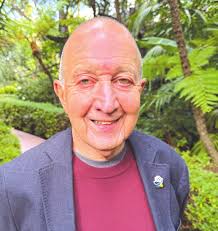
Peter Ostroff is a long-time Beverly Hills resident of over 50 years who retired in 2017 after a 50-year career as a trial lawyer. He was born in Washington, D.C. in 1942. He graduated from Washington University (St. Louis, Mo) in 1964 with a B.A. degree in political science and economics. He graduated from the University of Chicago Law School in 1967 with a J.D. degree. He taught law at Monash University Law School in Melbourne, Australia in 1968. He became a member of the Illinois Bar in 1967 and the California Bar in 1969, He clerked for Hon. Shirley M. Hufstedler of the United States Court of Appeal 1969-70, practiced law with Nossaman, Waters, Scott, Krueger & Riordan and successor firms from 1970 to 1980 and with Sidley Austin from 1980 until 2017. During his full time law practice years he was a Committee Chair and Member of the Council of the American Bar Association, Litigation Section and was President of the Association of Business Trial Lawyers. Since 2018, he has served on the Beverly Hills Planning Commission. In addition to his work on the Commission, Peter has chaired the BHUSD 7-11 Surplus Property Committee and contributed to planning efforts for the District Offices site on S. Lasky Drive and future uses of the Hawthorne School property. He also served as Co-Chair of the Citizens Advisory Committee for the City's Climate Adaptation and Action Plan. He has been married to Anne Y. Ostroff since 2002, has two children, Nick Ostroff and Natalie Anne Cookson and has two grandchildren, Elliott Cookson and Emma Anne Cookson. Some family information is collected under Family Tree in this website. Since April 2024, he has written a weekly column for the Beverly Hills Weekly The columns are collected in this website.
petero@ostroff.la