Peter Ostroff
A Voice for Beverly Hills — Past, Present, and Future
DuPont and San Francisco
The article discusses the ongoing litigation between the DuPont Clinic and the city of Beverly Hills, where the clinic claims city officials interfered with its lease to provide abortion services, while a local advocacy group calls for a satisfactory resolution and investigation into the city's actions. Additionally, the author shares reflections on San Francisco, highlighting its beauty and cultural significance, while contrasting it with other regions in California, particularly in the context of urban development and livability.
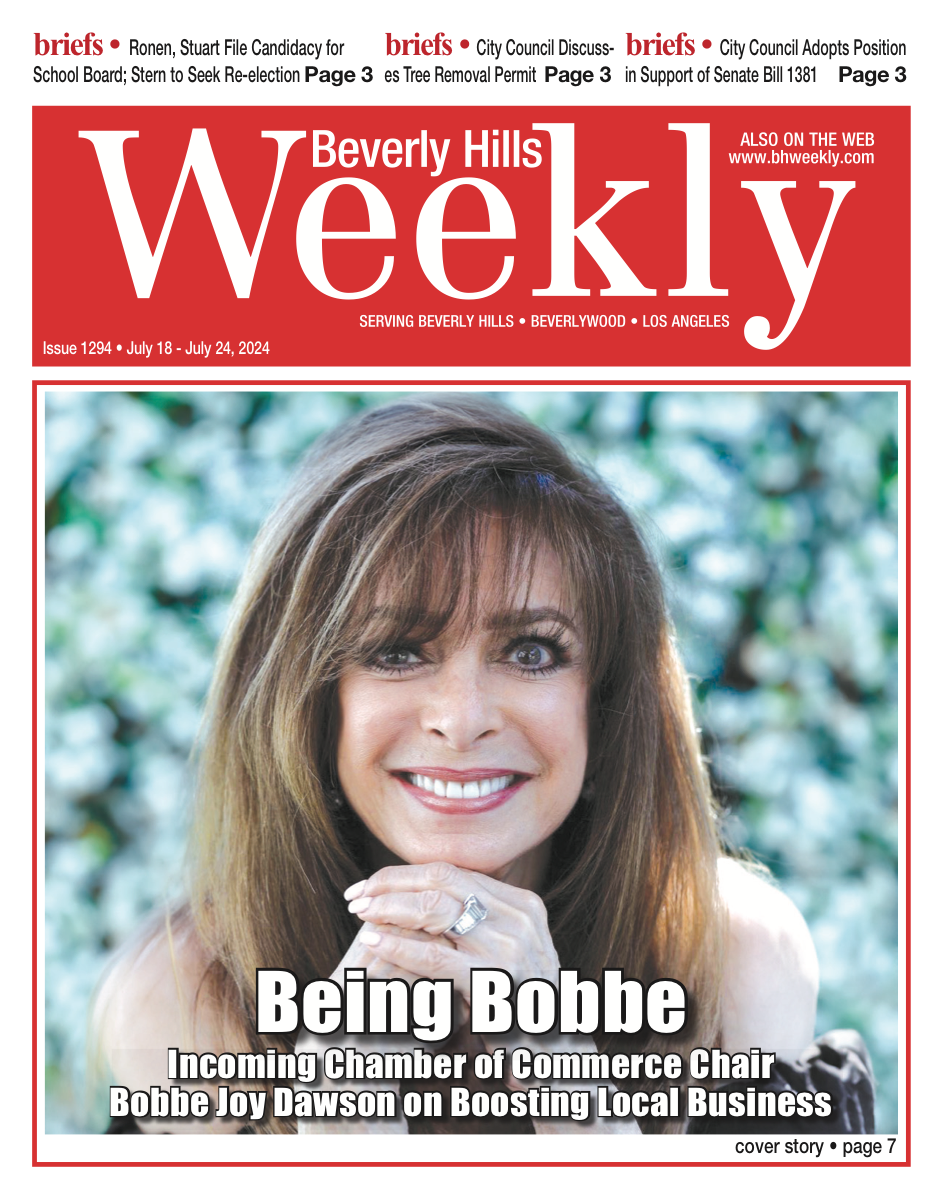
This column is mostly about San Francisco but first I want to address the litigation by the DuPont Clinic against the city and five city officials.
The Dupont claim includes that the defendants intentionally interfered with and caused the termination of the lease between DuPont and the owner of the 8920 Wilshire Building. DuPont intended to operate a clinic that would provide, among other things, abortion services. Essentially DuPont claims that city officials caused or persuaded the landlord to cancel DuPont’s lease.
The litigation has been pending for a number of months and the city has filed a motion to dismiss some or all of the claims. That motion will be argued in September.
The situation has been widely publicized in part due to the actions of a group of city and nearby residents, “Bhforchoice.” The leaders of this group include Gay Abrams, Heather Fels, Andrea Grossman and Amanda Smith. Bhforchoice is advocating several things including a resolution of the lawsuit satisfactory to DuPont Clinic and an independent investigation into the conduct of city officials. They want to know about city officials’ communications with anti-abortion groups who were protesting the establishment of the Clinic.
Almost all litigated cases are resolved before trial by settlement or other action. There will be a settlement that is satisfactory to DuPont, sooner or later. It should have been sooner, much sooner.
The city will not and should not conduct a public investigation because that could be contrary to the city’s litigation interests. Bad facts uncovered would only hurt, good facts would be viewed as self-serving.
It is not my intention to express a view about the litigation.
Rather, my focus is on principle.
In the wake of the SCOTUS Dobbs decision overruling Roe v. Wade which had precluded state and local legislation unduly restricting abortion, the City Council was very vocal in opposition to the decision and in favor of a woman’s right to choose.
After the draft Dobbs decision leaked, the Beverly Hills City Council unanimously adopted a resolution in support of abortion rights. The City issued a press release stating “[t]he City of Beverly Hills has a long history of supporting everyone’s right to equality and freedom of choice.” Then Mayor Lili Bosse said: “This is something I wholeheartedly support with all my soul.”
After the Dobbs decision was released, the Beverly Hills City Hall was lit up in lights in protest of the overturning of Roe v. Wade. Mayor Bosse stated: “Today’s decision is absolutely devastating… These are human rights being taken away in a show of disrespect to women and my heart breaks for those who sacrificed so much to bring us those freedoms.”
Yet when protests erupted about DuPont’s prospective opening, city representatives apparently met with representatives of the landlord and the protesters. What happened during these meetings is a subject of dispute in the litigation. During this period, the landlord rescinded the lease. And DuPont has not opened a clinic in Beverly Hills.
The question now is: What is the city doing now in furtherance of the eloquent expressions of views and to facilitate a woman’s right to choose in our city?
***
As we were visiting our San Francisco home for ten days recently and traveling around the Bay area, I decided to share some impressions about this very special place.
I approach this task with some hesitation because so many have written so much about the area. Yet I am encouraged by the fact that one of the most evocative descriptions was written by another trial lawyer, Jake Ehrlich, in his book “A Life in My Hands”. Ehrlich, a successful lawyer to the stars from the 1930’s to his death in 1970 details San Francisco in a way that makes you want to go back in time to experience the city as he did. But there is no need to go back in time because experiencing it today is every bit as engaging.
As a disclaimer, as much as I love the Bay Area, I love Southern California more. But this is about the Bay Area.
We always drive the 376 miles door to door from Beverly Hills to our condo immediately west of the beautiful Grace Cathedral. Anne drives, I doze. I won’t specify the travel time for this journey in case a California Highway Patrol officer is reading.
After the Grapevine and the underappreciated beauty of the Central Valley, we emerge into the approach to the Bay Bridge.
On the south is the endless Port of Oakland handling 99% of the containerized goods coming into Northern California and is the ninth busiest in the US. From the endless forest of cranes and containers it is hard to believe that there are eight other ports that are busier. No matter – it exemplifies the importance of the role of the region, the state and the country in globalization. On the north, there is the first vista of San Francisco Bay viewed from the highway that seems at or below sea level. The Bay views are almost endless from the hills behind Oakland and Berkeley to the Larkspur Bridge to Alcatraz to Sausalito and Tiburon to Mt. Tamalpais to the Golden Gate Bridge. Globally unique.
Then at the middle of the Bay is the spectacular view of the San Francisco skyline from the Coit Tower to the Transamerica Tower to the new Salesforce Tower. Unbeatable. Entering the city we pass through the concrete canyons of the Financial District (sadly decimated by COVID) up California Street to the always elegant top of Nob Hill. Our views are so mesmerizing that I never want to venture out. But I do.
And almost everything is within walking distance. We have found a good new pizza place, Back to Back, and across Taylor Street is the Nob Hill Cafe, which has been around for more than 35 years. There are dozens of restaurants also nearby on Hyde Street and Polk Street including German, Italian, Thai, Japanese, and an outstanding oyster bar. There is even a branch of the Crustacean.
One of my first stops is City Lights Bookstore, a half mile away, which was founded by beat generation icon Lawrence Ferlinghetti in 1953. It has every book that you ever wanted, and many that you did not know you wanted.
My route to and from City Lights (which is on the border between Chinatown and Italian North Beach) is along the two main Chinatown north/south streets, Stockton and Grant, one block away from each other and a world apart. Stockton has a myriad of Chinese grocery markets and shoppers on a Saturday morning. The sidewalks overflow with foot traffic and the feel is of a market street in Taiwan or China. Grant, made famous by the song “Grant Avenue, San Francisco, California USA” in “Flower Drum Song” is a much quieter, but not quiet, street full of shops and souvenir stands catering to tourists. Our favorite nearby Chinese restaurants are the R&G Lounge on Kearny and the Osmanthus Dim Sum Lounge on Broadway. There are lots of good, inexpensive restaurants in other neighborhoods.
Other important venues, like Trader Joe’s and Whole Foods are close by, as is the most important, Oracle Park, home of the San Francisco Giants. Despite being an avid Dodgers fan and hating the Giants, Oracle is vastly superior to Dodger Stadium. The sightlines are better, the concessions are better and more varied and the seats are not nearly so expensive. Most importantly, Oracle is much more accessible. I can walk there in 30 minutes and get there by Uber in 20. There is also good public transportation that brings you to the gates.
I live around 10 miles from Dodger Stadium and must leave home no less than two hours before gametime. Once there, general admission parking is at least $35 in the vast unmarked lots. The lack of signage in the lots assure at least high anxiety about whether at the end of the game you can find your car which in any event is a 10 to 15 minute walk to the gate. While getting into Dodger Stadium is a nightmare, going to a game at Oracle is a pleasure.
Berkeley is clearly the crown jewel of the East Bay and the home of one of the best universities in the world, UC Berkeley. The University and the nearby city parks, including the Rose Garden, provide excellent places to hike and walk. The west side of Berkeley is flat and largely uninteresting in contrast to the University area and the neighborhoods to the north and east. Those areas are full of mature trees of all types and homes that are largely dark wood and old. Because of the trees and the dark wood, most of the homes are probably not as old as they look. Berkeley has a very large Hillside Overlay Zone that covers nearly 50% of the city. Any new construction of more than one story requires discretionary approval that must protect existing trees, minimize grading and land form alteration.
However, given current pressures for housing, Berkeley is considering limiting or eliminating single family residential zoning and providing for a staggering 100,000 new housing units in a city that currently has less than 50,000 housing units and a population of around 125,000. This makes our current concerns about builder’s remedy or mixed use projects seem very minor in comparison.
The cities of Sausalito and Tiburon are also very different from San Francisco. To get there from SF requires a trip across the bay either driving over the Golden Gate Bridge or by ferry– either way a 30 minute or so journey. Both provide terrific vistas of San Francisco from the Presidio to Coit Tower. Both are small cities. Sausalito is built on the slopes of the Marin Headlands. Most of the residences are built on very narrow streets on the steep hillside. They have views of the city or the Sausalito yacht harbor. There are two or three commercial streets along the waterfront with lots of good restaurants. Tiburon is across the Richardson Bay from Sausalito offering views to the south of Angel Island State Park, Alcatraz and the city. These are both bedroom communities of fewer than 10,000 residents. They are very affluent and have very strict development standards which limit development.
And then there is Silicon Valley. This is one of the most important areas in the United States and includes cities from San Jose to Palo Alto and beyond. And, with the exception of Stanford University, its commercial and residential areas, while attractive, are largely uninteresting. The appearance of this area which includes some impressive headquarters of some of our most important commercial enterprises generally looks like an industrial/office park and is a disappointment. And, because of the economic success of the enterprises and the people who work there, real estate prices are so high that one gets far less for one’s money than almost anywhere else. If you have no reason to go there – don’t. There is little to see.
My advice is to spend your time in the splendid City by the Bay. It may have been staggered by COVID but remains one of the most interesting and beautiful urban places in the world.
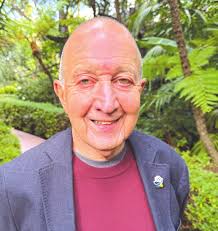
Peter Ostroff is a long-time Beverly Hills resident of over 50 years who retired in 2017 after a 50-year career as a trial lawyer. He was born in Washington, D.C. in 1942. He graduated from Washington University (St. Louis, Mo) in 1964 with a B.A. degree in political science and economics. He graduated from the University of Chicago Law School in 1967 with a J.D. degree. He taught law at Monash University Law School in Melbourne, Australia in 1968. He became a member of the Illinois Bar in 1967 and the California Bar in 1969, He clerked for Hon. Shirley M. Hufstedler of the United States Court of Appeal 1969-70, practiced law with Nossaman, Waters, Scott, Krueger & Riordan and successor firms from 1970 to 1980 and with Sidley Austin from 1980 until 2017. During his full time law practice years he was a Committee Chair and Member of the Council of the American Bar Association, Litigation Section and was President of the Association of Business Trial Lawyers. Since 2018, he has served on the Beverly Hills Planning Commission. In addition to his work on the Commission, Peter has chaired the BHUSD 7-11 Surplus Property Committee and contributed to planning efforts for the District Offices site on S. Lasky Drive and future uses of the Hawthorne School property. He also served as Co-Chair of the Citizens Advisory Committee for the City's Climate Adaptation and Action Plan. He has been married to Anne Y. Ostroff since 2002, has two children, Nick Ostroff and Natalie Anne Cookson and has two grandchildren, Elliott Cookson and Emma Anne Cookson. Some family information is collected under Family Tree in this website. Since April 2024, he has written a weekly column for the Beverly Hills Weekly The columns are collected in this website.
petero@ostroff.la