Peter Ostroff
A Voice for Beverly Hills — Past, Present, and Future
District Elections/Bizarre Irony
There is growing interest among residents in Beverly Hills, particularly in the South, to shift from at-large City Council elections to district-based elections, as many feel their area has been overlooked by current representatives. The article outlines the legal processes available for such a change, while also discussing the implications of district elections and the ongoing debate about their necessity and potential impact on governance.
Listen to this article
ElevenLabs · Roger - Laid-Back, Casual, Resonant

Some interest has been expressed recently in exploring the possibility of having our City Council members elected from geographical districts in the City rather than “at large” to represent the City as a whole. The level of interest in this notion seems highest in the Sensational South, where some residents feel that their part of the City has been neglected by our elected representatives. Notably, four of the current members of the City Council live north of Santa Monica Blvd. but 75% of the residents of the City live south of the Blvd. When John Mirisch, a resident of the south, completes his term in June and new members of the Council are elected, it is entirely possible that all five councilmembers will be from the north. My purpose in this column is to explain the process by which Beverly Hills, or any city in Calif., for that matter can switch from an at-large election system for members of a City Council to a system in which voters elect councilmembers from districts within the City. I do not primarily address whether such a system is necessary or desirable for our City. In short, I will discuss the “how?” not the “why?” A general law city such as Beverly Hills could change from at large elections to district elections in two ways: 1) the City Council on its own initiative could follow the procedures of the Calif. Elections Code to enact an ordinance establishing districts and specifying the details for district elections; or 2) a court could order the establishment of districts pursuant to the California Voting Rights Act (CVRA) of 2002.
Prior to the enactment of the CVRA, fewer than 10% of Calif. cities selected their council members by district. Now, approximately half of all cities have adopted some form of district elections. The CVRA together with the federal Voting Rights Act of 1965 expands the ability of Latinos and other groups to challenge at-large electoral systems and other voting systems that may dilute their voting strength. Under the CVRA, jurisdictions (cities, counties, school districts, and special districts) can be sued if their voting systems are found to disenfranchise or impair “the ability of a protected class to elect candidates of its choice or its ability to influence the outcome of an election.” The CVRA adopts the federal meaning of a “protected class” as groups that have historically faced voting discrimination on the basis of race, color, or language minority status and unlike under the federal VRA, protected classes are not required to be “geographically compact or concentrated.” At this point, it appears unlikely to me that a person or group could make a convincing showing that at large elections in our City impair the ability of a protected class to influence the outcome of an election. A litigant could attempt to make this case by pointing out that the north is 83.7% white, non-Hispanic, and the rest of the city is 73.6%. Notably, litigants need not establish why a protected class’s preferred candidate lost. CVRA litigation may properly be described as “purely a statistical exercise.” However, I note that our neighboring City of Santa Monica has been embroiled in litigation for more than 10 years as the city council resists the
imposition of district elections. Quite apart from whether district elections, if demanded, could be required by Calif. law, a majority of the Council could vote an intention to form districts and then follow prescribed procedures involving a series of community meetings, the formation of districts, resolving whether the district council members are elected by the residents of the district or City wide and other details. No vote of the residents or specific findings are required to commence this process. See California Elections Code Section 10010. All that is needed is three councilmembers to vote in favor and the process is kicked off. Retiring longtime Council member Mirisch is strongly in favor of districts and thinks that under this system, the south will get two or three seats and there will be a significant shift. Mirisch stated: “With increasing state preemption causing significant impacts throughout the City, it is more important than ever for all parts of Beverly Hills to be represented on the Council. Instead we are facing a situation where all five City Council members could be from north of Santa Monica Blvd where less than quarter of our residents live. [Apparently, John has not taken into account the candidacy of young newcomer Rebecca Pynoos, a renter who lives south of Olympic, that seems to be getting so much attention and traction.] “It’s both bad government and extremely unfair to the residents in the South, and it’s a systemic problem. The obvious solution would be to go to district elections, like dozens of other cities in the state, so that residents from all parts of the City have Council representation.” The form of district elections can vary. Most cities have adopted by-district elections, in which voters select a councilmember to represent the area of the city (the district) where they reside and do not get to vote on the councilmembers from other districts. There are other variations on the theme that
are in use. Notwithstanding Mirisch’s argument, I fail to see any unfairness in the current system of at-large elections in our City. In fact, Mirisch has been on the Council for 17 years and has lived in the South for the entirety of his service. It would be difficult to make the case that there are minorities disadvantaged by the current system. The main question is whether a system of representation on the Council by districts would result in better government. Before we run off in the direction of change for the sake of change, I would welcome a thoughtful analysis of that subject.
*** Bizarre Irony Here’s a situation that exemplifies the strange nature of Beverly Hills politics today. When Mary Wells ran for Council in 2024, people who cared about the schools did not support her because, if elected, she would leave the Board of Education a few months prior to completing her four year term. Why did they not support her? Because Wells had been an outstanding leader of the Board of Education and those who cared about the schools wanted her to stay. Now, Russell Stuart is running for Council 15 months into his four year term on the Board of Education even though he had expressly committed to completing his four year term to mislead voters into thinking that he did not view a short period on the board as a “stepping stone”. Notwithstanding the obvious integrity issues displayed by his casual abandonment of his commitment, but also because of his injection of dysfunction into the Board, some people who care about the schools now support Stuart’s run for City Council. Why do they support him? Because some people who care about the schools will pay any price to get him off the Board of Education. While this may be understandable, it is hardly neighborly to attempt to export your problems onto your neighbors.
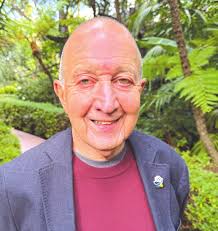
Peter Ostroff is a long-time Beverly Hills resident of over 50 years who retired in 2017 after a 50-year career as a trial lawyer. He was born in Washington, D.C. in 1942. He graduated from Washington University (St. Louis, Mo) in 1964 with a B.A. degree in political science and economics. He graduated from the University of Chicago Law School in 1967 with a J.D. degree. He taught law at Monash University Law School in Melbourne, Australia in 1968. He became a member of the Illinois Bar in 1967 and the California Bar in 1969, He clerked for Hon. Shirley M. Hufstedler of the United States Court of Appeal 1969-70, practiced law with Nossaman, Waters, Scott, Krueger & Riordan and successor firms from 1970 to 1980 and with Sidley Austin from 1980 until 2017. During his full time law practice years he was a Committee Chair and Member of the Council of the American Bar Association, Litigation Section and was President of the Association of Business Trial Lawyers. Since 2018, he has served on the Beverly Hills Planning Commission. In addition to his work on the Commission, Peter has chaired the BHUSD 7-11 Surplus Property Committee and contributed to planning efforts for the District Offices site on S. Lasky Drive and future uses of the Hawthorne School property. He also served as Co-Chair of the Citizens Advisory Committee for the City's Climate Adaptation and Action Plan. He has been married to Anne Y. Ostroff since 2002, has two children, Nick Ostroff and Natalie Anne Cookson and has two grandchildren, Elliott Cookson and Emma Anne Cookson. Some family information is collected under Family Tree in this website. Since April 2024, he has written a weekly column for the Beverly Hills Weekly The columns are collected in this website.
petero@ostroff.laMore from the Archive
Second or Third Council Choices
The column advises undecided voters on how to choose their second or third City Council candidates, emphasizing the importance of integrity, experience, and respect in leadership. It particularly criticizes candidate Russell Stuart for lacking these qualities and for his questionable conduct and social media presence, urging voters to seek answers about his background and actions.

Final Election Thoughts/Art Show/SF Rising
The article discusses the troubling influence of partisan politics in the non-partisan City Council elections, highlighting false social media claims against certain candidates and criticizing the Board of Education's ongoing litigation due to internal dysfunction. Additionally, it celebrates the successful Beverly Hills Art Show, noting its growth and the potential for increased revenue through better monitoring of vendor sales.

Some News of Note
The first meeting of the newly constituted City Council raised questions about accepting a donation from Israel for a memorial, highlighting a shift in dynamics following John Mirisch's departure after 17 years. Additionally, concerns about operational issues at the La Cienega Metro station and ongoing wealth disparity in the city were discussed, alongside the need for better management of city projects and the implications of recent water infrastructure challenges.