Peter Ostroff
A Voice for Beverly Hills — Past, Present, and Future
Are We Ready for the Metro?
The Los Angeles County Metropolitan Transit Authority has completed tunneling for the D Line subway extension to Westwood, which includes seven new stations and is set to improve public transportation in the region. As the project moves forward, local officials emphasize the need for effective security measures and transportation solutions to ensure residents can easily access the new subway stations and fully utilize the service.
The Los Angeles County Metropolitan Transit Authority (Metro) announced last week the completion of all tunneling for the subway D Line from the current end of the line at Wilshire and Western to the VA Hospital in Westwood. This includes an extension of over nine miles and seven new stations, including two in the City of Beverly Hills, at La Cienega and Rodeo, and one very nearby station at Constellation in Century City. This is the successful and safe conclusion of a massive tunneling project over many years (including a 20-year pause to ensure that tunneling could be safely done without methane gas disruptions in the La Brea Tar Pits area). Now, all that remains is completion of the construction of the stations themselves, a non-trivial but finite set of projects.
The total cost of the project will be the jaw-dropping sum of $9B paid for 50/50 by Metro and the federal government according to Metro spokesperson Dave Sotero. The city of Beverly Hills has not contributed to the costs of construction of the tunnels and will not, absent a change that I will get to, contribute to the costs of construction of the stations.
Metro is a Los Angeles County agency with massive resources and responsibilities. In 2023, the system had a total County-wide ridership of 284,901,000 and had a ridership of 907,500 per weekday as of the fourth quarter of 2023. Metro operates around 110 miles of subways and light rail trains. That will be closer to 120 miles when the D line is completed. Base fare is $2.50 and “senior” (over a youthful 62) fare is $0.35 to $0.75.
In recent decades, Metro has spent billions to improve regional quality of life by creating better, faster public transportation to enable residents to travel faster and less expensively and to reduce traffic or at least slow increases that are reflective of a growing population with finite space for roads and the like.
New D Line service from DTLA to La Cienega is scheduled to begin by the end of 2025. Service through to Constellation by the end of 2026 and to the Westwood VA by the end of 2027. Although schedules are still being developed, Mr. Sotero estimates that this trip from DTLA to La Cienega station will take less than 20 minutes. When the line has been completed, he estimates that a trip from DTLA to UCLA will take only 25 minutes, unaffected by street level traffic.
Bottom Line: after many delays, the subway is coming to Beverly Hills!! So it occurred to me that this is an opportune time to review the current stage of preparations for the arrival of this service.
For a sensible review it is important to understand what Metro does and does not provide. Metro provides the route of travel (in this case miles of tracks and tunnels), the trains, the operators, and the stations. I understand that the Rodeo station, in particular, will be spectacular. Metro will handle the operations and maintenance of the D line.
Metro does not provide parking around its stations, does not provide restrooms on the trains nor in the stations and does not provide for transportation to or from the stations. Those important items and local law enforcement are the responsibility of the cities in which the stations are located.
During the recent City Council campaign, all candidates focused almost entirely on one subway related issue – security. Security of our City is of vital importance particularly in the short run when La Cienega will be the end of the line and passengers who may use the subway for shelter must exit the passenger cars and the stations.
Very little was said during the campaign about an equally important issue – how to facilitate use of the subway by City residents, shoppers, workers and visitors. While security is of vital importance, use of this subway is also important. Given the enormous investment, it would be most unfortunate if the new subway line were underused or simply drew away passengers from the extensive east/west bus service that Metro already provides to the City.
To state the obvious, security throughout the system is important for more than one reason. First, passengers must be able to have a safe comfortable experience. Beyond that, City residents are not going to even consider a ride on the D Line unless they are confident that they can reach their destinations without unduly unpleasant experiences.
Security on the trains and within the stations is entirely the responsibility of Metro. This is at present far from perfect. I understand that this is improving and that a substantial grant was recently announced that will, in part, be used to improve security. In any event, that is beyond our control.
In terms of security outside of and beyond the stations, at this point BHPD’s plans include “use of the City’s Real Time Watch Center, an extensive network of cameras and the drone program, [which] provide security coverage throughout the City including the areas near the new Metro stations. In addition, security resources will exist both at and below street level”, according to Lauren Santillana, City Public Information Manager. She added that “the City’s MOA with Metro dictates staffing requirements to ensure 24/7 security coverage.” While it may appear that nothing specific has yet been planned, Ms. Santillana points out that “the City will continue to assess what additional staffing resources may be needed near the stations.” There is no question in my mind that our outstanding BHPD will continue to keep us secure.
We should communicate ideas for enhancing security to the City Manager’s office, our Commissioners or our Councilmembers. An obvious question is what to do about toilets at or near the stations. In specific cases, Mr. Sotero advises, Metro has allowed private companies who provide and maintain portable toilets to operate them at or near Metro’s stations.
So we turn to the question of what is planned and what should be done to facilitate use, bearing in mind that the stations are more than a mile apart. If no parking is provided at the stations, how will passengers travel to and from the subway stations to their homes, jobs or other City destinations? This is often referred to as the “first mile/last mile” issue referring to getting to and from the stations to destinations. In the case of Beverly Hills, this is somewhat of a misnomer given that many residents and many office workers and tourists are going to or coming from substantially more than a mile away. Of course, they could take an Uber or a long walk but, more likely, they will not abandon their cars or other modes of transportation.
Notably, the City has some services that could take senior citizens to and from their destinations and Metro has a first/last mile plan that includes traffic calming, curb extensions, street trees and landscaping; signal timing for pedestrians and cyclist bike lanes, bike parking and bike share stations; wayfinding signage to key destinations and transit connections; and new or improved sidewalks and crosswalks. All of these are nice as is the City’s Complete Streets Plan but none are likely to change behavior patterns or attract subway passengers.
What specific actions can we suggest? In at least one instance, a potentially available short walk may not be available. The Constellation station is a very short distance from the rear of Beverly Hills High School. For security reasons, this shortcut will not be created. According to BHUSD Superintendent Michael Bregy: “At this time we are not planning on creating a pathway from the back of the high school to the entry points. Currently the walking pathway from the subway station to the entry areas at BHHS is just under a mile and a 14-17 minute walk.”
Dr. Bregy speculates that this mile distance will not likely be close enough to attract faculty or student passengers. I think that he is correct about that. I am informed that studies show that people are willing to walk between ⅓ and ½ mile to and from their destination and a station but not much more than that. Nonetheless, it may be prudent to survey potential usage by students, faculty or staff of a much shorter pathway from the back of the high school to the station.
According to Mr. Sotero, cities that can coordinate between their own transit systems and the Metro stations have the best opportunity to attract new passengers to subway or light rail. Uniquely among our neighboring cities, the City has no transit system beyond special purpose programs. Santa Monica, Culver City and Los Angeles have their own established systems. West Hollywood has recently implemented its own. Actually, one of the purposes of one of the new West Hollywood transit system is to link the City directly with the Hollywood and Highland station on Metro’s B line which is located in Los Angeles.
My suggestion is that the City explore partnering with West Hollywood, Santa Monica or Culver City on instituting transit routes (using appropriately sized fuel efficient vehicles) custom designed to get potential passengers to and from the new stations.
While it may be premature before the Rodeo station is open, should we look at how we might provide at a reasonable cost a small bus that would travel an east/west route along Charleville and a north/south route from Sunset to Olympic along Beverly Drive that would help passengers get to and from the station?
Contracting with a vendor to provide and operate portable toilets could be a way of assessing needs in the first and subsequent stages without undue capital expense.
Should we be looking now at how to deal with the undeniable need for toilets near the stations rather than waiting until the stations are open?
There is apparently one somewhat open issue relating to the BH stations. As currently designed the entry and exit “portals” for the Rodeo station are located only on the south side of Wilshire. Some have urged that a portal on the north side be added as many passengers traveling to the City will be here to visit shops, stores or physicians on the north side of Wilshire. The City has agreed that if it requests that Metro add the north portal, the City and Metro will split the cost 50/50. Assuming that the City’s share will be substantially in excess of $50M, should this be done?
If you want to travel from the City to UCLA or Downtown Los Angeles or anywhere along the way, the D Line will be much, much faster and far less expensive when you consider costs of parking or taxi or Uber fares. What more would it take to induce you to give it a try?
To date, substantial thought and planning has been expended in aid of making the Metro D line a great success and I am not at this point critical of any aspect. It is, however, time to get more granular and specific and I am certain that City officials (and I) would be pleased to know your suggestions.
People Mentioned
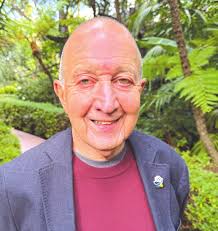
Peter Ostroff is a long-time Beverly Hills resident of over 50 years who retired in 2017 after a 50-year career as a trial lawyer. He was born in Washington, D.C. in 1942. He graduated from Washington University (St. Louis, Mo) in 1964 with a B.A. degree in political science and economics. He graduated from the University of Chicago Law School in 1967 with a J.D. degree. He taught law at Monash University Law School in Melbourne, Australia in 1968. He became a member of the Illinois Bar in 1967 and the California Bar in 1969, He clerked for Hon. Shirley M. Hufstedler of the United States Court of Appeal 1969-70, practiced law with Nossaman, Waters, Scott, Krueger & Riordan and successor firms from 1970 to 1980 and with Sidley Austin from 1980 until 2017. During his full time law practice years he was a Committee Chair and Member of the Council of the American Bar Association, Litigation Section and was President of the Association of Business Trial Lawyers. Since 2018, he has served on the Beverly Hills Planning Commission. In addition to his work on the Commission, Peter has chaired the BHUSD 7-11 Surplus Property Committee and contributed to planning efforts for the District Offices site on S. Lasky Drive and future uses of the Hawthorne School property. He also served as Co-Chair of the Citizens Advisory Committee for the City's Climate Adaptation and Action Plan. He has been married to Anne Y. Ostroff since 2002, has two children, Nick Ostroff and Natalie Anne Cookson and has two grandchildren, Elliott Cookson and Emma Anne Cookson. Some family information is collected under Family Tree in this website. Since April 2024, he has written a weekly column for the Beverly Hills Weekly The columns are collected in this website.
petero@ostroff.la